
Title: “The Journey of Inner Awakening: From Abraham to the Birth of Jesus”
Introduction: The Unfolding of Divine Consciousness
The story of Jesus begins with a lineage that symbolizes the evolution of consciousness, from Abraham through to David, and onwards to the exile in Babylon, culminating in the birth of Jesus. This lineage represents the journey of humanity towards a greater understanding of the divine essence within.
Section 1: The Lineage as a Symbol of Spiritual Growth
Each generation, from Abraham to David, and from David to the Babylonian exile, symbolizes stages in our spiritual journey. These fourteen generations each represent steps in our collective awakening to the divine presence within us all.
Section 2: The Birth of Jesus – A New Consciousness
The birth of Jesus marks a pivotal moment in human consciousness. His mother, Mary, symbolizes purity and the divine potential within us all. Joseph’s compassionate and understanding nature represents our higher self, guiding us towards acceptance and love.
Section 3: The Divine Message to Joseph
In a dream, a divine message is revealed to Joseph, assuring him of the sacred nature of Mary’s conception. This moment signifies the awakening of the inner spirit, the realization that what is born within us is of a pure, divine origin.
Section 4: The Significance of Jesus’ Name
The name Jesus, meaning ‘savior,’ symbolizes the potential within each of us to overcome our limitations and to transcend our perceived sins, or personal challenges. Jesus represents the divine spark within, capable of transforming and elevating our existence.
Section 5: The Prophecy of Emmanuel
The prophecy of Emmanuel, meaning ‘God with us,’ highlights the understanding that the divine essence is not separate from us but is an integral part of our being. This realization brings us closer to the experience of oneness with all creation.
Section 6: Joseph’s Acceptance and Action
Joseph’s acceptance of Mary and his adherence to divine guidance symbolize our own journey towards embracing our inner truth and acting in alignment with our highest self. This acceptance is a crucial step in our spiritual evolution.
Conclusion: The Birth of Jesus as a Symbol of Divine Love
The birth of Jesus is not just a historical event but a symbol of the divine love and consciousness born within each of us. It is a reminder that we are all interconnected, part of a greater whole, and capable of profound transformation through love and understanding.
This interpretation of Matthew 1 reimagines the genealogy and birth of Jesus as a metaphor for the spiritual journey of humanity. It emphasizes the themes of inner awakening, the realization of the divine within, and the transformative power of love and consciousness.
Title: “The Light of Consciousness: The Early Years of Jesus”
Introduction: The Coming of a New Consciousness
In a time marked by spiritual seeking, wise individuals, attuned to the higher truths, journeyed from the East, guided by a symbolic star, seeking the new embodiment of divine consciousness born in Bethlehem – Jesus.
Section 1: The Seekers of Truth
These wise seekers represent our own journey towards understanding and enlightenment. Their quest to find Jesus symbolizes the human search for deeper spiritual meaning and connection with the divine essence within.
Section 2: The Disturbance of the Ego
King Herod, troubled by the news of a new spiritual awakening, symbolizes the ego’s fear and resistance to change. His consultation with the chief priests and scribes reflects the ego’s attempt to grasp and control the emerging consciousness.
Section 3: The Fulfillment of Spiritual Prophecy
The prophecy of Bethlehem, the birthplace of the new consciousness, signifies the inevitable unfolding of spiritual evolution. It reminds us that every step in our journey is part of a greater plan towards awakening.
Section 4: The Guiding Light to Awakening
The star leading the wise men to Jesus symbolizes the inner guidance that each of us possesses. It is a reminder that we all have the capacity to find our way to higher understanding and connection.
Section 5: The Gifts of the Inner Journey
The gifts of gold, frankincense, and myrrh represent the various aspects of our inner journey – the value of our soul (gold), the elevation of our spirit (frankincense), and the transformation of our suffering (myrrh). These gifts are offerings of our inner work and growth.
Section 6: The Escape to Inner Refuge
The flight to Egypt represents the need to protect the nascent divine consciousness within us from the destructive tendencies of the ego. It symbolizes our journey towards safe inner spaces where this consciousness can grow and thrive.
Section 7: The Sorrow of Attachment and Loss
Herod’s wrath and the consequent sorrow in Bethlehem reflect the pain and suffering caused by attachment to the material and egoistic desires. It is a reminder of the suffering that ensues when we resist spiritual transformation.
Section 8: The Return to Inner Peace
The return of Joseph, Mary, and Jesus to Nazareth, following the passing of Herod, symbolizes the return to a place of inner peace and stability. It reminds us that after periods of turmoil and change, we can find peace in our own Nazareth, our center of balance and harmony.
Conclusion: The Path of the Nazarene
Jesus, being called a Nazarene, represents the path of someone deeply connected to spiritual truth and consciousness. This path is available to all who seek to embrace the divine love and understanding within themselves, transforming their lives and the world around them.
In this reinterpretation, the early life of Jesus is seen as a metaphor for our own spiritual journey. It emphasizes the awakening of divine consciousness within us, the challenges we face from our ego, and the transformative journey towards enlightenment and inner peace.
Title: “The Awakening Path: Embracing Inner Transformation”
Introduction: The Voice in the Wilderness
In a time of deep spiritual seeking, there emerged a guide, John, who spoke of inner transformation and the imminent arrival of a new consciousness. He called people to embrace self-awareness and change, symbolizing the need for humanity to prepare for a new era of understanding.
Section 1: The Call for Inner Change
John’s message, “Repent, for the kingdom of heaven is at hand,” emphasizes the need for a shift in our inner world. It’s a call to turn away from ego-driven desires and to realign with our true spiritual essence, which is interconnected with all.
Section 2: The Symbolism of John’s Lifestyle
John’s simple lifestyle, away from societal complexities, symbolizes the purity and focus needed on our spiritual journey. His choice of food and clothing reflects a life dedicated to essential truths, free from material distractions.
Section 3: Embracing Spiritual Cleansing
People from all walks of life came to John, seeking baptism as a symbol of washing away old patterns and embracing a renewed sense of self. This act represents our desire to cleanse ourselves of past limitations and to start anew on a path of higher consciousness.
Section 4: Challenging Superficial Beliefs
John’s confrontation with the Pharisees and Sadducees challenges superficial spiritual practices and empty lineage claims. He emphasizes that true spiritual lineage comes from conscious living and inner transformation, not mere heritage or outward rituals.
Section 5: The Metaphor of Baptism
John’s baptism with water symbolizes the initial steps of repentance and the willingness to change. He foretells the coming of one who will baptize with the Holy Spirit and fire, indicating a deeper and more profound transformation of the human spirit.
Section 6: The Baptism of Jesus and the Union of Spirit
Jesus’ baptism by John signifies the union of human and divine consciousness. It represents the acknowledgement and acceptance of our divine nature, an essential step in our spiritual evolution.
Section 7: The Divine Affirmation
The heavenly voice declaring Jesus as the beloved Son symbolizes the divine affirmation we all seek on our spiritual journey. It’s a reminder that we are deeply loved and cherished by the universe and that our true essence is divine.
Conclusion: The Path of Righteousness and Divine Love
Jesus’ baptism and the subsequent divine affirmation mark the beginning of a journey that exemplifies perfect love, compassion, and the potential for human transformation. It is an invitation for each of us to embark on our own path of spiritual awakening, embracing our interconnectedness with all and realizing our divine nature.
This reinterpretation of Matthew 3 presents the narrative as a metaphor for spiritual awakening and transformation. It emphasizes the need for inner change, the symbolism of baptism as a cleansing and rebirth, and the divine affirmation of our inherent spiritual nature. The message is one of hope, love, and the transformative power of embracing our true essence.
Title: “The Inner Quest: Embracing Enlightenment and Transformation”
Introduction: The Journey Within
Jesus, symbolizing the divine consciousness within us, embarked on a profound journey of self-discovery and spiritual awakening, confronting the challenges and temptations that represent our inner struggles and the ego’s resistance to change.
Section 1: The Temptation of the Ego
In the wilderness of our own minds, we encounter various temptations that challenge our spiritual integrity. These temptations, represented by the devil, symbolize the ego’s attempts to distract and derail us from our true path of enlightenment.
Section 2: The Sustenance of Spiritual Truth
The temptation to turn stones into bread represents the ego’s lure of materialism and immediate gratification. Jesus’ response emphasizes that true fulfillment comes not from material sustenance but from embracing and living spiritual truths.
Section 3: The Test of Faith and Trust
The temptation to leap from the temple pinnacle symbolizes the ego’s challenge to our faith and trust in the divine. It’s a test of whether we seek external validation or remain steadfast in our inner knowing and connection with the divine essence.
Section 4: The Lure of Power and Dominance
The temptation of worldly power and glory represents the ego’s desire for control and dominance. Jesus’ rejection of this temptation signifies the choice to serve a higher purpose, aligning with divine will rather than personal ambition.
Section 5: The Beginning of a New Era
Following these trials, Jesus hears of John’s imprisonment, symbolizing the end of one phase of consciousness and the beginning of another. This transition marks the start of Jesus’ active ministry and his journey to spread enlightenment.
Section 6: Spreading the Light in Darkness
Jesus’ move to Galilee and the fulfillment of prophecy symbolize the spread of spiritual light in places of darkness and ignorance. It represents the awakening of consciousness in regions of our mind that were previously unenlightened.
Section 7: The Call for Inner Transformation
Jesus’ message, “Repent, for the kingdom of heaven is at hand,” is a call for personal transformation and the realization that the divine realm is an internal state of being, accessible to all through inner change and awareness.
Section 8: The Invitation to Spiritual Awakening
The calling of the first disciples symbolizes our own calling to embark on the spiritual journey. The invitation to become ‘fishers of men’ represents the role of guiding others towards awakening and enlightenment.
Section 9: The Healing Power of Consciousness
Jesus’ healing work in Galilee symbolizes the transformative power of enlightened consciousness to heal and uplift. It shows the potential of spiritual awareness to bring healing and wholeness to all aspects of our lives.
Conclusion: The Ripple Effect of Enlightenment
The widespread impact of Jesus’ teachings and healings represents the far-reaching effects of embracing and living by spiritual truths. It’s a testament to the power of love, compassion, and divine consciousness to transform not just individuals but entire communities and beyond.
In this reinterpretation, Matthew 4 is seen as a metaphor for the inner journey towards enlightenment and the challenges we face in overcoming ego-driven desires and fears. It emphasizes the transformative power of embracing spiritual truths and living in alignment with our divine essence.
Title: “The Path of Inner Light: Teachings of Love and Awareness”
Introduction: The Sermon of Universal Truths
Amidst a world of diverse perspectives and experiences, a profound message of love, understanding, and self-awareness was shared, symbolizing the universal truths that connect us all.
Section 1: Embracing Humility and Spiritual Richness
Blessed are those who recognize their inner emptiness and seek spiritual fulfillment, for theirs is a journey towards true enlightenment and inner peace.
Section 2: Finding Comfort in Inner Growth
Those who experience sorrow and loss are blessed, for through these experiences, they find deeper understanding and compassion, leading to a comforting sense of connection with all beings.
Section 3: The Strength of Gentleness
The gentle and humble are blessed, for they understand the power of kindness and empathy, which allows them to connect deeply with the world, inheriting the richness of human experience.
Section 4: The Fulfillment in Righteousness
Those who earnestly seek truth and justice, yearning for a world of fairness and kindness, are blessed, for their quest leads to a profound sense of fulfillment and inner harmony.
Section 5: The Reward of Compassion
Blessed are those who show mercy and forgiveness, for they understand the interconnectedness of all beings and will receive compassion and understanding in return.
Section 6: The Clarity of a Pure Heart
Those with pure intentions and a clear conscience are blessed, for they will perceive the divine essence within themselves and in the world around them.
Section 7: The Peacemakers as Divine Children
Blessed are the peacemakers, for their efforts to create harmony and understanding resonate with the divine nature, and they are recognized as true embodiments of divine love.
Section 8: The Honor in Righteous Suffering
Those who face adversity for standing up for what is right are blessed, for their struggles are a testament to their commitment to higher principles and truths.
Section 9: The Salt and Light of the World
You are the essence that preserves and enlightens the world. Let your actions and words reflect your inner light, guiding and enriching the lives of others, and revealing the divine presence within us all.
Section 10: The Fulfillment of Spiritual Law
I have come not to discard our spiritual foundations but to fulfill them, bringing a deeper understanding and connection to these eternal truths.
Section 11: The Higher Call of Righteousness
Transcend the superficial righteousness of outward actions and embrace a deeper, more genuine righteousness that stems from an awakened and compassionate heart.
Section 12: The Transformation of Inner Conflicts
Address and resolve your inner conflicts and resentments, finding peace within yourself before seeking external resolutions.
Section 13: The Mastery of Emotions and Desires
Look beyond physical temptations and fleeting desires, seeking a deeper, more meaningful connection with the essence of life and love.
Section 14: The Power of Sincerity in Speech
Let your words be sincere and straightforward, reflecting the truth and integrity of your inner self.
Section 15: The Response to Injustice with Compassion
In the face of injustice and harm, respond not with retaliation but with compassion and understanding, reflecting the divine nature within you.
Section 16: The Generosity of Spirit
Be generous and open-hearted, offering assistance and kindness without expectation of reward or recognition.
Section 17: The Love for All, Beyond Boundaries
Extend your love and kindness beyond your immediate circle, embracing even those who oppose you, reflecting the unconditional love that is the essence of our shared humanity.
Conclusion: The Aspiration for Divine Perfection
Strive to embody the divine qualities of love, understanding, and compassion, recognizing that perfection lies in our continuous effort to align with these higher principles and values.
This reinterpretation of Matthew 5 presents the teachings as guiding principles for inner transformation and spiritual awakening. It emphasizes the importance of humility, compassion, forgiveness, and unconditional love as pathways to realizing our interconnectedness with all beings and our inherent divine nature.
Title: “The Inner Journey: Embracing Authenticity and Mindfulness”
Introduction: Living True Religion
Embrace a genuine path of spirituality, focusing on actions that resonate with your true self, rather than seeking external approval. Let your good deeds flow naturally, without the need for recognition.
Section 1: The Essence of Altruism
When you give to others, do it with a heart full of love and selflessness, without the desire for applause or acknowledgement. True generosity is a quiet act of love and empathy.
Section 2: The Sacred Space of Prayer
In your moments of prayer and reflection, seek a personal, intimate connection with the divine essence within you. Avoid hollow repetitions and public displays, and instead, find a quiet place to connect deeply with your inner self and the universal consciousness.
Section 3: The Power of Forgiveness
Forgiveness is a gift you give yourself as much as others. Releasing resentment and embracing forgiveness opens your heart and allows for healing and inner peace.
Section 4: The Practice of Mindful Fasting
When you fast or practice self-denial, do it as a means to deepen your spiritual awareness and self-control, not as an outward show of piety. Let it be a personal journey towards inner clarity and balance.
Section 5: The True Wealth of the Spirit
Avoid the pursuit of material wealth, which is temporary and often brings more worry than joy. Instead, invest in your spiritual growth and the riches of your inner world, which bring lasting peace and fulfillment.
Section 6: The Vision of Clarity
Keep your focus on what is truly important, nurturing a perspective that is filled with light and wisdom. A clear and focused mind illuminates your entire being.
Section 7: Serving with a Unified Heart
You cannot split your devotion between spiritual growth and material gain. Choose to serve the higher purpose of your true self, fostering a life of integrity and authenticity.
Section 8: The Simplicity of Existence
Let go of anxieties about daily needs and material concerns. Trust in the natural flow of life, just as nature effortlessly provides for all its creatures.
Section 9: The Elegance of Nature’s Simplicity
Observe the simplicity and beauty of nature, which thrives without stress or laborious effort. Emulate this natural grace in your own life, finding beauty and peace in simplicity.
Section 10: The Priority of Spiritual Pursuits
Prioritize your spiritual growth and seek to align with the higher values of love, compassion, and authenticity. As you focus on these, your material needs will be met with less effort and more harmony.
Section 11: The Wisdom of Living in the Present
Live in the present moment, free from the burdens of past regrets and future anxieties. Each day brings its own experiences and challenges; meet them with mindfulness and grace.
This reinterpretation of Matthew 6 presents the teachings as a guide for inner transformation and mindfulness. It emphasizes the importance of authentic spiritual practices, the power of forgiveness, the pursuit of inner peace over material wealth, and the wisdom of living in the present. The message encourages a journey towards self-discovery, inner harmony, and a deeper connection with the universal essence of love and compassion.
Title: “The Path of Enlightened Living: Wisdom for Inner Harmony”
Introduction: The Power of Non-Judgment
Begin your journey of inner transformation by releasing judgment towards others. Understand that when you judge others, you invite judgment upon yourself, reflecting your own inner conflicts and biases.
Section 1: Self-Awareness and Compassion
Before pointing out the flaws in others, turn your gaze inward. Recognize and address your own shortcomings and biases. This self-awareness will allow you to help others with compassion and understanding.
Section 2: Discerning the Sacred
Value and protect your inner truths and wisdom. Share your insights and gifts selectively, ensuring they are appreciated and not misused or undervalued.
Section 3: The Universe Responds
Embrace the principle of asking and receiving. The universe is responsive to your sincere desires and efforts. Seek with an open heart, and doors will open, providing you with the experiences and insights you need.
Section 4: The Principle of Reciprocity
Live by the rule of treating others as you wish to be treated. This principle is fundamental to creating a harmonious and loving world. It reflects the interconnectedness of all beings.
Section 5: The Narrow Path to Enlightenment
Recognize that the path to true enlightenment and inner peace is not always easy or popular. It requires dedication, self-reflection, and a commitment to personal growth.
Section 6: Discerning True Guidance
Be cautious of false guides who may appear benevolent but harbor selfish or harmful intentions. True wisdom and guidance are known by their positive impacts and the genuine growth they inspire.
Section 7: The Fruits of Inner Work
Just as a tree is known by its fruits, so too are people known by their actions and the energy they bring into the world. Strive to cultivate positive, loving actions that reflect your inner growth.
Section 8: Authenticity in Spiritual Practice
Not all who outwardly appear spiritual are truly aligned with divine will. True alignment is shown through actions and intentions that resonate with love, compassion, and authenticity.
Section 9: Building a Foundation of Wisdom
Like a house built on a solid foundation, a life built on the principles of love, awareness, and compassion will withstand the challenges of life. In contrast, a life lacking these foundations will struggle to find stability and meaning.
Conclusion: The Authority of Inner Wisdom
These teachings offer a powerful and authoritative guide for living a life of deeper meaning and connection. They invite you to embrace a path of love, self-awareness, and compassion, leading to true enlightenment and harmony.
This reinterpretation of Matthew 7 presents the teachings as a roadmap for personal and spiritual growth. It emphasizes the importance of non-judgment, self-awareness, reciprocal kindness, discernment in choosing spiritual guides, and building a life based on the solid foundation of inner wisdom and compassion. The message is one of hope, encouraging a journey towards a more enlightened, loving, and interconnected existence.
Title: “The Inner Miracles: A Journey of Healing and Self-Discovery”
Introduction: Healing from Within
The true essence of healing begins from within. Recognize the divine power you possess to transform and heal not only yourself but also to positively impact those around you.
Section 1: Embracing Inner Cleansing
Encounter the transformative power of self-belief and inner cleansing. Just as the leper approached with faith, understand that your inner strength and belief in your interconnectedness with the divine can initiate profound healing.
Section 2: The Strength of Faith
Witness the power of faith through the story of the centurion’s servant. Realize that your faith in the unseen forces of the universe can bring about incredible changes, transcending physical limitations and traditional beliefs.
Section 3: The Universal Connection
Acknowledge the limitless potential of human consciousness, where boundaries are transcended, and healing is achieved through a deep, universal connection, exemplified by the healing of diverse individuals.
Section 4: The Nature of True Followship
Understand the depth of commitment required to truly follow a path of spiritual enlightenment. It’s a journey that goes beyond superficiality and comfort, demanding a profound inner transformation.
Section 5: Mastering the Storms Within
Learn from the calming of the storm that your inner peace and centeredness can bring tranquility even in the midst of life’s turmoil. Mastering your inner storms is key to navigating life’s challenges.
Section 6: Liberation from Inner Demons
The story of the possessed men in the Gergesenes symbolizes the liberation from inner demons. Recognize that you have the power to confront and overcome your deepest fears and negative thoughts.
Section 7: The Impact of Inner Transformation
Witness the ripple effect of inner transformation on the external world. Your journey of self-discovery and healing can lead to profound impacts, inspiring change in your surroundings.
Conclusion: The Power to Transform
As you journey through these teachings, remember that the greatest miracles occur within. Your belief, faith, and inner work have the power to transform your life and the lives of those around you. Embrace your inner strength, connect with the divine within, and witness the unfolding of miracles in your life.
In this reinterpretation of Matthew 8, the focus is shifted from external miracles to the profound inner transformations that they symbolize. It emphasizes the themes of inner healing, the power of faith, understanding our interconnectedness, mastering internal struggles, and the impact of personal growth on the world. This approach invites you to look within for strength and healing, recognizing the divine power inherent in each individual.
Title: “The Path of Inner Transformation: A Guide to Wholeness and Harmony”
Introduction: The Journey Within
Discover the power of inner transformation and healing, where the divine essence within each of us is the source of true change and growth.
Section 1: Embracing Forgiveness and Healing
Experience the transformative power of forgiveness, as demonstrated in the healing of the paralytic. Understand that forgiving oneself and others can lead to profound healing and liberation from internal burdens.
Section 2: Inclusivity and Unconditional Love
Reflect on Jesus’ interaction with Matthew and the publicans, embodying the principle of unconditional love and inclusivity. Recognize that true transformation comes from embracing all aspects of oneself and others, without judgment.
Section 3: Embracing Change and Renewal
Contemplate the metaphor of new cloth and new wine, symbolizing the necessity of embracing change and renewal for personal growth. Understand that old patterns and beliefs must be released to make room for new insights and understanding.
Section 4: The Power of Faith and Belief
Witness the healing of the ruler’s daughter and the woman with the issue of blood, illustrating the power of faith and belief in the process of healing. Recognize that your beliefs shape your reality and that faith in yourself and the interconnectedness of life can lead to miraculous changes.
Section 5: Opening to New Perspectives
Learn from the healing of the two blind men about the importance of opening oneself to new perspectives and possibilities. Recognize that your vision of life can be transformed through faith and a willingness to see beyond physical limitations.
Section 6: Embracing Your Voice
Understand the significance of the healing of the mute man, symbolizing the importance of finding and expressing your inner voice. Recognize that each person has a unique contribution to make to the world, and expressing your truth is key to your transformation.
Section 7: Compassion and Collective Healing
Reflect on Jesus’ compassion towards the multitudes and his encouragement to his disciples to be laborers of healing. Understand that collective healing begins with individual transformation and that each person has a role in creating a harmonious world.
Conclusion: The Path to Wholeness
This journey through Matthew 9 invites you to explore the power of inner transformation and healing. Each story and teaching emphasizes the importance of forgiveness, unconditional love, faith, and personal growth. Recognize that true change begins within, and by embracing these principles, you can contribute to a world filled with love, harmony, and understanding.
Title: “Journey of Spiritual Empowerment: The Path of Inner Awakening”
Introduction: The Call to Inner Discovery
Explore the spiritual journey of self-discovery and empowerment, where every individual is an integral part of the cosmic whole, capable of profound transformation and healing.
Section 1: The Empowerment of the Twelve
Reflect on the empowerment of the twelve disciples, representing the universal potential within each of us to effect change and bring healing. Understand that this power stems from an inner connection to the divine essence, allowing for transformation and growth.
Section 2: Mission of Unconditional Love
Embrace the mission of spreading unconditional love and healing. This journey is not just external but a reflection of the internal path of self-discovery and acceptance, where judgment is replaced with understanding and compassion.
Section 3: Embracing Inner Wisdom and Harmlessness
Learn from the metaphor of being ‘wise as serpents and harmless as doves’, symbolizing the balance between inner wisdom and the purity of intention. This teaching encourages a deep understanding of oneself and others, fostering a harmonious and impactful existence.
Section 4: The Power of Authentic Expression
Discover the importance of authentic self-expression in the face of challenges. Understand that speaking one’s truth, guided by the inner spirit, is key to personal and collective transformation.
Section 5: The Strength in Endurance
Contemplate the strength found in enduring life’s trials. Recognize that challenges are opportunities for growth and that resilience is born from an inner well of divine love and understanding.
Section 6: Embracing Life’s Paradoxes
Reflect on the paradoxical teachings about peace and division, understanding that true peace often requires confronting and integrating inner conflicts. This process leads to a deeper harmony within oneself and in relationships with others.
Section 7: The Reward of Spiritual Fulfillment
Understand the profound rewards of spiritual fulfillment that come from living a life aligned with divine love and purpose. Recognize that true fulfillment comes not from external accolades but from an inner sense of alignment with one’s true self.
Conclusion: The Path of Spiritual Empowerment
This journey through Matthew 10 invites you to embrace your inner power and wisdom, transforming challenges into opportunities for growth and deeper understanding. By aligning with the divine essence within and expressing it authentically in the world, you contribute to a harmonious and enlightened existence, filled with love, understanding, and deep fulfillment.
Title: The Journey Within: A Modern Reflection on Divine Love and Inner Transformation
Introduction
In the world today, just as in ancient times, we encounter messages and teachings that guide us towards a deeper understanding of ourselves and our connection to a higher power. These teachings, while rooted in historical texts, transcend time and are ever-relevant in our journey towards love, hope, and transformation.
1. The Meeting of Inner Light
When Jesus finished instructing his disciples, he continued his mission, spreading his message to various cities. This section reflects on the conversation between Jesus and John the Baptist’s disciples, emphasizing the miraculous deeds of Jesus not just as external wonders but as symbols of internal awakening and healing. This highlights the idea that within each of us lies the potential for transformation and enlightenment.
2. The Essence of True Greatness
Jesus spoke to the crowds about John the Baptist, illustrating the importance of looking beyond superficial appearances to recognize true greatness. This part delves into the understanding that true spiritual greatness is not about external achievements or recognition, but about inner humility, understanding, and the realization of our interconnectedness with the divine.
3. The Dance of Life
In this section, Jesus observes the nature of people’s reactions to different teachings and messengers. It’s a metaphor for how we often respond to life’s various rhythms – joy, sorrow, abundance, and scarcity. It urges us to find balance and harmony within, recognizing that every experience is an opportunity for growth and deeper understanding.
4. The Mirror of the Soul
Jesus reflects on the responses of different cities to his teachings, emphasizing the importance of inner repentance and transformation. This passage encourages introspection and the realization that true change begins within, leading to a more compassionate and enlightened existence.
5. The Hidden Wisdom
Here, Jesus speaks of the divine wisdom often hidden from the intellectually proud but revealed to those with open, childlike hearts. It’s a call to embrace simplicity and purity in our quest for understanding, recognizing that true wisdom often lies beyond the grasp of conventional knowledge.
6. The Invitation to Rest
In this profound invitation, Jesus offers rest and peace to those burdened by life’s struggles. It symbolizes the internal rest we find when we align with our true selves and embrace the divine love within us. It’s a call to let go of external burdens and find peace in the simplicity and lightness of being that comes from inner alignment and harmony.
Conclusion: The Power of Divine Love
This reinterpretation of Matthew 11 encapsulates the essence of divine love as a transformative and unifying force within each of us. It invites us to journey within, to discover our interconnectedness with all of existence, and to embrace the potential for profound personal and spiritual transformation. Through this journey, we come to understand that love, hope, and transformation are not just ideals to aspire to but tangible realities that we can experience in our daily lives.
Title: The Path of Inner Harmony and Universal Love
Section 1: Embracing True Understanding
In a time of deep reflection, a teacher walks amidst the grain fields with his students, embracing the Sabbath day not just as a rigid rule but as an opportunity for nurturing the soul. When questioned about their actions, the teacher reminds them of the essence of spiritual wisdom – it’s not about literal adherence to rules, but understanding their deeper purpose.
Section 2: Healing and Compassion Beyond Boundaries
Moving from the fields to a place of worship, the teacher encounters a man in need of healing. In this moment, he demonstrates that true compassion knows no bounds of time or place. He heals the man, showing that kindness and help should never be confined by rigid interpretations of spiritual laws.
Section 3: Confronting Narrow Perspectives
Faced with criticism, the teacher wisely addresses the narrow-mindedness of his accusers. He speaks of unity and the interconnectedness of all life, teaching that we are all part of a greater whole. In this unity, actions taken in love and compassion are always in harmony with the universal law.
Section 4: The Inner Light of Forgiveness
The teacher speaks of forgiveness as a powerful force, emphasizing that true understanding and love can transcend even the gravest of human errors. He encourages his listeners to cultivate purity of heart and intention, as these are the true measures of a person’s character.
Section 5: Seeking Signs and Understanding
In response to the demand for miraculous signs, the teacher urges his followers to seek deeper understanding rather than external validations of faith. He alludes to historical figures and events, urging them to find the symbolic and spiritual lessons within these stories.
Section 6: The Family of Universal Love
Concluding his teachings, the teacher redefines the concept of family. He extends it beyond blood ties to include all who walk the path of love, understanding, and spiritual fulfillment. In doing so, he emphasizes the interconnectedness of all beings and the universal nature of divine love.
In this reinterpretation, the message of Matthew 12 is transformed into a guide for inner harmony and universal love, emphasizing the importance of compassion, understanding, and spiritual growth. It’s a journey towards recognizing the divine within us and all around us, fostering a deeper connection with the world and its inhabitants.
Title: The Journey Within: Parables of Enlightenment
Section 1: The Teacher by the Sea
A wise teacher, seeing the gathering of many souls, took his place by the seaside. His presence drew in a multitude, symbolizing the human yearning for deeper understanding and connection.
Section 2: Parable of the Sower
The teacher shares a story of a sower of seeds, illustrating how our inner receptiveness determines our spiritual growth. Like seeds on various grounds, the wisdom we encounter takes root differently depending on our inner openness and resilience.
Section 3: The Purpose of Parables
When asked why he speaks in parables, the teacher explains that these stories are keys to unlock the deeper layers of consciousness. They are meant to challenge, provoke thought, and awaken the inner wisdom that often lies dormant.
Section 4: The Parable of the Tares
Through the story of wheat and tares, the teacher reveals the coexistence of light and shadow within the world and ourselves. It’s a call to understand and integrate these aspects, rather than hastily judge or act.
Section 5: The Mustard Seed and Leaven
The teacher uses the metaphors of a mustard seed and leaven to depict the expansive nature of true awareness and love. From small beginnings, profound changes can emerge, influencing the entirety of our being.
Section 6: Revealing Hidden Truths
The teacher emphasizes that the wisdom he imparts is ancient yet ever-relevant, offering insights into the soul’s journey through the physical realm and beyond.
Section 7: Unveiling the Tares
In explaining the parable of the tares, the teacher guides his listeners to recognize the interplay of light and dark forces in life, and the ultimate triumph of awareness and love.
Section 8: Discovering Inner Treasures
The parables of hidden treasure and the pearl of great price teach that the quest for spiritual truth is the most rewarding journey, often requiring one to let go of material attachments and societal norms.
Section 9: The Drag-net
The net cast into the sea symbolizes the diverse experiences of life, each with its own lesson and purpose. The final sorting of the catch signifies the culmination of life’s journey and the realization of one’s true nature.
Section 10: The Rejection at Home
Returning to his roots, the teacher faces skepticism and disbelief, a reminder that enlightenment often faces resistance, even from those closest to us. It underscores the idea that true wisdom and understanding come from within, rather than external validation.
This reinterpretation of Matthew 13 offers a journey of self-discovery, where each parable serves as a mirror to our inner world. It’s a call to explore the depths of our consciousness, embrace our complexities, and find unity in diversity, guided by love, hope, and transformation.
Title: The Path of Inner Awakening: Lessons of Compassion and Faith
Section 1: Echoes of the Past
Herod, a ruler of the land, hears of a wise teacher’s growing influence. Mistaking him for John the Baptist, a prophet he once imprisoned, Herod reflects on his past actions. This shows how our past can echo in our present, urging us to confront our actions and their impact on our soul’s journey.
Section 2: The Unfortunate End of John
John, a voice of truth, faces the ultimate sacrifice for his honesty and integrity. His fate at the hands of Herod and Herodias’ daughter is a stark reminder of the sometimes tragic cost of speaking truth to power and the moral complexities we navigate in life.
Section 3: Retreat to Solitude
Upon hearing of John’s demise, the teacher retreats to a quiet place, symbolizing the need for inner reflection in times of turmoil. This retreat shows us the importance of turning inwards for peace and understanding.
Section 4: The Miracle of Sharing
As evening approaches, the teacher is faced with a hungry multitude. In an act of compassion, he miraculously feeds them with five loaves and two fishes. This act symbolizes the infinite potential within us to create abundance and share selflessly.
Section 5: Walking on Water
Later, the teacher demonstrates his mastery over physical limitations by walking on water. This extraordinary act is a metaphor for transcending our fears and doubts, teaching us about the power of faith and the limitless potential of the human spirit.
Section 6: Overcoming Doubt
Peter, a disciple, attempts to emulate the teacher but is overcome by doubt, beginning to sink. This moment teaches us about the delicate balance between belief and doubt in our spiritual journey.
Section 7: Calming the Storm
Upon the teacher’s return to the boat, the storm calms, symbolizing the peace that comes with faith and the presence of a higher consciousness within us.
Section 8: Recognition of the Divine
The disciples, witnessing these events, acknowledge the teacher as a divine figure, symbolizing the awakening to the divine essence within each of us.
Section 9: Healing in Gennesaret
Arriving at Gennesaret, the teacher’s reputation as a healer grows as he cures the sick. This healing power signifies the transformative power of love, compassion, and the human touch.
This reinterpretation of Matthew 14 encourages us to find strength in our inner wisdom, to share generously with others, and to trust in the journey of self-discovery and spiritual awakening. It teaches us about the transformative power of love and faith, reminding us that we are all interconnected in this journey of life.
Title: The Journey Within: Embracing Love, Understanding, and Transformation
Section 1: The Essence of True Worship
A group of religious leaders question the practices of the teacher’s followers, emphasizing ritual purity. The teacher, in response, highlights the essence of true spiritual practice – not the outer rituals, but the purity and intentions of the heart. This teaches us that our actions and words must reflect our inner spirituality and love.
Section 2: Beyond Literal Interpretation
The teacher addresses the crowd, emphasizing that it’s not the external actions that define a person, but the expressions of their heart. This section encourages us to look beyond superficial judgments and understand the deeper motivations of our actions.
Section 3: Universal Compassion
The narrative shifts to the story of a foreign woman pleading for her daughter’s healing. Initially, the teacher’s response seems exclusive, but upon the woman’s display of faith, he grants her request. This symbolizes the universal nature of divine love and compassion, transcending all boundaries.
Section 4: Healing and Unity
Near the Sea of Galilee, the teacher heals many, regardless of their afflictions. This act symbolizes the healing power of unconditional love and the unity of all beings in their quest for wholeness and well-being.
Section 5: The Miracle of Abundance
Facing a hungry multitude, the teacher again performs a miracle, feeding thousands with a few loaves and fishes. This miracle teaches us about the abundance that can be created through faith, compassion, and the sharing of resources.
Section 6: Departure to Magdala
After ensuring the well-being of the multitude, the teacher departs, symbolizing the continuous journey of spiritual awakening and the spreading of divine love and wisdom.
This reinterpretation of Matthew 15 invites us to understand the deeper essence of spiritual practices and to recognize the power of love and compassion that transcends all boundaries. It encourages us to look within and realize that the divine essence is present in all of us, guiding us towards enlightenment and unity with the universal spirit.
Title: The Path of Inner Awakening: Love, Faith, and Transformation
Section 1: Seeking Signs and Understanding
A group of religious leaders approach the spiritual teacher, seeking a miraculous sign. The teacher, instead of showing a sign, urges them to understand the deeper spiritual truths around them, emphasizing the importance of perceiving the inner essence of events and experiences, rather than seeking external validation.
Section 2: Beyond Literal Understanding
The teacher’s followers misunderstand his warning about the “leaven” of the Pharisees and Sadducees, thinking he speaks of physical bread. He clarifies that his message is about the deeper understanding of beliefs and teachings, encouraging them to look beyond the surface and seek the deeper truths within themselves and others.
Section 3: The Revelation of True Identity
In a moment of deep insight, a disciple, Simon Peter, recognizes the teacher’s divine nature. The teacher affirms this insight, highlighting that true understanding comes from an inner awakening, not from external teachings. This signifies the awakening of consciousness to the divine presence within and among us.
Section 4: The Journey of True Discipleship
The teacher begins to reveal the challenges and transformations that lie ahead, both for himself and his followers. He emphasizes the importance of self-denial and bearing one’s own cross, symbolizing the journey of inner transformation and the surrender of the ego for a higher purpose.
Section 5: The Paradox of Life and Transformation
The teacher speaks of the paradox of losing one’s life to find it, illustrating the transformative power of love and self-sacrifice. This teaching encourages us to let go of our egoic desires and attachments to discover our true selves and our interconnectedness with all beings.
Section 6: The Promise of Ultimate Fulfillment
He concludes with a promise of the coming of a deeper spiritual reality, where each person’s actions and choices will be recognized and rewarded. This is a call to live a life aligned with divine love, wisdom, and truth, and a reminder of the eternal nature of our spiritual journey.
In this reinterpretation of Matthew 16, the emphasis is on the inner journey of awakening, love, and transformation. It invites us to look within and recognize the divine essence that connects us all, to understand the deeper truths of our existence, and to live a life of love, compassion, and self-awareness, leading to ultimate enlightenment and unity with the divine.
Title: Inner Enlightenment: A Journey of Faith and Transformation
Section 1: The Moment of Transcendence
A spiritual teacher takes his closest students to a secluded mountain. There, they witness a profound transformation, symbolizing the awakening of the higher self. The teacher’s appearance becomes radiant, signifying the illumination of inner wisdom and divine connection. This moment of transcendence reveals the potential within each person to connect with their higher self.
Section 2: Voice of the Divine
During this transformative experience, a voice is heard, affirming the teacher as a beloved son, filled with divine favor. This symbolizes the deep inner acknowledgment of one’s true essence and the call to listen to the inner wisdom that guides each individual towards their true path.
Section 3: The Descent and Understanding
As they descend the mountain, the teacher instructs his students to keep this vision private until a later time, symbolizing the importance of internalizing spiritual experiences. The discussion about prophetic figures emphasizes the continuity and renewal of spiritual wisdom throughout time.
Section 4: Healing the Afflicted
Upon returning to the people, the teacher is approached by a man whose son is in distress. Despite the disciples’ efforts, they are unable to heal the child. The teacher, through his deep connection and faith, heals the boy, demonstrating the power of inner belief and the ability to transcend physical and mental limitations.
Section 5: The Power of Faith
The disciples question their inability to heal. The teacher explains that true healing and transformation come from a deep, unwavering faith, even as small as a mustard seed, illustrating that faith is not measured by size but by its quality and depth.
Section 6: The Foretelling of Trials
The teacher prepares his students for the upcoming challenges, speaking of his own journey of suffering and resurrection. This foreshadows the transformative journey each individual must undertake, embracing trials as opportunities for growth and renewal.
Section 7: A Lesson in Humility and Service
In a final scene, the teacher and his student encounter a situation involving tribute. The teacher uses this as a lesson in humility and service, guiding his student to find the needed tribute in an unexpected way. This teaches the value of meeting obligations while maintaining inner freedom and the creative potential within each person.
In this reinterpretation of Matthew 17, the emphasis is on the inner journey of awakening and transformation. The narrative invites individuals to connect with their higher selves, embrace the power of faith, and understand that true wisdom and healing come from within. It’s a call to recognize the divine essence within each person and to live in alignment with this inner truth, leading to a life of compassion, understanding, and enlightenment.
Title: The Path of Inner Harmony and Understanding
Section 1: Embracing Childlike Wonder and Humility
In a gathering, a question arises about who is the greatest in the spiritual realm. A wise teacher brings a child into the midst and shares a profound truth: to enter the realm of higher understanding, one must adopt the openness, curiosity, and humility of a child. True greatness lies in humbling oneself and embracing the purity and innocence found in the childlike aspect of our being.
Section 2: The Responsibility of Influence
The teacher emphasizes the importance of being mindful of one’s influence on others, especially those who are young or vulnerable in spirit. The guidance is clear: leading others astray or causing harm, even unintentionally, carries a significant spiritual burden. It is crucial to nurture and protect the innocence and purity in oneself and in others.
Section 3: The Lost Sheep: A Tale of Compassion
A parable is shared about a shepherd who leaves his flock to find one lost sheep, symbolizing the boundless compassion and caring for every individual. This story illustrates that everyone matters equally, and going out of one’s way to help even one person is a noble and important act.
Section 4: Resolving Disputes with Empathy and Understanding
The teacher provides guidance on resolving conflicts, emphasizing direct communication, empathy, and understanding. The approach is about restoring harmony while respecting each person’s dignity and perspective. It’s a reminder that in relationships, the goal should not be to win but to understand and reconcile.
Section 5: The Power of Collective Intention
The teacher speaks of the power that arises when people come together with a shared intention or purpose. In such unity, there is a manifestation of a higher presence, symbolizing that the collective energy and intention can lead to profound changes and realizations.
Section 6: The Infinite Capacity for Forgiveness
A disciple asks about the limits of forgiveness. The teacher replies with a principle of boundless forgiveness, symbolizing the infinite capacity of the human heart to forgive. It’s a call to release grudges and to embrace a state of continual forgiveness, recognizing that this is key to inner peace and spiritual growth.
Section 7: The Parable of the Unforgiving Servant
A story is shared about a servant forgiven a great debt by his master but who fails to show the same compassion to another. This parable highlights the importance of extending the same understanding and forgiveness to others that one wishes to receive. It teaches that true spiritual maturity involves practicing empathy and forgiveness in all aspects of life.
In this reinterpretation of Matthew 18, the emphasis is on the inner journey towards spiritual growth, empathy, and understanding. It calls for embracing humility like a child, understanding the impact of our actions on others, the importance of forgiveness, and the power of collective intention. It’s a guide to living a life rooted in love, compassion, and a deep understanding of the interconnectedness of all beings.
Title: The Journey of Inner Awakening and Selfless Love
Section 1: Healing and Teaching Beyond Jordan
In a time of great seeking, a wise teacher moved through the lands, healing and sharing wisdom. As he traveled, he drew many followers, all yearning for enlightenment and understanding. This section highlights the journey of seeking inner peace and the transformative power of compassionate action.
Section 2: The Sacred Bond of Unity
A discussion arises about the nature of relationships and commitments. The teacher emphasizes the sacredness of deep connections, where two individuals become united in purpose and spirit. This unity is not just a physical bond but a deep, spiritual one, reflecting the interconnectedness of all beings.
Section 3: Embracing Life’s True Purpose
The teacher encounters individuals struggling with societal norms and personal choices. He guides them towards understanding the essence of life’s true purpose, which transcends societal expectations and material attachments. It’s a call to prioritize spiritual growth and selfless love over transient worldly desires.
Section 4: Welcoming the Pure of Heart
In a profound moment, children are brought to the teacher, symbolizing innocence and purity. The teacher welcomes them, teaching that the qualities of openness, curiosity, and innocence are keys to spiritual enlightenment. This section symbolizes the importance of maintaining a pure heart and an open mind on one’s spiritual journey.
Section 5: The Challenge of Material Attachments
A young individual, rich in material wealth but seeking deeper meaning, approaches the teacher. The dialogue that unfolds highlights the challenge of letting go of material attachments to embrace a life of selflessness and spiritual richness. It illustrates the difficulty of transcending material desires to achieve true spiritual fulfillment.
Section 6: The Possibility of Spiritual Liberation
The teacher’s words about the challenges facing the materially wealthy in achieving spiritual enlightenment lead to astonishment among his followers. He explains that while it may seem impossible for those attached to material wealth to attain spiritual liberation, with divine guidance and inner transformation, all things are possible.
Section 7: The Reward of Selfless Devotion
In a conversation about sacrifice and devotion, the teacher assures his followers that those who forsake worldly attachments for a higher purpose will find greater fulfillment. This promise of spiritual reward and everlasting life underscores the value of selfless love and dedication to a higher cause.
Section 8: The Paradox of Spiritual Hierarchy
Finally, the teacher imparts a profound truth: in the spiritual realm, traditional notions of hierarchy are reversed. Those who seem first in the material world may be last in spiritual terms, and vice versa. This paradoxical wisdom emphasizes the importance of humility, service, and selflessness in the journey towards spiritual awakening.
In “The Journey of Inner Awakening and Selfless Love,” the core message of Matthew 19 is transformed into a guide for spiritual growth, emphasizing the importance of letting go of material attachments, embracing unity and love, and realizing the interconnectedness of all beings. It’s a call to a life of compassion, humility, and selfless devotion, leading to true fulfillment and enlightenment.
Title: “The Infinite Garden: A Modern Interpretation of Divine Love and Inner Enlightenment”
Section 1: The Vineyard of Life
In the kingdom of the heart, there is a story of a gardener who seeks helpers for his vineyard. At dawn, he invites some to work for a fair reward. Throughout the day, he continues to find others, idle and without purpose, and he welcomes them into his garden, promising a just reward for their efforts.
As evening falls, he gathers all the workers and gives each the same reward, regardless of their time spent in the vineyard. This confounds those who toiled longer, but the gardener gently reminds them of their agreement and speaks of his right to be generous.
This tale mirrors our journey through life, where time and effort are transcended by the grace and love that unites us. We are all laborers in the vineyard of existence, called at different moments, yet equally cherished and rewarded by the essence of divine love within us.
Section 2: The Journey to Inner Jerusalem
The narrative then shifts to a journey towards a sacred city, symbolizing an inward journey to enlightenment. The guide on this journey, embodying love and sacrifice, speaks of challenges and rebirth, foretelling a transformation that transcends physical suffering.
This passage is a metaphor for our own spiritual journey. We are all travelers, facing trials and transformations, guided by the inner light of understanding and compassion. The resurrection after tribulation symbolizes our awakening to a higher consciousness, where love becomes our guiding force.
Section 3: The Request of the Devoted Mother
In the story, a mother, representing nurturing love, asks for her sons to be granted honor in the kingdom. The guide responds with wisdom, speaking of the challenges of the spiritual path and the ultimate equality in the realm of true enlightenment.
This reflects our own desires for recognition and status. However, the path of true fulfillment and enlightenment does not favor one over another; it is a journey of equal challenges and rewards, where each individual’s inner journey is honored.
Section 4: The Path to True Greatness
The narrative turns to a discussion on power and leadership. True greatness, it teaches, is not in dominion over others, but in serving and uplifting them. The greatest among us are those who serve with love and humility.
This is a call to transform our understanding of power and greatness. In the garden of life, we are encouraged to nurture and support each other, recognizing that leadership is about selfless service and fostering a world of compassion and unity.
Section 5: The Awakening of the Blind
Finally, the story tells of two blind individuals who, upon hearing the guide’s presence, call out for mercy and are healed. This miraculous act symbolizes the awakening of inner sight, the ability to see beyond physical limitations to the truth of our interconnectedness and divine nature.
This episode is a metaphor for our own awakening. Often, we are blinded by ego and worldly distractions. The call for mercy and the subsequent healing represent our own journey towards enlightenment, where we open our eyes to the love and unity that bind us all.
In this modern retelling, the essence of the narrative remains unchanged: it is a story of love, hope, and transformation. It reminds us that we are all part of a greater whole, connected by the divine love that flows within and around us. It encourages us to see beyond our limited perspectives, to serve with compassion, and to awaken to our true potential as beings of light and love.
Title: “The Path of Inner Transformation: A Contemporary Reflection on Divine Love and Self-Realization”
Section 1: The Humble Journey
As we approach our inner Jerusalem, the place of peace and self-realization, we learn of a symbolic entry where the guide, embodying humility and peace, chooses a simple mode of transportation. This teaches us the virtue of humility and the importance of approaching our inner journey without ego or pretense. The people’s celebration and recognition of the guide’s arrival symbolize our own acknowledgment of the divine presence within us and the joy it brings to our lives.
Section 2: Purifying the Temple Within
The narrative then describes the cleansing of a sacred space, symbolizing the purification of our own inner temple – the mind and heart. This act of clearing out what is unnecessary or harmful reminds us of the importance of introspection and the removal of negative thoughts and behaviors that hinder our spiritual growth. The healing of the blind and lame within the temple symbolizes our own healing journey, where we overcome our inner limitations and find wholeness through love and understanding.
Section 3: The Lesson of the Fig Tree
Next, we encounter a fig tree that bears no fruit, symbolizing unfulfilled potential and the consequences of not living in harmony with our true purpose. The withering of the tree serves as a reminder that without inner growth and faith, our spiritual journey can become stagnant. This teaches us the power of faith and the importance of nurturing our inner selves to bear the fruits of love, compassion, and wisdom.
Section 4: Challenging External Authority
The story then shifts to a confrontation in the temple, where the guide is questioned about his authority. This reflects our own challenges in questioning external authorities and beliefs that may not align with our inner truth. The guide’s response encourages us to seek answers within and to trust our inner wisdom and connection with the divine.
Section 5: The Parable of Two Sons
A parable is shared about two sons, one who initially refuses his father’s request but then fulfills it, and another who agrees but does not follow through. This teaches us about the importance of actions over words, and that true alignment with our spiritual path is shown through our deeds and commitment to growth, rather than mere promises or appearances.
Section 6: The Parable of the Vineyard
The narrative concludes with a parable about a vineyard and its unfaithful caretakers, symbolizing the responsibilities we have in nurturing our inner garden – the mind and soul. The rejection of the vineyard owner’s son represents our own rejection of inner truth and love. The eventual punishment of the unfaithful caretakers serves as a warning to embrace our divine nature and live in accordance with the principles of love and compassion.
In this reinterpretation, the core message of love, hope, and transformation is emphasized through the lens of inner spiritual growth and self-realization. It invites us to embark on a journey of inner purification, to embrace humility, to cultivate faith and personal growth, to challenge external beliefs that don’t resonate with our inner truth, and to act in alignment with our highest selves. This path leads us to recognize and embody the divine love within us, transforming our lives and the world around us with compassion, understanding, and unity.
Title: “Journey to Inner Harmony: Embracing the Divine Within”
Section 1: The Universal Banquet
The kingdom of our inner world is likened to a grand celebration, a wedding feast for the soul. Here, invitations are sent to everyone, symbolizing the universal call to awaken and join in the unity of spirit. Many ignore this call, preoccupied with the distractions of the material world. The narrative teaches that our true fulfillment lies not in external pursuits but in responding to the inner call of love and unity. This banquet is open to all, regardless of their past, inviting us to partake in the divine feast of love and enlightenment within
us.
Section 2: The Essence of True Participation
In the midst of this celebration, a guest is found without a wedding garment, representing the importance of preparing oneself internally for the spiritual journey. This garment symbolizes qualities like love, compassion, and understanding. Being without it implies a lack of readiness or willingness to transform and embrace the divine essence within. This teaches us that mere attendance in spiritual matters is not enough; what matters is how we prepare our hearts and minds to receive and embody the love and wisdom that is offered.
Section 3: Rendering Unto the World and the Divine
The narrative then explores the balance between worldly duties and spiritual obligations. The guide’s wisdom in addressing the tribute to the worldly ruler while emphasizing the importance of what belongs to the divine realm teaches us about balancing our material responsibilities with our spiritual growth. It suggests that while we engage in worldly affairs, our ultimate allegiance should be to the higher principles of love and truth that reside within us.
Section 4: Beyond Earthly Limitations
A discussion with skeptics about life after death leads to an enlightening revelation about the nature of existence. The guide clarifies that in the higher realm of existence, earthly concerns and limitations do not apply. This part of the narrative encourages us to look beyond our physical existence and understand that we are part of a larger, eternal reality, encouraging us to live with a consciousness of our eternal nature.
Section 5: The Greatest Commandments
The story culminates with the declaration of the two greatest commandments: to love the divine essence with all one’s heart, soul, and mind, and to love one’s neighbor as oneself. This emphasizes that the essence of spiritual law and prophecy is rooted in love. Love is the highest principle that guides us to inner harmony and unity with all. It teaches us that by cultivating love within ourselves, we connect more deeply with the divine and with each other, fulfilling our highest spiritual potential.
Section 6: The Enigma of the Divine
In the final part, a question about the nature of the divine essence leads to a contemplation of its transcendental nature, beyond human lineage or conception. This part of the narrative invites us to explore the mystery of the divine within us, transcending traditional views and understanding the interconnectedness of all existence.
In this reinterpretation of Matthew 22, the central theme is the journey to recognizing and embracing the divine love within us and in all beings. It calls for a transformation from mere outward observance to deep internal change, balancing our earthly existence with our spiritual nature, and ultimately realizing that the essence of all spiritual teachings is love. This path of love leads to inner harmony, enlightenment, and a profound connection with the universe.
Title: “The Inner Path to True Wisdom: A Modern Reflection on Spiritual Integrity”
Section 1: The Illusion of Outer Appearances
In the journey of our inner world, we encounter those who position themselves as guides but are more focused on external appearances and recognition than on genuine spiritual growth. They burden others with rigid interpretations and practices, losing the essence of spiritual truth, which is love and compassion. This teaches us to discern between those who genuinely guide us towards inner growth and those who are more concerned with outward show and authority.
Section 2: The True Masters Within
The narrative cautions against placing others on pedestals as our spiritual masters, reminding us that the true master resides within each of us. We are all interconnected in the web of divine consciousness, and by acknowledging the divine within ourselves and others, we foster a sense of unity and equality. This passage encourages us to seek wisdom from within and to recognize that we are all on an equal journey towards enlightenment.
Section 3: The Perils of Hypocrisy
A stark warning is issued against hypocrisy – living in a way that contradicts the essence of the spiritual truths we profess. The text highlights the danger of focusing solely on external rituals and laws while neglecting the core values of love, mercy, and faith. It reminds us that true spirituality begins within, with a genuine transformation of the heart and mind.
Section 4: The Cleansing of the Inner Self
The metaphor of cleaning the inside of a cup to ensure its outer cleanliness is used to illustrate the importance of inner purity and sincerity. It highlights the need for introspection and the cleansing of our inner selves from negative emotions and ego-driven motives. Only by purifying our inner selves can we truly embody the spiritual virtues we seek to express.
Section 5: The Facade of Righteousness
A poignant analogy is drawn between those who outwardly appear righteous but are inwardly corrupt and tombs that look beautiful on the outside but contain decay within. This section warns against the illusion of external righteousness and stresses the importance of cultivating true virtue and integrity within our hearts.
Section 6: The Reflection of Past Mistakes
In reflecting on historical injustices and the persecution of wise and enlightened beings, the narrative urges us not to repeat the mistakes of the past. It calls for introspection and acknowledgment of our collective and individual failings, encouraging us to learn from history and to grow in wisdom and compassion.
Section 7: The Lament for Lost Opportunities
The final part expresses a lament for missed opportunities to embrace love and wisdom. It symbolizes the universal call to awaken and embrace the spiritual truths that have been constantly offered to us. It is a reminder of the potential we have to gather under the wings of divine love and wisdom, should we choose to respond to the call.
In this modern interpretation of Matthew 23, the emphasis is on inner transformation and spiritual integrity. It calls for a move away from external shows of religiosity and towards genuine, heart-centered spirituality. It encourages introspection, humility, and the cultivation of love and compassion as the true markers of spiritual growth. This path leads us to discover the divine essence within ourselves and in all beings, fostering a world where love, wisdom, and unity prevail.
Title: “The Awakening Within: A Journey to Inner Enlightenment”
Section 1: The Impermanence of External Structures
As we navigate our spiritual journey, we are reminded that external structures and material achievements, symbolized by the temple, are transient. The true temple resides within us, and its endurance depends not on physical constructs but on our inner strength and spiritual growth. This teaches us to focus on internal development and personal enlightenment rather than external accomplishments.
Section 2: Signs of Inner Turmoil
The discourse then shifts to the signs of inner conflict and turmoil, symbolized by wars, rumors of wars, and natural disasters. These represent the internal struggles and challenges we face on our path to enlightenment. We are encouraged not to be troubled by these inner conflicts, as they are part of our growth process, leading us to a deeper understanding and connection with the divine within.
Section 3: The Challenge of Deception
We are cautioned about the deceptive influences that can lead us astray on our spiritual path. These false prophets symbolize the misleading thoughts and ego-driven desires that can distract us from our true purpose. This section teaches us the importance of discernment and staying true to our inner wisdom and divine essence.
Section 4: The Importance of Endurance
In the face of adversity and challenges, we are encouraged to endure and stay committed to our path. This endurance is not just about survival but about thriving spiritually and growing in love and wisdom. The promise of salvation symbolizes the achievement of enlightenment and unity with the divine essence within us.
Section 5: The Universal Spread of Enlightenment
The narrative foretells the spread of spiritual enlightenment across the world, symbolizing the awakening of humanity to its true nature and potential. This global awakening is a testament to the power of love and truth to transcend boundaries and bring about universal transformation.
Section 6: The Unpredictability of Spiritual Awakening
The unpredictability of the timing of spiritual awakening is emphasized, teaching us to always be prepared and vigilant on our spiritual journey. We are reminded that enlightenment can come at any moment and that we should live in a state of readiness, embracing every moment as an opportunity for growth and deeper understanding.
Section 7: The Parable of the Fig Tree
The parable of the fig tree teaches us to recognize the signs of our own spiritual growth and readiness. Just as the budding of the fig tree signals the approach of summer, the signs within us indicate our progress towards enlightenment. This section encourages us to be aware of and nurture our spiritual development.
Section 8: The Necessity of Spiritual Readiness
The final exhortation is to remain spiritually vigilant and prepared. The metaphor of the homeowner and the thief illustrates the need for constant awareness and readiness in our spiritual journey. We are encouraged to live in a state of conscious presence, actively engaging in practices that promote our spiritual growth and connection with the divine.
In this modern interpretation of Matthew 24, the focus is on the internal journey towards enlightenment and the challenges and triumphs along the way. It emphasizes the impermanence of material things, the importance of inner wisdom, the challenges of deception and inner turmoil, and the necessity of endurance and preparedness in the pursuit of spiritual awakening. This path, filled with love, hope, and transformation, leads us to discover the divine essence within and realize our interconnectedness with all beings.
Title: “The Inner Light: A Path to Compassion and Self-Realization”
Section 1: The Parable of the Ten Inner Lights
In the realm of our inner journey, the story of ten individuals with lamps symbolizes our own spiritual preparedness and self-awareness. Five of them are mindful and keep their inner light (lamp) fueled with understanding and love (oil), while the other five neglect their inner growth. This parable teaches us the importance of nurturing our spiritual selves and being ready for moments of profound insight and transformation.
Section 2: The Value of Inner Resources
As the narrative unfolds, those with dimmed inner lights seek to borrow from those who have nurtured their own. This reflects the truth that spiritual understanding and growth cannot be borrowed or given; it must be cultivated within each individual. The closing of the door symbolizes that opportunities for spiritual awakening and growth are sometimes fleeting, emphasizing the need for continuous personal development and self-reflection.
Section 3: The Parable of the Talents
The story of the talents represents the diverse gifts and potentials within each of us. The servants who multiply their talents symbolize those who actively develop and use their inner resources for growth and service. In contrast, the servant who hides his talent represents fear and inaction. This parable teaches us to embrace our potential and use our inner gifts, not out of fear or obligation, but as an expression of our true selves.
Section 4: The Responsibility of Self-Actualization
The master’s return and reckoning symbolize the moment of self-realization, where we assess our use of inner gifts. It teaches that self-actualization is a personal responsibility and that we are accountable for our spiritual growth and the way we use our innate abilities in life.
Section 5: The Unity of All Beings
The final scene, where all nations are gathered, represents the interconnectedness of all humanity. The division between the ‘sheep’ and ‘goats’ symbolizes the separation based on acts of love and compassion. This teaches that our actions towards others are reflections of our inner state and that true enlightenment involves recognizing the divine in everyone and acting with unconditional love and compassion.
Section 6: The Essence of Compassionate Action
The King’s pronouncement to the righteous highlights that acts of kindness and compassion to others are, in essence, acts of love towards the divine within us all. This section emphasizes that spiritual enlightenment is deeply connected to how we treat the ‘least’ among us, reflecting the universal truth that we are all one.
Section 7: The Consequences of Neglecting Inner Unity
Conversely, the rebuke to those who neglected to show compassion underscores the consequences of ignoring our interconnectedness. It serves as a reminder that neglecting to recognize the divine in others and ourselves leads to spiritual stagnation and disconnection.
In this modern interpretation of Matthew 25, the core message is one of love, hope, and transformation through self-awareness, the nurturing of our inner gifts, and compassionate action. It highlights the importance of being spiritually prepared, using our innate talents wisely, and recognizing our interconnectedness. Through these teachings, we learn that the path to enlightenment is through the cultivation of our inner light and the expression of unconditional love and compassion towards all beings.
Title: “The Journey Within: Embracing Our Inner Truth”
Section 1: The Foretelling of Transformation
As we navigate our inner journey, there comes a recognition of inevitable transformation, symbolized by the prediction of the ‘crucifixion’. This moment signifies the dissolution of the ego and the birth of a higher consciousness. It teaches us that true enlightenment often comes through experiencing and transcending life’s deepest challenges.
Section 2: The Anointing of the Inner Self
The act of anointing symbolizes the recognition and honoring of our inner divinity. The woman’s gesture of pouring precious ointment represents the act of nurturing our spiritual selves with love and care. The disciples’ indignation reflects the common misunderstanding of the importance of inner work, emphasizing the need to value and prioritize our spiritual growth.
Section 3: The Betrayal from Within
Judas’s betrayal symbolizes the internal conflicts we face when our lower desires and fears betray our higher selves. This act teaches us to be vigilant of our inner Judas, which can lead us away from our true path through temptation or fear.
Section 4: The Last Supper: Embracing Unity and Oneness
The Last Supper signifies the unity of all aspects of self. The breaking of bread and sharing of wine symbolize the sharing of our inner resources and experiences. This ritual reminds us of the interconnectedness of all life and the importance of nurturing our spiritual community.
Section 5: The Garden of Inner Turmoil
In the garden, the inner struggle between the ego and the higher self is depicted. Jesus’ sorrow and prayer symbolize the inner conflict we face in our darkest hours. It teaches us the power of acceptance and surrender to the higher will within us, transcending personal desires and fears.
Section 6: The Betrayal and Arrest: Confronting the Shadow
The betrayal and arrest of Jesus represent the confrontation with our shadow selves. It symbolizes the challenges we face in acknowledging and integrating the darker aspects of our personality. This encounter is crucial for our spiritual growth and the attainment of wholeness.
Section 7: Peter’s Denial: The Fear of Self-Recognition
Peter’s denial reflects our own fear of fully embracing our spiritual identity, especially in the face of external pressures and judgments. This section teaches us about the inner courage needed to stand by our truth and the pain of self-denial.
Section 8: The Trial: Judging the Self
The trial of Jesus symbolizes the judgment we often place on ourselves. It reflects our inner conflicts between our lower and higher selves and the societal pressures that can suppress our true spiritual nature.
Section 9: The Rooster’s Crow: Awakening to Reality
The crowing of the rooster signifies the moment of awakening and realization. It represents the point where we become aware of our betrayals and denials of our true selves and begin the process of reconciliation and healing.
In this modern interpretation, the narrative of Matthew 26 is transformed into a journey of inner discovery and transformation. It emphasizes the importance of embracing our inner truth, confronting our shadows, and the ultimate reconciliation and unity of all aspects of our being. This journey leads us to a deeper understanding of ourselves and our place in the universe, guided by the principles of love, compassion, and hope.
Title: “Embracing the Eternal Cycle: A Journey of Inner Transformation”
Section 1: The Dawn of Change
As we embark on our inner journey, we encounter moments of profound change, symbolized by the gathering of forces against the enlightened self, represented here by Jesus. This signifies the inevitable confrontation with the parts of us that resist change, reflecting the struggle between our higher self and the aspects of our ego that cling to old patterns.
Section 2: The Contrition of Judas: Facing Inner Regret
Judas’s remorse and tragic end symbolize the inner turmoil we face when we betray our true selves. It represents the painful realization of our actions against our higher nature and the consequences of not living in alignment with our inner truth.
Section 3: The Trial of the Self
Standing before Pilate, Jesus embodies the presence of our higher self, confronted by external judgment and misunderstanding. This scene symbolizes our own internal trials, where we must stand firm in our truth despite external pressures and misunderstandings by others.
Section 4: The Choice Between the Ego and the Spirit
The choice between Jesus and Barabbas represents the internal conflict between our higher self (Jesus) and our lower instincts (Barabbas). It signifies the choices we make in life between spiritual growth and remaining in our comfort zones.
Section 5: The Cleansing of Responsibility
Pilate’s act of washing his hands symbolizes the human tendency to avoid responsibility for our spiritual journey. It reflects the challenges we face in taking responsibility for our inner transformation.
Section 6: The Path of Suffering: Embracing Life’s Challenges
The crucifixion signifies the deepest challenges and suffering we endure as part of our spiritual growth. It symbolizes the process of dying to the old self and the transformation that comes through life’s most difficult experiences.
Section 7: The Moment of Forsakenness: Confronting Inner Darkness
Jesus’ cry of abandonment on the cross symbolizes moments when we feel spiritually forsaken, confronting our deepest fears and sense of isolation. It represents the dark night of the soul, a crucial stage in our journey towards enlightenment.
Section 8: The Veil Torn: Access to Inner Sanctum
The tearing of the temple veil at Jesus’ death symbolizes the removal of barriers to our inner sanctum, the divine within us. It signifies the access we gain to our deepest self and the divine after undergoing profound transformation.
Section 9: The New Dawn: Resurrection as Renewal
The earthquake and resurrection of saints symbolize the seismic shifts in our consciousness and the awakening of dormant aspects of our being as we evolve spiritually.
Section 10: Recognition of the Divine Within
The recognition of Jesus’ divine nature by the centurion and others symbolizes the moments of clarity and understanding we achieve when we recognize the divine nature within ourselves and in the world around us.
Section 11: The Sacred Burial: Honoring Our Past
The burial of Jesus represents the respectful acknowledgment and release of our past selves. It symbolizes the importance of honoring our journey, even the painful parts, as we move forward in our spiritual evolution.
Section 12: Guarding the Tomb: Protecting Our Transformation
The sealing of the tomb and setting of a watch symbolize our efforts to protect the integrity of our transformation and to prevent regression to old ways. It represents the vigilance needed to maintain our spiritual progress.
In this reinterpretation, the events of Matthew 27 are seen as stages of profound inner transformation and spiritual awakening. Each phase of the narrative reflects different aspects of our journey towards realizing our divine nature and the interconnectedness of all life. Through this journey, we embrace the cycles of death and rebirth within us, leading to a deeper understanding of love, hope, and the eternal presence of the divine within each of us.
Title: “Awakening to the Inner Dawn: The Path of Enlightenment”
Section 1: The Dawn of Inner Awakening
The journey begins with the discovery of the empty tomb, symbolizing the awakening of our inner consciousness. The presence of the angel, a representation of our higher self, reveals the transcendence of our spiritual essence beyond physical limitations. This moment signifies the realization that our true nature is not bound by the material world but is eternal and ever-evolving.
Section 2: The Earthquake: Shaking the Foundations of Belief
The earthquake represents the profound shifts that occur within us as we awaken to our true nature. It signifies the shaking of our foundational beliefs and the crumbling of old paradigms, making way for new understanding and spiritual growth.
Section 3: The Encounter with the Divine Within
The meeting of the women with Jesus symbolizes our own encounter with the divine essence within us. It represents the realization that the source of divine love and wisdom is present within each of us, guiding and supporting us on our spiritual journey.
Section 4: The Message of Hope and Continuity
Jesus’ message to the women to inform the disciples of his presence in Galilee symbolizes the continuous journey of spiritual discovery and the ongoing presence of the divine in our lives. It teaches us that our spiritual journey does not end but continually evolves and unfolds.
Section 5: The Challenge of Misunderstanding and Misrepresentation
The guards’ report and the subsequent bribery by the chief priests symbolize the external challenges and misunderstandings we face in our journey. It represents the resistance of the ego and the societal pressures that can distort and challenge our spiritual truths.
Section 6: The Gathering of the Faithful
The disciples’ journey to the mountain in Galilee represents the gathering of our inner faculties as we seek higher spiritual understanding. The mountain symbolizes the elevated state of consciousness we aspire to reach.
Section 7: Embracing Faith and Overcoming Doubt
The worship of Jesus by the disciples, despite some doubting, symbolizes the duality of faith and doubt in our spiritual journey. It teaches us that even in moments of uncertainty, our commitment to our spiritual path is crucial for growth.
Section 8: The Universal Commission: Spreading Enlightenment
Jesus’ directive to teach and baptize all nations signifies the spreading of enlightenment and the awakening of consciousness across the world. It represents our role in sharing the universal truths of love, compassion, and unity with others.
Section 9: The Promise of Eternal Presence
The closing assurance of Jesus’ everlasting presence symbolizes the eternal nature of the divine within us. It reassures us that we are never alone on our journey and that the divine essence is always with us, guiding us toward greater understanding and unity.
In this modern interpretation, Matthew 28 becomes a narrative of inner awakening and the realization of our divine nature. It emphasizes the transformation from old beliefs to new understanding, the encounter with the divine within, and the role we play in spreading enlightenment. This journey is marked by challenges, but also by the promise of eternal guidance and the unending presence of divine love and wisdom in our lives.

Here is the image depicting Joseph from the Bible, asleep in a peaceful setting, with a radiant beam of light from the heavens illuminating him and Mary, symbolizing the divine message in his dream.

Here is the image depicting the Three Wise Men or Magi in a vast desert landscape under a starry night sky, following the brilliant star to Bethlehem, where the newborn baby Jesus is portrayed in a stable.

Here is the image depicting King Herod seated on a lavish throne in a grand palace, surrounded by chief priests and scribes, symbolizing his fear and resistance to the news of a new spiritual awakening and his struggle to maintain power in the face of transformative change.

Here is the image depicting Mary and Joseph traveling on a desert path, with Mary seated on a donkey holding the infant Jesus, and a guiding star shining above them, symbolizing their challenging journey and the protection of divine consciousness.

Here is the image depicting the return of Joseph, Mary, and Jesus to Nazareth, symbolizing their return to a place of inner peace and stability following periods of turmoil and change.

Here is the image representing the spiritual guide John, emphasizing the theme of inner transformation and the arrival of a new consciousness, showcasing his message and simple lifestyle.

Here is the image depicting the Baptism of Jesus by John, symbolizing the union of human and divine consciousness and representing a significant moment in spiritual evolution.
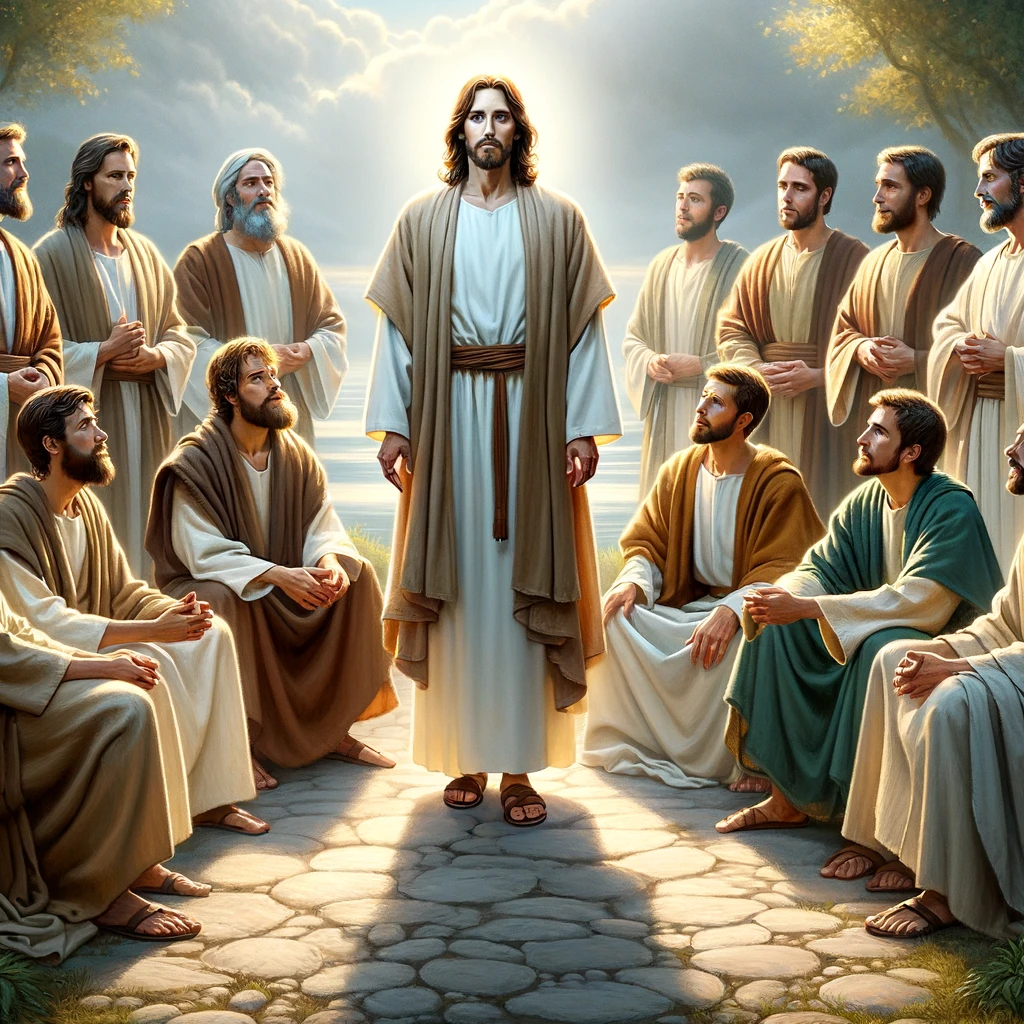
Here is the image depicting the scene where Jesus, standing in the center, empowers his twelve disciples. Each disciple, arrayed in a semi-circle around Jesus, is depicted with a unique personality and demeanor, reflecting the diverse backgrounds and characteristics mentioned in the passage. The tranquil outdoor setting enhances the spiritual atmosphere of the scene.
In Matthew 10, the twelve apostles named by Jesus are:
1. Simon (Peter): Often considered the leader of the apostles, he was a fisherman by trade.
2. Andrew: Brother of Simon Peter, also a fisherman.
3. James (son of Zebedee): Brother of John, and part of Jesus’ inner circle of apostles.
4. John (son of Zebedee): Brother of James, and also part of the inner circle; traditionally believed to be the author of the Gospel of John.
5. Philip: Known for his questioning nature in the Gospels.
6. Bartholomew (also known as Nathanael): Recognized Jesus as the Son of God when they first met.
7. Thomas (Didymus or ‘the Twin’): Best known for his doubt about Jesus’ resurrection until he saw Jesus with his own eyes.
8. Matthew (Levi): A former tax collector who became an apostle, traditionally credited with writing the Gospel of Matthew.
9. James (son of Alphaeus): Often identified as “James the Less” to distinguish him from James, son of Zebedee.
10. Thaddaeus (Lebbaeus or Judas, son of James): Little is known about him, and he is sometimes confused with Judas Iscariot.
11. Simon the Zealot: The “Zealot” designation likely indicates a passionate nature or possibly ties to a specific Jewish political movement.
12. Judas Iscariot: Infamously known for betraying Jesus, leading to his arrest and crucifixion.

Here is an image depicting the metaphor of being ‘wise as serpents and harmless as doves’, symbolizing the balance between inner wisdom and the purity of intention.

The image representing the biblical metaphor “I send you forth as sheep in the midst of wolves: be ye therefore wise as serpents, and harmless as doves” has been created. It symbolically illustrates the balance between being wise and harmless, with sheep among wolves and the inclusion of serpents and doves. The serene setting emphasizes unity and balance in a harmonious way.

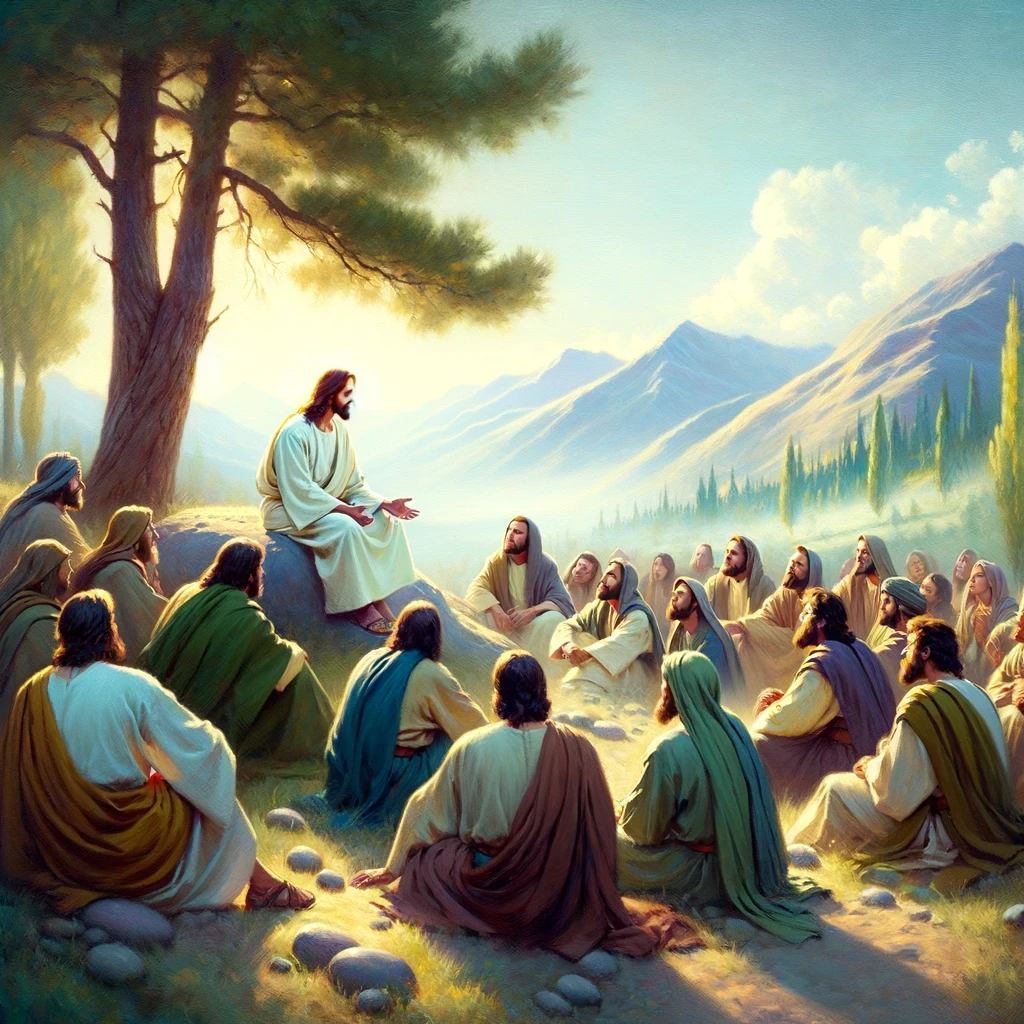
Here is the image depicting the scene of Jesus sitting on a mountain and teaching his disciples.

Here is the image depicting the concept “Blessed are the poor in spirit: for theirs is the kingdom of heaven.” It features a person in a meditative or contemplative pose, surrounded by a peaceful and ethereal landscape, symbolizing their journey towards spiritual fulfillment and inner peace.

Here is the image depicting the concept: “Blessed are they that mourn: for they shall be comforted.” This scene symbolizes the transformative journey of sorrow leading to understanding, compassion, and a comforting connection with all beings.

Here is the image depicting the concept: “Blessed are the meek: for they shall inherit the earth.” This serene representation captures the essence of gentleness and humility, showcasing individuals who embody kindness and empathy in a harmonious natural setting.


Here is a symbolic representation showing individuals on their quest for truth and justice, embodying a deep yearning for a world of fairness and kindness. The image captures their profound sense of fulfillment and inner harmony, surrounded by symbols of righteousness, balance, and peace. The scene is serene and uplifting, highlighting the beauty of their pursuit and the fulfillment they achieve.
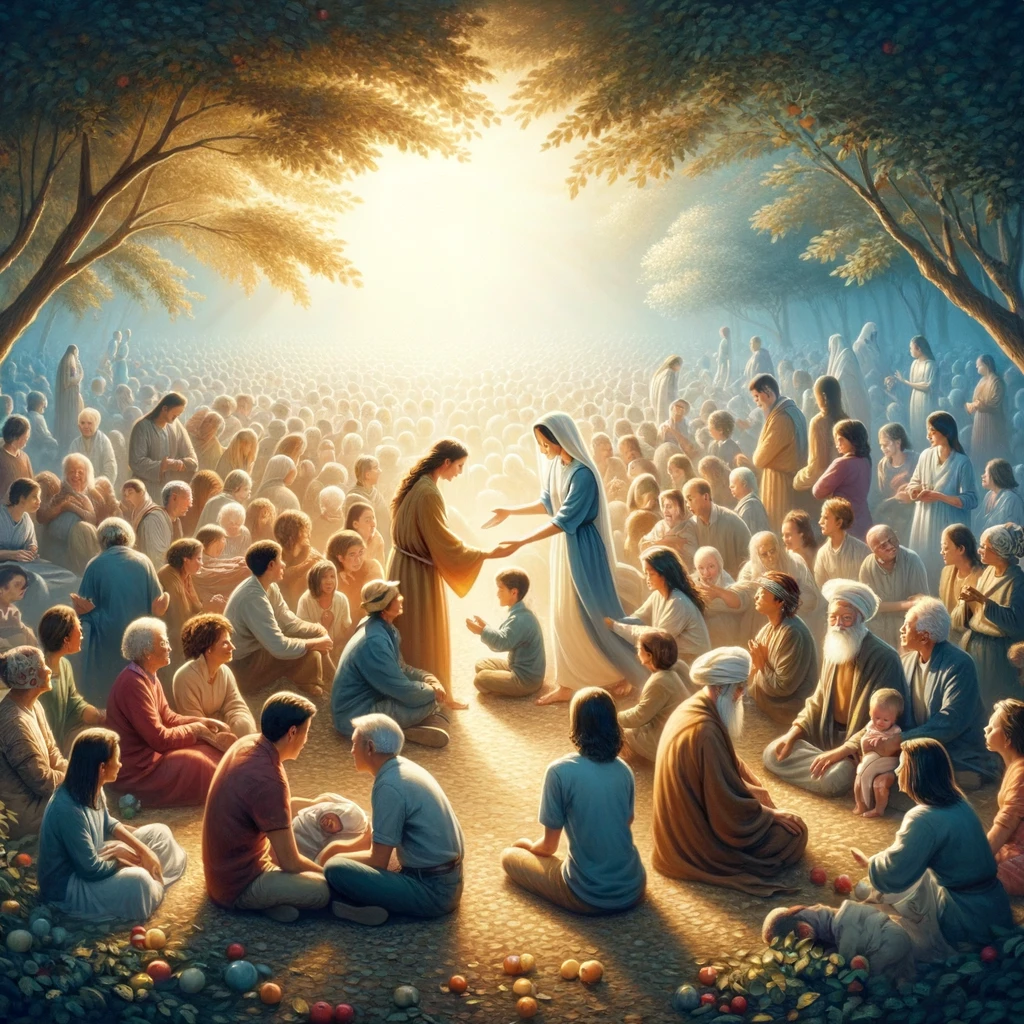
Here is the image depicting the theme of mercy and forgiveness, showcasing people of different ages, genders, and backgrounds engaging in acts of kindness, compassion, and understanding. This scene symbolizes the interconnectedness of all beings and embodies the spirit of the phrase ‘Blessed are the merciful: for they shall obtain mercy’.

Here is an image representing the concept of “Blessed are the pure in heart: for they shall see God.” This artwork depicts individuals with pure intentions and clear consciences, surrounded by a gentle glow, in a state of contemplation and spiritual connection.

Here is the image depicting “Blessed are the peacemakers: for they shall be called the children of God.” It shows a serene and spiritual scene with individuals from various backgrounds coming together in harmony, embodying the essence of peacemakers.

Here’s the image depicting individuals from different walks of life facing adversity with courage and determination, united in their commitment to justice and truth. The scene conveys a powerful message of unity, courage, and the triumph of the human spirit, embodying the essence of ‘Blessed are they which are persecuted for righteousness’ sake: for theirs is the kingdom of heaven’.

Here is the image depicting the concept of “Ye are the light of the world. A city that is set on a hill cannot be hid.”

Here is the image depicting the scene where a lit candle is placed on a candlestick, illuminating a room warmly and symbolizing guidance, enlightenment, and the sharing of inner light and wisdom.
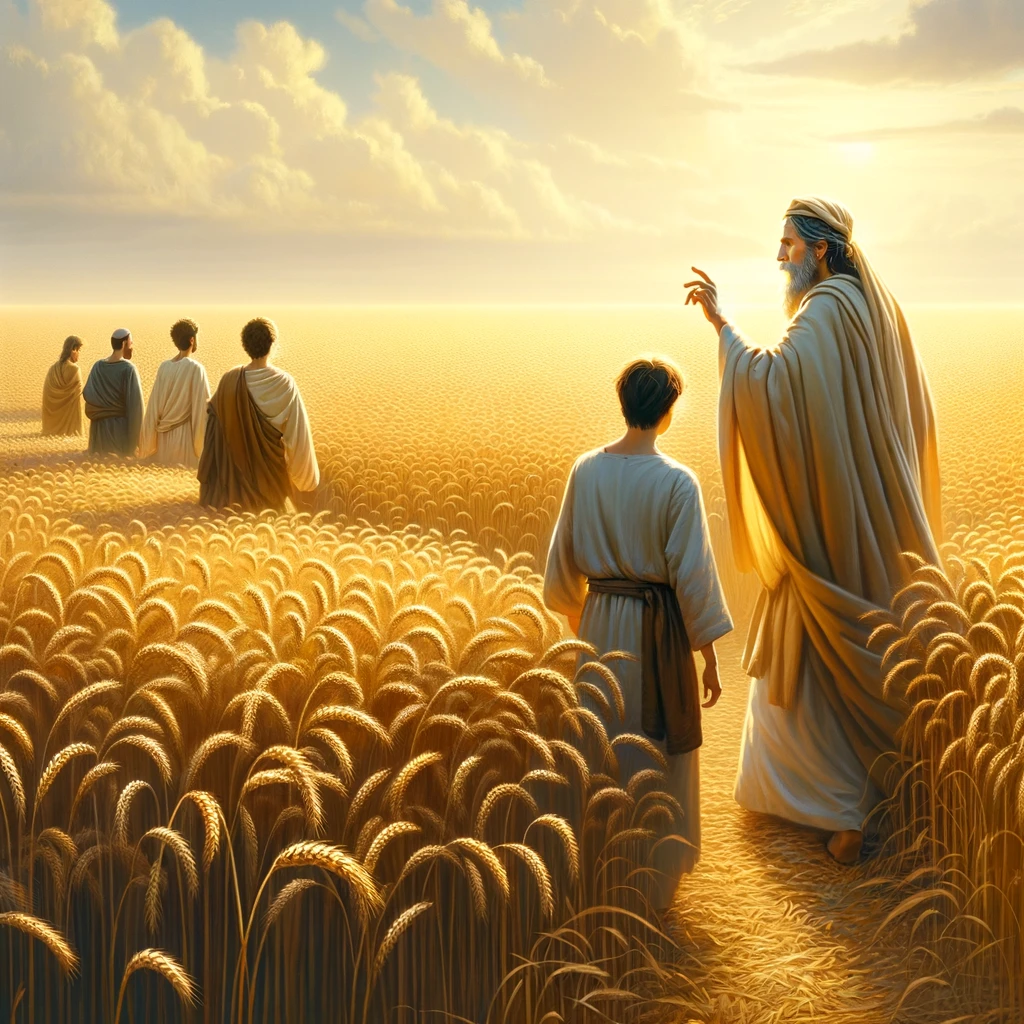
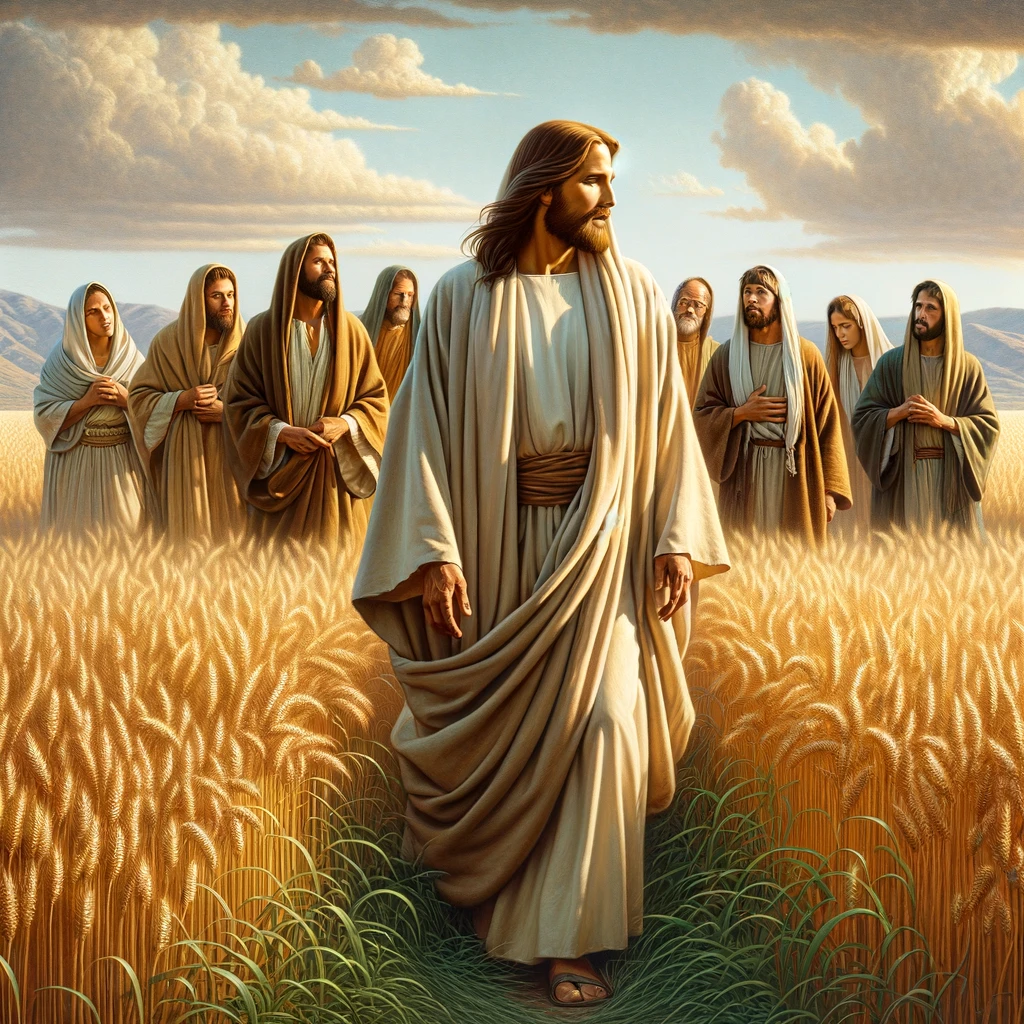
Here is the revised image, created with a more traditional depiction of Jesus walking in grain fields with his students, as described in Matthew 11.
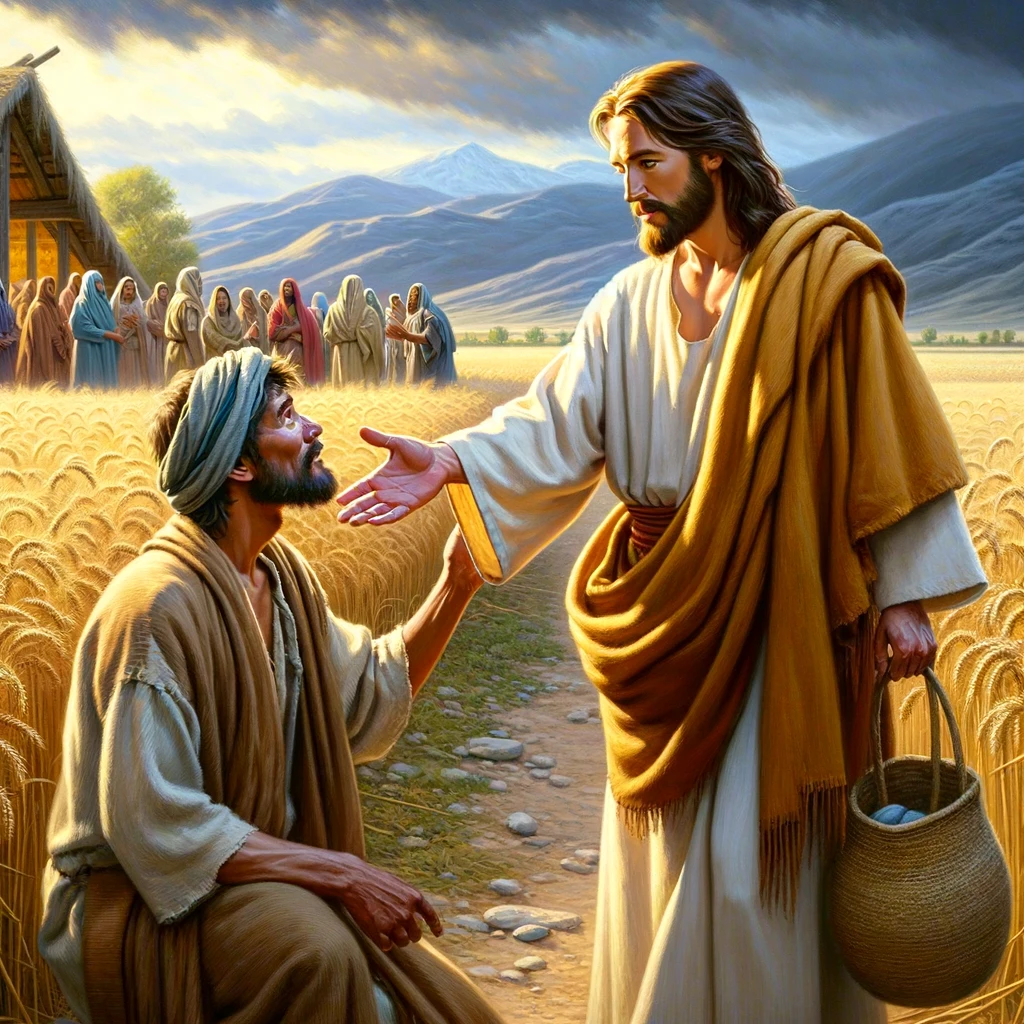
The image has been created, capturing the moment where Jesus moves from the grain fields to a place of worship and encounters a man in need of healing.
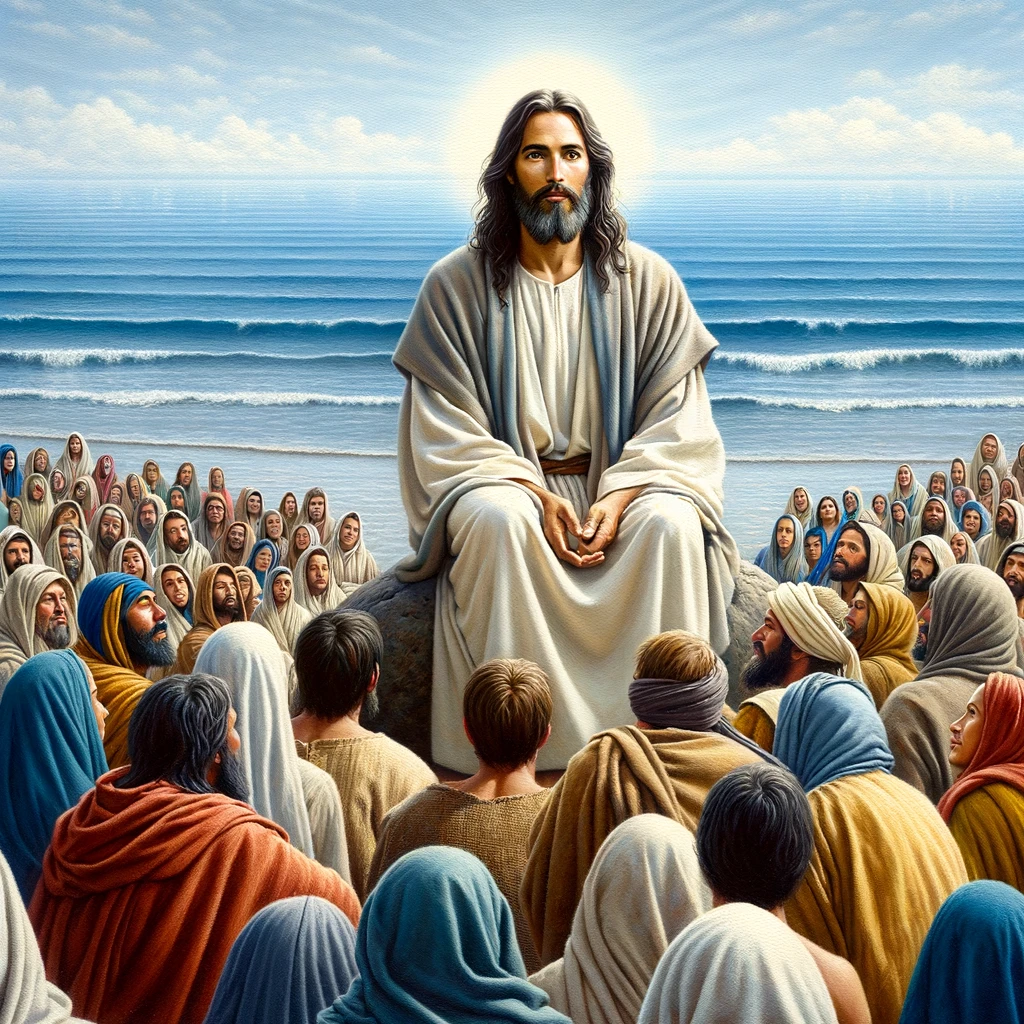
The image has been created, illustrating the scene of a wise teacher by the seaside.

The image has been created, visually interpreting the parable of the Drag-net, symbolizing the diverse experiences of life and the culmination of life’s journey.
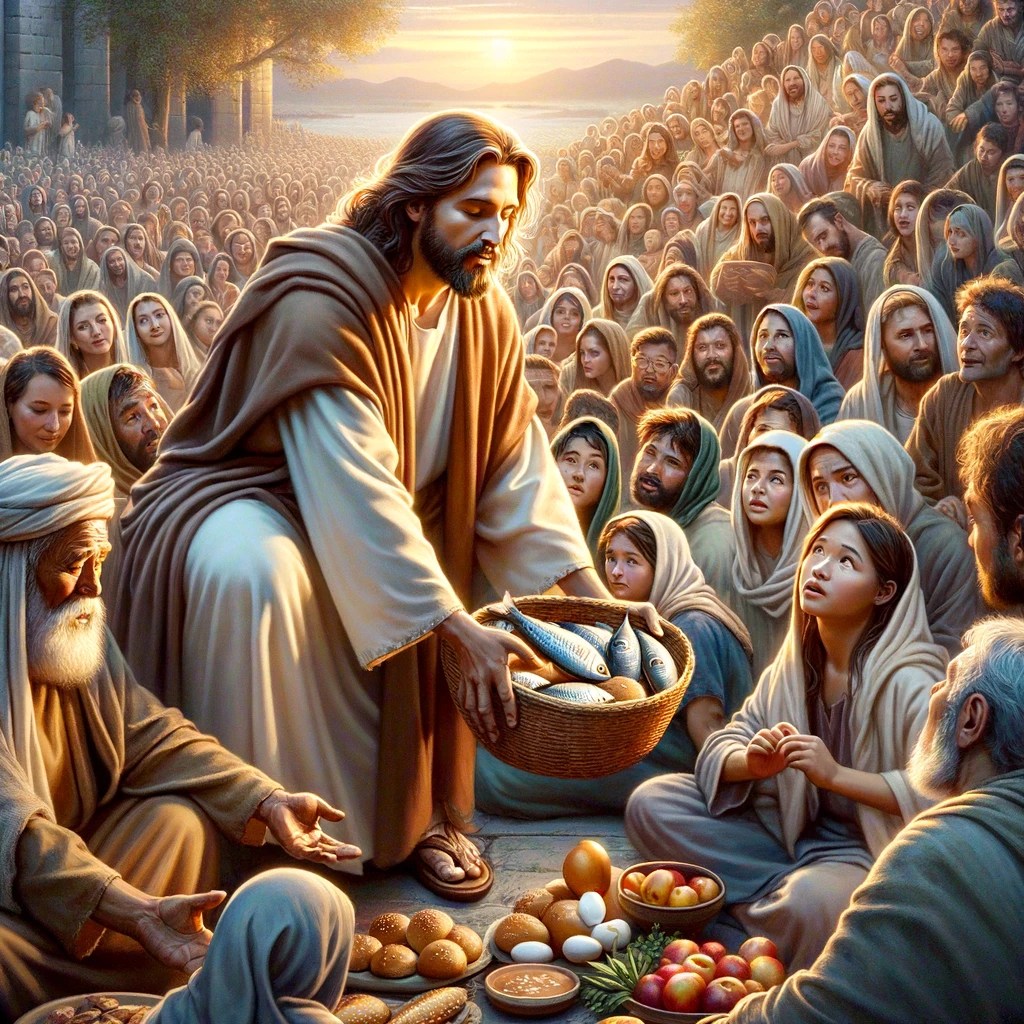
The image has been created, portraying the Miracle of Sharing, where Jesus feeds a multitude with five loaves and two fishes, symbolizing the potential to create abundance and share selflessly.

The image has been created, depicting the scene where the teacher, symbolizing Jesus, demonstrates his mastery over physical limitations by walking on water.

The image has been created, depicting the moment when Peter, a disciple, attempts to walk on water like Jesus but is overcome by doubt, symbolizing the balance between belief and doubt in our spiritual journey.

The image has been created, illustrating the moment when the teacher, symbolizing Jesus, returns to the boat and calms the storm, embodying the peace that comes with faith and higher consciousness.
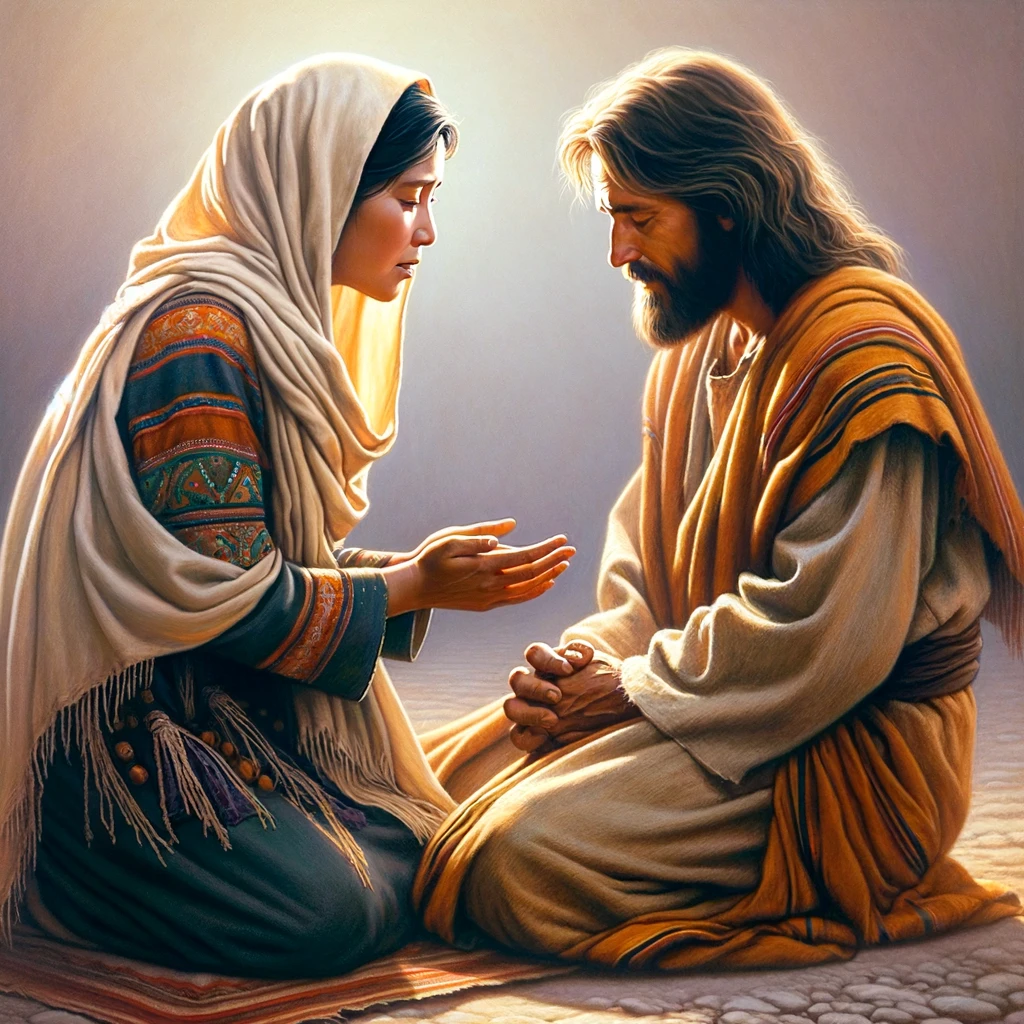
The image has been created, depicting the scene where a foreign woman pleads with Jesus for her daughter’s healing, symbolizing the universal nature of divine love and compassion.
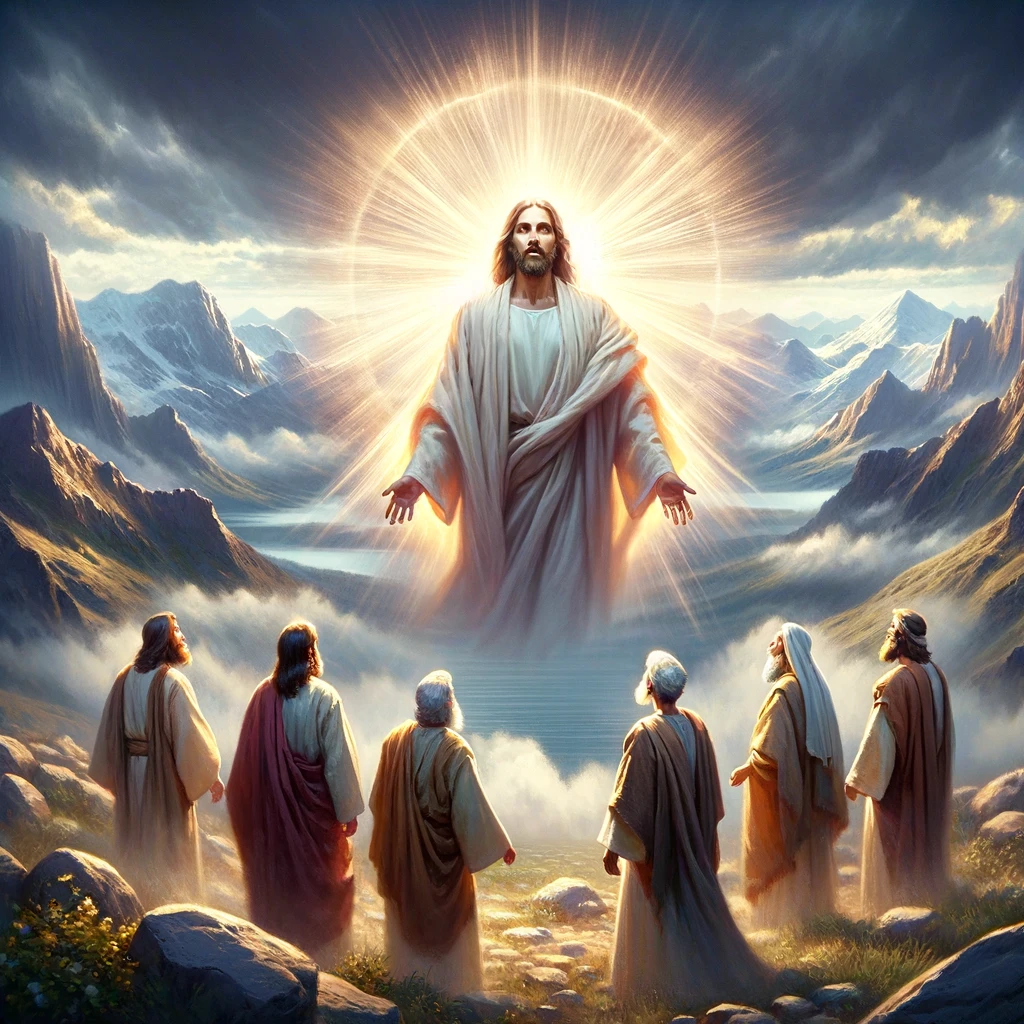
The image has been created, illustrating the moment of transcendence, where Jesus reveals his divine connection and inner wisdom to his disciples on a secluded mountain.
 Modern Mosaic
Leave a comment