
Title: “The Path of Inner Light: A Modern Interpretation of Mark 1”
Introduction: The Dawn of Inner Awareness
The journey begins with the realization that the essence of the Divine resides within each of us. This message, echoing through the ages, calls us to awaken to the presence of the Divine Spirit, our inner guide, leading us towards a life of love, hope, and transformation.
Section 1: The Call to Inner Preparation
In the wilderness of our inner world, we encounter voices calling us to prepare the way for a deeper understanding of our true selves. This preparation involves acknowledging and releasing past errors and embracing a path of spiritual renewal.
Section 2: The Baptism of Inner Awakening
The story of Jesus’ baptism symbolizes our own awakening. As we emerge from the waters of self-reflection, we gain a new perspective – an understanding that we are deeply loved and connected to a greater whole. This revelation fills us with a profound sense of peace and purpose.
Section 3: The Test of Inner Strength
In our personal wilderness, we face challenges and temptations that test our resolve. This period of introspection and struggle is essential for our spiritual growth, teaching us resilience and deepening our connection to the Divine.
Section 4: Spreading the Light Within
Jesus’ teachings in Galilee represent the spreading of inner wisdom. He encourages us to recognize the Divine presence within and to understand that true change begins from within. By embracing this inner light, we can transform our lives and the world around us.
Section 5: Embracing the Divine in Others
The encounters of Jesus with fishermen, a man with an unclean spirit, and a mother-in-law with a fever, symbolize the recognition and healing of the divine spark within others. We are called to see beyond the surface, acknowledging the inherent worth and potential in everyone we meet.
Section 6: The Healing Power of Love
Jesus’ healing of the sick and possessed speaks to the transformative power of love. This love is not just an emotion but a force that transcends our individual selves, bringing healing and wholeness to our lives and the lives of those around us.
Conclusion: The Unending Journey of Love and Enlightenment
Our journey does not end, but continually evolves as we spread love and understanding. Like Jesus, we are called to share the light of our inner truth, bringing hope and healing to a world in need. In embracing this path, we find our true purpose and the fulfillment of our highest potential.
In this reinterpretation, the essence of Mark 1 is transformed into a narrative that emphasizes the divine within and the power of love as a force for personal and collective transformation. It speaks to the heart of spiritual seekers, encouraging them to discover the deep, interconnected nature of all existence and the transformative power of love and self-awareness.
Title: “The Journey Within: A Heartfelt Interpretation of Mark 2”
Introduction: The Light Within Us All
This narrative unfolds to reveal the essence of divine love and inner transformation, highlighting that the sacred resides within each one of us, connecting us all in a web of compassion and understanding.
Section 1: Healing From Within
In a house filled with seekers, a man ill in body but rich in faith is brought forth. This story symbolizes our own inner struggles and the power of faith to heal us. Just as the man was forgiven and healed, we too are invited to release our inner burdens and embrace renewal. It’s a testament to the belief that true healing begins within, a fusion of body, mind, and spirit.
Section 2: Embracing All Aspects of Self
As Jesus walks by the sea and calls Levi, it symbolizes our journey to acknowledge and embrace all parts of ourselves, even those we might hide from the world. This acceptance is the first step towards true transformation.
Section 3: The Feast of Acceptance
The gathering of Jesus with publicans and sinners in Levi’s house represents the universal invitation to the feast of life, regardless of our past. It’s a call to recognize the divine spark within each person and to realize that growth and understanding often come from unexpected places and experiences.
Section 4: Understanding Life’s Rhythms
The discourse on fasting illustrates the ebb and flow of life’s experiences. It teaches us to be present in each moment, understanding that there are times for solemn reflection and times for joyful celebration. This balance is essential for our spiritual journey.
Section 5: The Wisdom of Renewal
The teachings about the new cloth and new wine emphasize the need for continual renewal in our thoughts and beliefs. We are encouraged to let go of outdated patterns and embrace new perspectives that align with our evolving understanding of ourselves and the world.
Section 6: The True Purpose of Sacred Times
In the cornfields, Jesus redefines the essence of sacred times and practices. This teaches us that the true purpose of these rituals is to serve humanity, not to bind us. It’s a call to understand the deeper meaning behind our traditions and to apply them in ways that enhance our lives and those around us.
Conclusion: The Path to Enlightened Living
This reinterpretation of Mark 2 invites us to embark on a journey of self-discovery, healing, and transformation. It’s a reminder that the divine resides within each of us, connecting us in a profound tapestry of love and understanding. By embracing this inner light, we open ourselves to a life of compassion, acceptance, and enlightenment.
In this reinterpretation, Mark 2 becomes a guide for inner transformation and spiritual awakening, emphasizing the power of love, the importance of self-acceptance, and the journey towards enlightenment. It highlights the belief that we are all interconnected parts of a greater whole, each with the potential to live a life imbued with meaning, love, and joy.
Title: “Inner Light: A Journey Through Mark 3”
Introduction: The Awakening Within
This narrative guides us through a series of profound encounters and teachings that emphasize the divine presence within each individual and our interconnectedness with all of life.
Section 1: Healing Beyond Boundaries
As Jesus heals a man with a withered hand, he challenges societal norms, symbolizing the breaking of internal barriers. This act teaches us that true compassion and help know no bounds and that our capacity to heal and love is limitless when we tap into our inner divine nature.
Section 2: The Power of Unity and Love
The gathering of the multitude from various regions around Jesus by the sea signifies the universal nature of his message. It reminds us that we are all connected in our quest for understanding, healing, and love. In this unity, we find strength and the ability to transcend our limitations.
Section 3: The Call of the Apostles
The selection of the twelve apostles represents the awakening of different facets within us. Each apostle symbolizes a unique aspect of our character and potential. Their calling is a metaphor for our own journey to realize our inner strengths and to use them in service of a higher good.
Section 4: Embracing Our Wholeness
The multitude’s overwhelming response and Jesus’ interactions with them reflect our own inner conflicts and the power of acknowledgment and acceptance. This teaches us that embracing every part of ourselves is essential for true transformation.
Section 5: Overcoming Inner Division
The parable about a divided kingdom and house teaches the importance of inner harmony. It’s a call to align our thoughts, emotions, and actions with our highest self, fostering a sense of inner peace and unity.
Section 6: The Infinite Capacity for Forgiveness
Jesus’ teachings about forgiveness highlight the boundless nature of love and compassion. It teaches us that forgiveness is a key to unlocking our hearts and minds, allowing us to experience true freedom and enlightenment.
Section 7: Redefining Kinship
In redefining his family, Jesus illustrates that our true kinship extends beyond physical relationships to include all who embrace love and goodness. It’s a call to expand our understanding of family and community, recognizing our deep connection with all of humanity.
Conclusion: Embodying the Divine Love
This reinterpretation of Mark 3 invites us to explore the depth of our inner being and to recognize the divine spark within ourselves and others. It encourages us to live with love, compassion, and understanding, recognizing that we are all part of a greater, interconnected whole. Through this understanding, we embark on a path of healing, transformation, and enlightenment.
In this modern interpretation, Mark 3 becomes a narrative about discovering and nurturing the divine within, embracing our interconnectedness, and living a life guided by love and compassion. It emphasizes the idea that we are all capable of profound change and that through love, we can overcome any obstacle, find deep fulfillment, and contribute to a more harmonious world.
Title: “Seeds of the Soul: Insights from Mark 4”
Introduction: The Journey Within
This narrative reinterprets the teachings of Mark 4, emphasizing the inner journey of discovering our divine nature, the power of our thoughts and beliefs, and the interconnectedness of all life.
Section 1: The Parable of the Sower – The Seeds of Consciousness
In this teaching, the sower represents our inner self, planting seeds of thought and belief in the soil of our consciousness. The various soils symbolize different states of our mind – open, resistant, cluttered with worries, or receptive. This parable teaches us that the quality and fruition of our lives depend greatly on the state of our inner being and our openness to life’s deeper truths.
Section 2: The Lamp – Illumination from Within
The metaphor of the lamp underscores the importance of not hiding our inner light. It’s a call to recognize our inherent worth and to let our insights and understanding shine forth, guiding ourselves and others. This teaching reminds us that nothing in our psyche stays hidden forever; our thoughts and feelings always find a way to express themselves.
Section 3: The Measure of Perception
This part teaches us that our understanding and awareness shape our experiences. The ‘measure’ we use to perceive and understand life is the same measure that life will use to respond to us. It emphasizes the importance of cultivating a positive, open, and compassionate mindset.
Section 4: The Growing Seed – Unseen Transformation
Here, the kingdom of God is likened to a seed’s journey, which, when nurtured, grows in mysterious and wondrous ways. This symbolizes our spiritual growth, often imperceptible in the moment but profound over time. It teaches us to trust the natural progression of our inner development.
Section 5: The Mustard Seed – Potential in the Small
The mustard seed represents the immense potential in even our smallest thoughts and actions. It reminds us that great things often have humble beginnings and that every thought and action can contribute to significant change.
Section 6: The Storm on the Lake – Calming the Inner Turmoil
The storm on the lake symbolizes the inner turmoil we all face. Jesus’ calming of the storm represents the power of inner peace and faith to bring tranquility to our lives. It’s a powerful metaphor for mastering our fears and doubts, reminding us that within us lies the ability to bring peace to our most turbulent thoughts and emotions.
Conclusion: Embracing the Divine Within
This reinterpretation of Mark 4 invites us to explore the depths of our inner world, to plant and nurture seeds of positive thought, and to recognize the divine light within us. It calls us to cultivate faith and understanding, promising that in doing so, we can weather life’s storms and grow into our fullest potential, connected with all of existence in the grand tapestry of life.
In this reinterpretation, Mark 4 becomes a guide for inner exploration and spiritual growth, emphasizing the power of our thoughts, the importance of self-awareness, and the journey towards realizing our interconnectedness with the universe and the divine within us.
Title: “Healing Light: A Modern Interpretation of Mark 5”
Introduction: The Power of Inner Healing
This narrative reimagines the events of Mark 5, highlighting the themes of inner healing, the transformative power of faith, and the interconnectedness of all beings.
Section 1: The Healing of the Tormented Man
In the land of the Gadarenes, Jesus encounters a man tormented by inner demons, symbolizing our struggles with negative thoughts and emotions. This story teaches us about the power of confronting and releasing our inner turmoil. The man’s healing represents the potential for transformation and liberation through understanding, compassion, and inner work.
Section 2: The Liberation of the Swine
The dramatic incident where the unclean spirits enter the swine, which then plunge into the sea, symbolizes the release of negative energies and their return to the vastness from which they came. This act demonstrates the necessity of confronting and letting go of what no longer serves our highest good.
Section 3: The Woman’s Faith and Healing
The story of the woman with the issue of blood speaks to the power of faith and the belief in our ability to heal. Her action of touching Jesus’ garment represents reaching out with hope and trust, affirming that we have the power within us to initiate our own healing.
Section 4: The Revival of Jairus’ Daughter
The miraculous revival of Jairus’ daughter by Jesus symbolizes the awakening of our dormant potential and the renewal of life. This story encourages us to look beyond appearances, to believe in possibilities, and to awaken the life force within.
Section 5: The Message of Hope and Transformation
Throughout these events, Jesus’ teachings focus on the power of belief, the importance of inner peace, and the interconnectedness of all life. His actions and words serve as a guide for us to find healing, hope, and transformation within ourselves.
Conclusion: Embracing Our Inner Light
This reinterpretation of Mark 5 invites us to recognize the divine light within each of us. It encourages us to embrace our inner power to overcome challenges, to heal ourselves, and to realize our interconnectedness with all of existence. Through faith, compassion, and understanding, we can unlock our potential for profound transformation and find peace.
In this modern interpretation, Mark 5 becomes a narrative of self-discovery, healing, and spiritual awakening. It emphasizes the importance of inner work, the power of faith, and the interconnectedness of all life, encouraging us to embrace our inner light and potential for transformation.
Title: “Journey of the Heart: A Modern Reflection on Mark 6”
Introduction: Embracing Inner Wisdom and Compassion
This reinterpretation of Mark 6 explores the theme of inner transformation through love, compassion, and understanding, encouraging us to find strength and wisdom within.
Section 1: Overcoming Doubt and Embracing Potential
As Jesus returns to Nazareth, his teachings are met with skepticism by those who knew him. This reflects our own inner doubts and how familiar environments can often blind us to our own growth and potential. The key message is to rise above doubt and embrace our transformative journey.
Section 2: Empowering Others Through Inner Strength
The sending out of the apostles symbolizes the empowerment that comes from inner wisdom. It teaches us to share our knowledge and healing with others, relying not on material possessions but on inner strength and understanding.
Section 3: Recognizing the Depth Within Ourselves and Others
Herod’s alarm at hearing of Jesus’ deeds, mistaking him for John the Baptist, reflects our own fears when confronted with deep spiritual truths. It’s a call to recognize and confront the deeper aspects of ourselves and others.
Section 4: The Power of Compassion and Rest
Jesus’ invitation to his disciples to find rest in a desert place underscores the importance of self-care and reflection. It’s a reminder that in our busy lives, we must take time to connect with our inner selves for rejuvenation and clarity.
Section 5: Miraculous Provision – Abundance from Within
The feeding of the five thousand speaks to the miraculous results of faith and the abundance that can be created from seemingly little. It’s a metaphor for the boundless resources available within us when we approach life with faith and compassion.
Section 6: Mastering Life’s Storms through Inner Peace
The scene of Jesus walking on water during a storm symbolizes mastering life’s challenges through inner peace and faith. It encourages us to face our fears and trust in the strength within us to overcome life’s turbulent times.
Conclusion: Healing Through Inner Connection
The chapter concludes with the healing of many, symbolizing the transformative power of love and faith. It’s a reminder that by connecting with our inner divine nature, we can bring about healing and wholeness, not just for ourselves but for those around us.
In this modern interpretation, Mark 6 becomes a narrative about finding inner strength, overcoming doubts, and embracing the journey of self-discovery and transformation. It highlights the importance of inner wisdom, compassion, and the interconnectedness of all life.
Title: “Inner Awakening: Insights from Mark 7”
Introduction: Embracing the Journey Within
This narrative reimagines Mark 7, focusing on the internal journey toward understanding, acceptance, and spiritual awakening.
Section 1: Beyond External Rituals to Inner Purity
As Jesus addresses the criticisms of the Pharisees, he highlights the significance of internal purity over external rituals. This teaches us that true enlightenment and goodness come from within, not from superficial adherence to traditions.
Section 2: The Heart’s Echo – Source of True Self
Jesus’ explanation to his disciples about internal and external purity underscores that our actions and words are reflections of our inner state. It’s a reminder to cultivate a heart filled with love and kindness, as this is what truly shapes our interactions with the world.
Section 3: Embracing Universal Compassion – The Syrophenician Woman’s Faith
The interaction with the Syrophenician woman demonstrates the universality of divine love and the power of faith and persistence. It’s a call to transcend cultural and societal boundaries, recognizing the interconnectedness of all beings.
Section 4: Healing Beyond Words – The Deaf and Mute Man
Jesus’ healing of the deaf and mute man symbolizes the awakening of communication and understanding beyond physical limitations. It’s a metaphor for opening ourselves to deeper truths and expressing our true selves.
Section 5: The Power of Discretion in Sharing Miracles
The request for discretion in sharing the miracles speaks to the sacredness of spiritual experiences. It teaches us to cherish and internalize our transformative moments, allowing them to deeply influence our journey.
Conclusion: The Path of Inner Transformation
This modern interpretation of Mark 7 invites us to explore the depths of our inner being, to recognize the power of our thoughts and emotions, and to understand that true change and purity come from within. It’s a journey of recognizing our divine nature and expressing it through compassion, understanding, and love.
In this reinterpretation, Mark 7 becomes a guide for inner transformation, emphasizing the importance of internal purity, the power of faith and understanding, and the interconnectedness of all life. It encourages us to look within for enlightenment and to express our divine nature in our interactions with the world.
Title: “The Path of Inner Fullness: Insights from Mark 8”
Introduction: Discovering Inner Abundance and Truth
This narrative reinterprets Mark 8, focusing on the journey towards inner awareness, the realization of self, and the understanding of our interconnectedness with the universe.
Section 1: The Miracle of Inner Nourishment
The feeding of the four thousand illustrates the concept of inner fullness and abundance. It teaches us that physical sustenance is secondary to the nourishment of the soul. Through understanding and spiritual insight, we can experience a sense of fullness and satisfaction that transcends physical needs.
Section 2: Seeking Signs and Missing Essence
In the interaction with the Pharisees, Jesus emphasizes the importance of seeking deeper understanding rather than external signs. This mirrors our own tendency to seek validation from the outside world, neglecting the profound truths that lie within us.
Section 3: Awareness Beyond the Physical
The episode of the disciples worrying about bread symbolizes our often misguided focus on material needs, overlooking the deeper spiritual sustenance. It’s a reminder to elevate our consciousness and perceive the world through the lens of spiritual awareness.
Section 4: Healing and Awakening Vision
The healing of the blind man at Bethsaida symbolizes the awakening of inner vision. It’s an allegory for gaining clarity and insight, moving from a state of spiritual blindness to one of clear understanding and perception.
Section 5: The Revelation of True Identity
The exchange between Jesus and Peter about Jesus’ identity represents the journey of discovering our true selves. It’s a call to recognize and embrace our divine nature and purpose, transcending the limitations imposed by external perceptions.
Section 6: Embracing the Journey of Transformation
Jesus’ teachings on taking up the cross and following him symbolize the journey of self-denial, transformation, and the pursuit of higher consciousness. It’s an invitation to let go of ego-driven desires and to embark on a path of spiritual enlightenment.
Conclusion: The Interplay of Inner and Outer Worlds
This modern interpretation of Mark 8 guides us to understand the interplay between our inner and outer worlds. It encourages us to seek spiritual nourishment, to awaken our inner vision, to realize our true self, and to embrace the transformative journey towards enlightenment.
In this reinterpretation, Mark 8 becomes a narrative about inner fulfillment, the awakening of spiritual awareness, and the realization of our interconnectedness with all that is. It emphasizes the importance of inner nourishment, the search for deeper understanding, and the journey towards self-realization and enlightenment.
Title: “Inner Light: A Journey Through Mark 9”
Introduction: Unveiling the Inner Journey
This reinterpretation of Mark 9 emphasizes the internal journey towards enlightenment and understanding, highlighting the themes of self-discovery, healing, and inner transformation.
Section 1: The Transfiguration of Self
The Mount of Transfiguration narrative is reimagined as an allegory for the transformative journey within. It represents the unveiling of one’s highest potential and the realization of the divine spark within. This section emphasizes the importance of recognizing our inner light and the transformative power of self-awareness.
Section 2: Embracing the Essence of Faith
The episode of the healing of the boy with the unclean spirit is interpreted as a metaphor for overcoming inner turmoil and doubt. It teaches the power of faith, not in an external entity, but in the innate ability within each individual to overcome obstacles and find inner peace and healing.
Section 3: The Path to Understanding
Jesus’ discussion with his disciples about his fate symbolizes the journey to understanding life’s deeper truths. It encourages introspection and the acceptance of life’s challenges as pathways to growth and enlightenment.
Section 4: The True Nature of Greatness
The conversation about who is the greatest among the disciples is seen as a lesson in humility and service. It’s a call to recognize that true greatness lies in selflessness, compassion, and serving others, reflecting our interconnectedness with all beings.
Section 5: Inclusive Love and Universal Acceptance
The teaching about receiving a child and the caution against causing harm underscore the principles of unconditional love and acceptance. It’s a reminder of our responsibility to nurture and protect the innocence and purity found within ourselves and others.
Section 6: The Metaphor of Salt and Fire
The final teachings about salt and fire are reinterpreted as symbols of preservation and transformation. Salt represents the enduring essence of our true nature, while fire symbolizes the process of purification and renewal.
Conclusion: Embracing the Inner Journey
This reinterpretation of Mark 9 invites readers to embark on an inner journey of transformation, encouraging self-discovery, the embrace of life’s challenges as opportunities for growth, and the cultivation of a compassionate and service-oriented mindset.
In this modern interpretation, Mark 9 becomes a guide for the inner journey towards self-realization, healing, and understanding. It emphasizes the importance of introspection, the transformative power of challenges, and the cultivation of compassion and humility as pathways to enlightenment and inner peace.
Title: The Journey Within: A Modern Interpretation of Mark 10
1. Embracing Inner Unity (Verses 1-12)
In the region of Judæa, beyond Jordan, Jesus spoke of unity within oneself. He taught that the bond between individuals, like that of marriage, is a reflection of the inner harmony one must strive for. Separation or division, either externally or within oneself, is contrary to the natural order of love and unity.
2. Innocence and Openness (Verses 13-16)
Children were brought to Jesus, symbolizing innocence and openness. He emphasized that embracing life with a child-like openness is key to experiencing the fullness of existence. The pure and accepting nature of children is a model for how one should approach the world and their inner self.
3. The Path of Selflessness (Verses 17-22)
A man inquired about eternal life, representing the quest for deeper meaning. Jesus advised him to let go of material attachments and to embrace a life of selflessness and service. This path, challenging yet rewarding, is essential for true spiritual growth and connection with the divine within.
4. The Illusion of Material Wealth (Verses 23-27)
Jesus spoke of the difficulty for those with riches to enter into a deeper state of awareness. Wealth can create an illusion of separation and ego, hindering the realization that true value lies in spiritual connection and love.
5. Rewards of the Spiritual Path (Verses 28-31)
To his followers, Jesus promised that sacrifices made for the sake of spiritual growth and love will be rewarded manifold. The true riches are found in the connections we forge and the love we share, transcending material gains.
6. Predictions of Transformation (Verses 32-34)
As they journeyed towards Jerusalem, Jesus predicted his own suffering and resurrection. This symbolizes the transformative process of the human spirit – enduring challenges and emerging renewed and enlightened.
7. The Quest for True Greatness (Verses 35-45)
James and John’s request for high positions was addressed by Jesus, teaching that true greatness lies in service and humility. Leadership and authority should be exercised with compassion and for the upliftment of others.
8. The Miracle of Faith (Verses 46-52)
In Jericho, blind Bartimæus sought Jesus’ help. His healing symbolizes the power of faith and belief in transforming one’s life. Spiritual sight, the insight that comes from deep within, is a gift attained through trust and openness to the divine presence within us all.
In this interpretation, each section of Mark 10 is understood as a metaphor for inner spiritual journey and growth, emphasizing love, unity, selflessness, and the transformative power of faith.
Title: The Path to Inner Awakening: A Modern Interpretation of Mark 11
1. The Journey Begins (Sunday)
In a symbolic act, Jesus asks for a colt, representing the journey each person must undertake to discover their inner truth. The colt, never ridden, symbolizes the untapped potential within us. The people’s celebration as Jesus enters Jerusalem represents our own inner welcoming of spiritual awakening.
2. The Unfruitful Fig Tree (Monday)
Jesus’ encounter with the barren fig tree represents the importance of inner productivity and growth. It’s not enough to appear flourishing on the outside; true growth must occur within. The cursing of the tree symbolizes the rejection of superficial appearances in favor of genuine spiritual development.
3. Cleansing the Temple (Monday)
Jesus cleansing the temple symbolizes the need to purify our inner selves. The temple represents the mind and heart, often cluttered with materialistic and superficial desires. By casting out these distractions, we create space for spiritual insight and connectivity.
4. The Power of Faith (Tuesday)
The withered fig tree now symbolizes the power of belief and the importance of faith in the process of inner transformation. Faith in the divine presence within us can move mountains, symbolizing the overcoming of seemingly insurmountable personal challenges.
5. The Necessity of Forgiveness (Tuesday)
Jesus emphasizes forgiveness as essential for spiritual growth. Holding onto grievances binds us to negative energies, while forgiveness frees us and opens the path for divine grace. It’s a call to let go of ego and embrace a higher consciousness of love and understanding.
6. Questioning Authority (Tuesday)
The challenges Jesus faces from the religious authorities symbolize the internal conflict between our higher selves and our ego-based fears and doubts. Acknowledging the divine authority within us is key to overcoming these internal struggles and embracing our true spiritual nature.
In this interpretation, each event in Mark 11 is a metaphor for inner spiritual awakening. The narrative guides us to recognize the divine within, to cleanse ourselves of superficial desires, to embrace faith and forgiveness, and to acknowledge the higher authority of our spiritual selves. The core message is one of love, hope, and transformation, emphasizing that we are all divinely connected and capable of profound inner growth and enlightenment.
Title: The Inner Path to Enlightenment: Insights from Mark 12
1. Parable of the Vineyard (Verses 1-12)
This parable symbolizes our life journey. The vineyard represents our world, and we are the caretakers. The story teaches that we must nurture and care for our inner selves and the world around us. The rejection of the owner’s son symbolizes our often misguided rejection of our true self and potential. The message is to embrace our inner divinity and live in harmony with our true purpose.
2. Giving What is Due (Verses 13-17)
Jesus’ response about giving to Caesar what belongs to Caesar, and to God what belongs to God, is a profound statement on balance. It’s about recognizing and fulfilling our earthly responsibilities while also nurturing our spiritual selves. Our true allegiance is to the divine within us, which transcends worldly structures.
3. Understanding the Eternal (Verses 18-27)
The Sadducees’ question about resurrection and Jesus’ response highlight the concept of eternal life beyond physical existence. It teaches that life transcends physical boundaries and that our true essence is spiritual and eternal. This passage encourages us to look beyond the material world and understand our eternal, spiritual nature.
4. The Greatest Commandments (Verses 28-34)
The commandments to love God and our neighbors as ourselves emphasize the interconnectedness of all beings. It is a call to recognize the divine spark within each person and to treat all with love and respect. This teaching is central to personal transformation and spiritual awakening.
5. Questioning the Messiah (Verses 35-37)
Jesus’ discussion about the Messiah challenges traditional views and encourages a deeper understanding of spiritual truths. It’s an invitation to explore beyond literal interpretations and understand the profound, mystical aspects of spiritual teachings.
6. A Warning Against Superficiality (Verses 38-40)
Jesus criticizes the scribes for their superficiality and hypocrisy, emphasizing the importance of genuine spiritual practice over outward appearances. This passage warns against the ego’s traps and the importance of authentic spiritual growth.
7. The Widow’s Offering (Verses 41-44)
The widow’s offering illustrates the virtue of giving from the heart. Despite her poverty, her contribution is valued more because it is given wholeheartedly. This teaches the importance of intention and sincerity in our actions, highlighting that true generosity comes from selflessness and love.
In this reinterpretation, Mark 12 is a guide for inner growth and spiritual enlightenment. It combines the teachings of Jesus with insights from modern spiritual thinkers to emphasize love, hope, transformation, and the recognition of the divine within. Each section is a step on the path to understanding our true nature and our connection to the universe, encouraging us to live with love, compassion, and authenticity.
Title: The Journey Within: A Modern Interpretation of Mark 13
1. Impermanence of the Material World (Verses 1-2)
This passage teaches us about the transient nature of the physical world. The destruction of the temple symbolizes the impermanence of material things. It invites us to focus on the eternal, spiritual aspects of our existence, reminding us that true stability and peace are found within.
2. The Awakening (Verses 3-8)
The warnings of wars, natural disasters, and societal upheavals serve as metaphors for inner turmoil and the chaos that often precedes spiritual awakening. These ‘birth pangs’ of new consciousness remind us that personal and collective growth often comes through challenges, urging us to remain steadfast and hopeful in times of change.
3. Perseverance and Faith (Verses 9-13)
Facing adversity for one’s beliefs is a call to stand firm in our truths. This section symbolizes the inner battles we face in our journey towards enlightenment. It encourages resilience, faith, and the understanding that enduring these trials is part of our spiritual evolution.
4. The Abomination of Desolation (Verses 14-23)
This cryptic prophecy can be seen as a warning against losing oneself to negative influences and false beliefs. The ‘abomination’ represents the corruption of our true nature by ego and ignorance. It’s a call to remain vigilant and true to our inner wisdom, avoiding deception by false prophets of materialism and fear.
5. The Cosmic Shift (Verses 24-27)
These verses describe cosmic upheavals, symbolizing profound inner transformations. This apocalyptic imagery reflects the dismantling of old paradigms and the birth of a new consciousness. It’s a reminder of the power of transformative growth and the emergence of a higher self.
6. The Lesson of the Fig Tree (Verses 28-31)
The fig tree metaphor teaches awareness and recognition of the signs of inner change. Just as one can predict summer by the budding of leaves, we can understand our spiritual progress by observing changes within ourselves. It’s a lesson in mindfulness and attuning to the rhythms of our spiritual journey.
7. The Mystery of Time (Verses 32-37)
The uncertainty of the ‘end times’ symbolizes the unpredictable nature of our spiritual journey. It teaches us to live in a state of readiness, embracing each moment with presence and awareness. The call to watchfulness is a reminder to remain conscious and prepared for transformative experiences in our lives.
In this interpretation, Mark 13 becomes a guide for inner transformation, symbolically portraying the journey of awakening and spiritual growth. It combines ancient wisdom with modern psychological and spiritual insights, emphasizing the themes of impermanence, inner turmoil, resilience, spiritual vigilance, transformation, mindfulness, and the mystery of the spiritual journey. This chapter encourages us to embrace change, stay true to our inner wisdom, and remain open to the continual process of self-discovery and enlightenment.
Title: The Path to Transformation: A Modern Reading of Mark 14
1. Preparing for Change (Verses 1-2)
The chief priests’ and scribes’ plotting symbolizes the resistance we often encounter, both internally and externally, when significant change is imminent. This reminds us that transformation is often preceded by challenges.
2. Anointing of the Spirit (Verses 3-9)
The anointing of Jesus with precious ointment signifies the importance of honoring our inner divinity. It emphasizes the value of spiritual enrichment over material wealth, highlighting the act of selfless giving as a means of connecting with the divine within us.
3. Betrayal of Inner Truth (Verses 10-11)
Judas’s betrayal represents the internal conflict we face when we are tempted to stray from our true path. It’s a reminder to stay aligned with our highest selves, despite external influences or the allure of temporary gains.
4. The Last Supper: Embracing Unity (Verses 12-26)
The Last Supper symbolizes the unity of all beings and the interconnection of life. Breaking bread together represents sharing and community, while the wine symbolizes the shared human experience. This passage teaches the importance of togetherness and the recognition of our collective journey.
5. Gethsemane: Embracing Inner Struggles (Verses 32-42)
Jesus’s anguish in the garden symbolizes the inner turmoil we face during our darkest moments. His acceptance of fate signifies the surrender to the higher self, embracing life’s trials as opportunities for growth and transformation.
6. Betrayal and Abandonment (Verses 43-52)
The betrayal by Judas and the disciples’ abandonment reflect the challenges in remaining true to our convictions when faced with fear and uncertainty. It’s a call to stand firm in our beliefs, even when it means standing alone.
7. Trial and Denial: Facing Inner Judgments (Verses 53-72)
Jesus’s trial and Peter’s denial represent the inner judgments we face in our spiritual journey. It underscores the importance of integrity and the struggle to uphold our inner truth in the face of societal pressures and self-doubt.
In this modern interpretation of Mark 14, the narrative transcends its historical context to offer insights into personal and spiritual growth. It portrays the journey of self-discovery, embracing our inner divinity, overcoming internal conflicts, the importance of community and unity, facing our darkest fears, standing firm in our beliefs, and confronting our inner judgments. This chapter becomes a metaphorical guide on the path to enlightenment, emphasizing love, hope, transformation, and the recognition of the divine within us and in all of existence. It’s a reminder that every challenge is an opportunity for growth and that embracing our journey with love and compassion leads to true fulfillment and enlightenment.
Title: The Journey Within: A Contemporary Interpretation of Mark 15
1. The Dawn of Transformation (Verses 1-5)
As Jesus stands before Pilate, facing accusations, his silence symbolizes the inner strength and calm one must maintain in the face of life’s trials. This teaches us about the power of inner peace in overcoming external chaos.
2. Choosing the Inner Path (Verses 6-15)
The release of Barabbas over Jesus illustrates the frequent choice between the easy, worldly path (Barabbas) and the challenging, spiritual path (Jesus). It’s a metaphor for the internal conflicts we face when making life-altering decisions.
3. Embracing the Inner Trials (Verses 16-20)
The mocking and abuse of Jesus represent the inner struggles and ‘crucifixion’ of the ego that one undergoes during profound personal transformation. It’s a reminder that true growth often comes from facing and overcoming our deepest fears and pains.
4. The Burden of Transformation (Verses 21-22)
Simon carrying the cross signifies the burdens we must bear on our journey to self-discovery. It emphasizes that although the path to enlightenment is challenging, it’s a necessary part of spiritual growth.
5. Rejecting Temporary Comforts (Verse 23)
Jesus refusing the wine mixed with myrrh, a pain reliever, symbolizes the rejection of temporary comforts to face the necessary pain of growth and transformation head-on.
6. The Ultimate Sacrifice (Verses 24-28)
The crucifixion of Jesus represents the ultimate sacrifice of the ego. It’s a powerful metaphor for the death of one’s lower self to give birth to a higher, more spiritually aligned self.
7. The Darkness Before Dawn (Verses 33-37)
The darkness covering the land reflects the dark night of the soul, a period of profound inner turmoil and confusion that precedes a significant spiritual awakening.
8. Tearing Down Old Beliefs (Verse 38)
The tearing of the temple veil symbolizes the breaking down of old beliefs and barriers, allowing access to the sacred – our inner divine nature.
9. Recognition of the Divine Within (Verse 39)
The centurion’s realization that Jesus was the Son of God illustrates the moment of enlightenment when one recognizes the divine nature within themselves and others.
10. The Role of the Devoted (Verses 40-41)
The women who witnessed Jesus’s crucifixion symbolize unwavering faith and devotion. It highlights the importance of support and love in our spiritual journey.
11. Honoring the Inner Journey (Verses 42-47)
Joseph of Arimathea’s care for Jesus’s body represents the reverence and care we must give to our inner selves during times of transformation and renewal.
In this reinterpretation of Mark 15, the narrative transcends its historical context to become a guide for personal growth and spiritual enlightenment. It symbolizes the journey within, from confronting and overcoming internal challenges to the ultimate sacrifice of the ego for spiritual rebirth. Each event and character in the chapter serves as a metaphor for the various stages and experiences one encounters on the path to discovering the divine within and achieving a state of higher consciousness and unity with all. This chapter is a reminder that the journey of transformation is challenging yet profoundly rewarding, leading to a deeper understanding of love, hope, and our interconnectedness with all of existence.
Title: The Awakening: A Modern Interpretation of Mark 16
1. The Dawn of Enlightenment (Verses 1-4)
As the women approach the tomb, their journey symbolizes the human quest for understanding and truth. The rolled-away stone represents the removal of barriers to spiritual enlightenment and the discovery of inner wisdom.
2. Revelation of the Inner Self (Verses 5-7)
The encounter with the figure in the tomb signifies the revelation of our higher self and the realization of our own spiritual resurrection. It’s a metaphor for discovering the divine aspect within us.
3. The Spread of Awakening (Verse 8)
The women’s initial silence and amazement reflect our often overwhelmed reaction to newfound spiritual insights. It emphasizes the profound impact of spiritual awakening on our worldview.
4. The Power of Inner Transformation (Verse 9-11)
Mary Magdalene’s encounter with the risen Jesus and her subsequent disbelief by others illustrate the personal nature of spiritual experiences and the skepticism they often face from those still bound by traditional thinking.
5. Broadening Perspectives (Verses 12-13)
The appearance of Jesus to others in different forms symbolizes the diverse ways in which enlightenment and spiritual understanding can manifest in our lives.
6. Embracing Belief and Understanding (Verse 14)
Jesus confronting the unbelief of his disciples represents the challenge of accepting profound spiritual truths and the inner struggle between doubt and faith.
7. The Call to Spiritual Action (Verses 15-18)
The directive to spread the message worldwide signifies the universal nature of spiritual truth. The promised signs symbolize the transformative effects of spiritual practice and belief, such as healing and profound communication (new tongues).
8. Ascension to Higher Consciousness (Verse 19)
Jesus’s ascension is a powerful metaphor for rising to a higher state of consciousness and the ultimate union with the divine source.
9. Living the Awakened Life (Verse 20)
The disciples’ preaching and the accompanying signs represent living an awakened life, where one’s actions and words are aligned with divine wisdom and contribute to the collective spiritual growth of humanity.
In this reinterpretation of Mark 16, the narrative transcends its historical setting to become a timeless guide for spiritual awakening and growth. Each event symbolizes a step in the journey toward inner enlightenment, from confronting and removing barriers to higher understanding to realizing and embracing the divine within. The chapter encourages us to embark on this transformative journey, assuring us that the path, though challenging, leads to a profound and fulfilling union with the divine, a state where love, hope, and interconnectedness with all beings become the foundation of our existence. This chapter reminds us that spiritual awakening is not just a personal experience but a call to action to share our understanding and help others on their paths, fostering a world united in compassion, wisdom, and transcendent love.
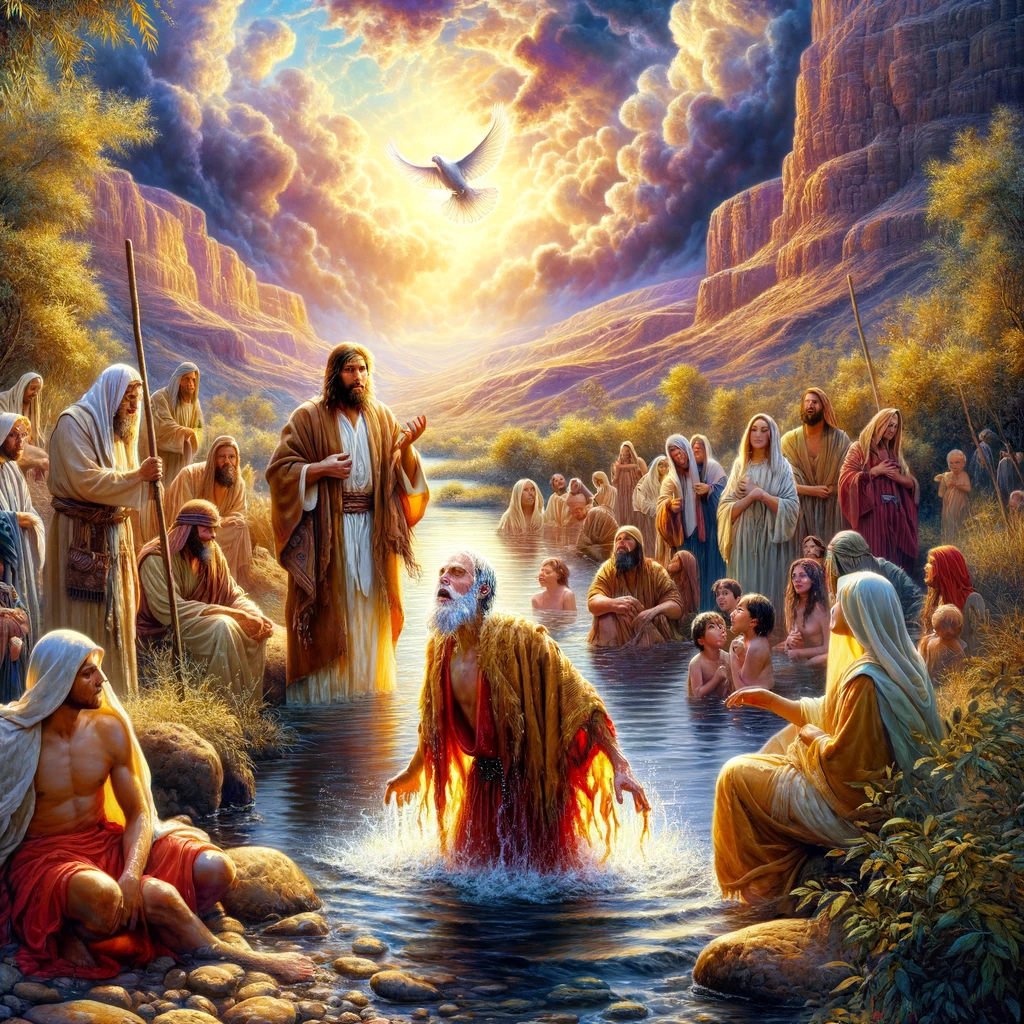
The image vividly depicts the scene of John the Baptist’s ministry in the wilderness by the River Jordan, including the moment of Jesus’ baptism and the spiritual transformation it signifies.

Here is the image depicting the scene where the Spirit guides Jesus into the wilderness, where he stays for forty days, faces temptations, and is among wild beasts, while angels minister to him.

The image illustrates the moment by the Sea of Galilee where Jesus encounters Simon and Andrew casting their net into the sea, and invites them to become ‘fishers of men’.
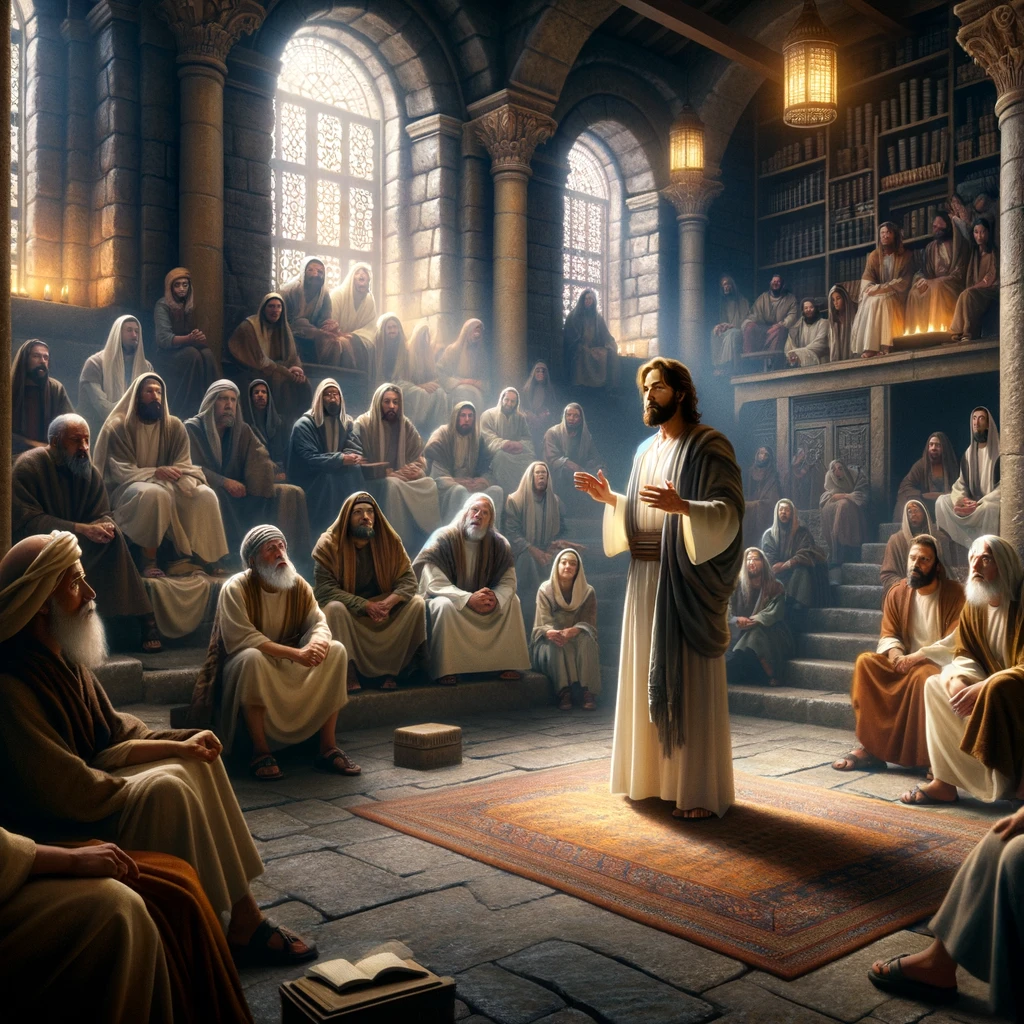
The image portrays the scene inside a synagogue in Capernaum, capturing the moment of Jesus’ teaching and the profound impact it had on the audience, including the man with an unclean spirit.

The image captures a serene and contemplative scene set in the early morning, depicting Jesus in a solitary place engaged in prayer, with Simon and others quietly approaching in the background.
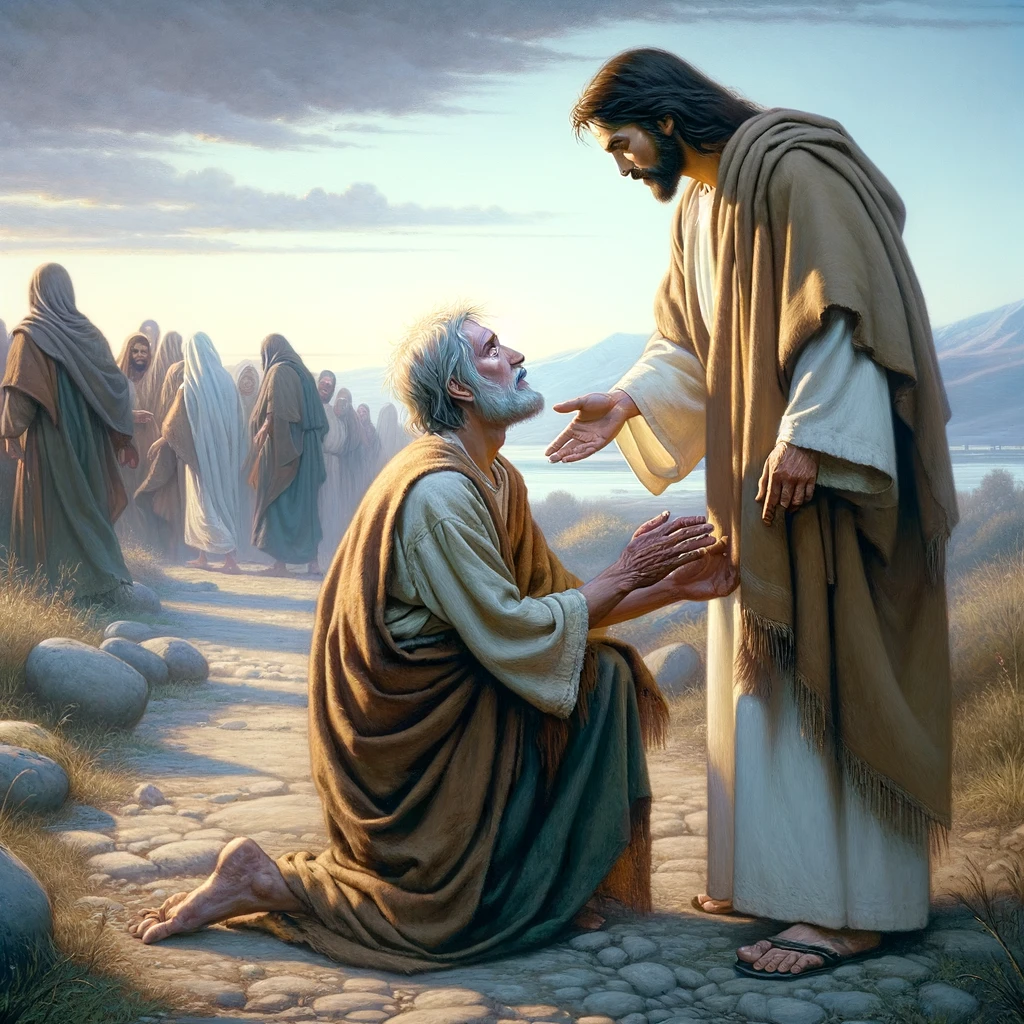
The image depicts a moving scene where Jesus, full of compassion, heals a kneeling leper, capturing the moment of their profound interaction.
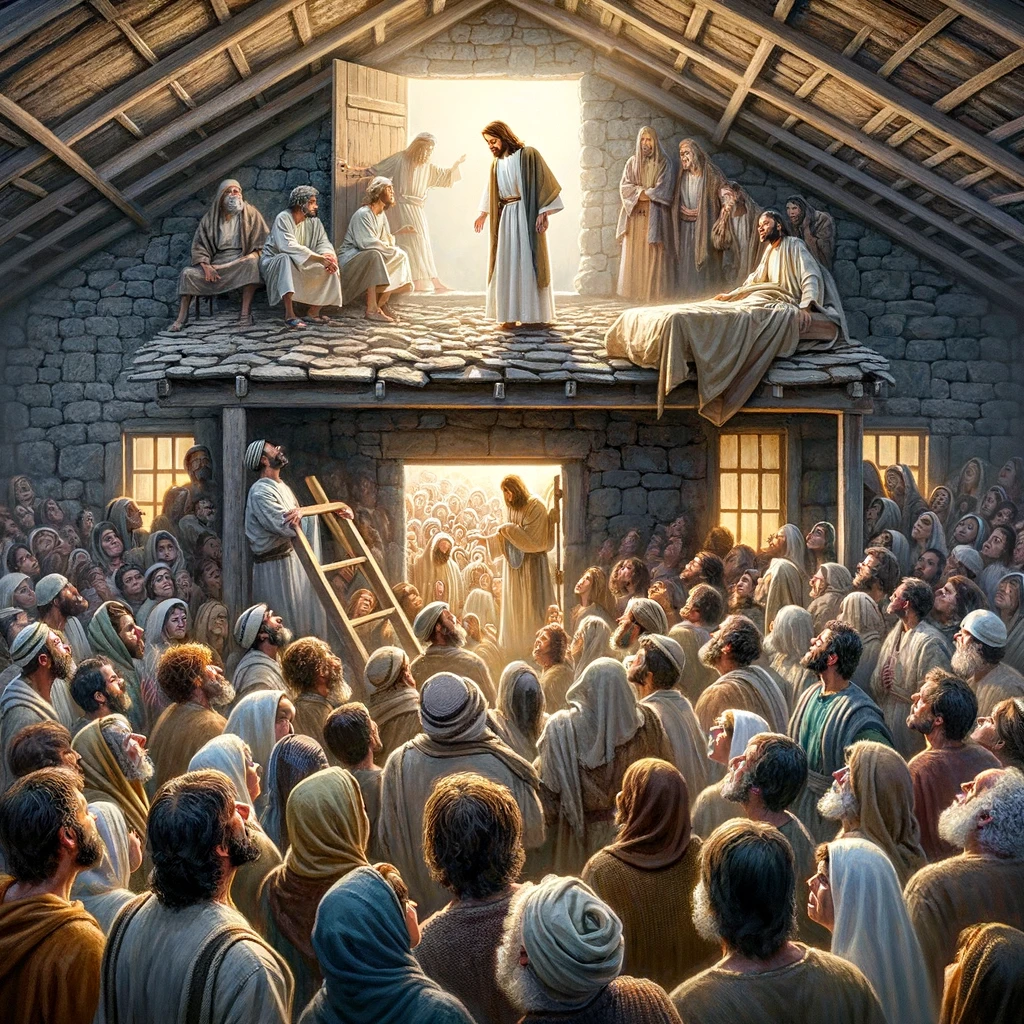
The image depicts the scene inside a modest house in Capernaum, crowded with people eager to hear Jesus, and the moment when a person sick of palsy is being lowered through the roof to reach him.

The image captures the tranquil scene of Jesus and his disciples walking through the cornfields on the sabbath, with the disciples plucking ears of corn and the Pharisees observing and questioning this action.
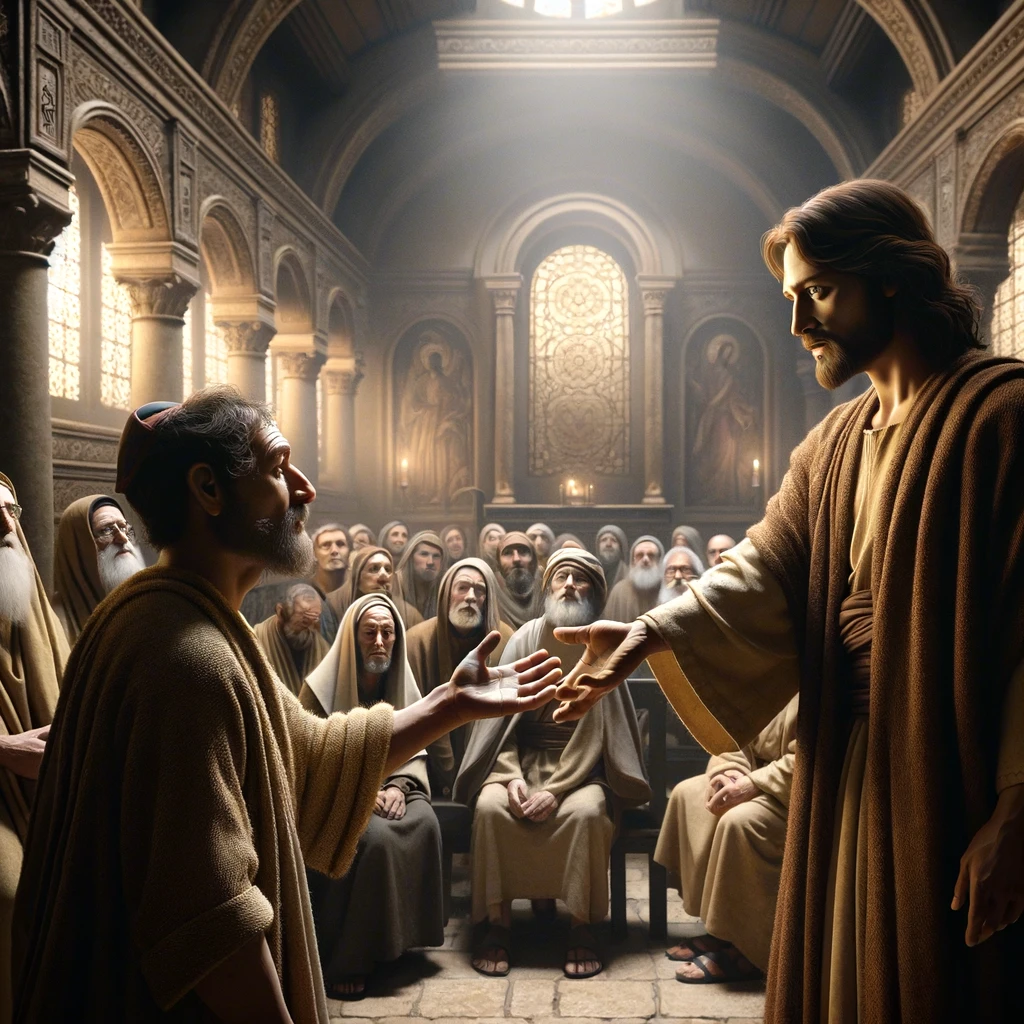
The image depicts a poignant scene inside a synagogue, where Jesus, standing with compassion and determination, heals a man with a withered hand, amid the watchful and skeptical eyes of the Pharisees.

The image portrays a powerful scene on a mountain where Jesus, with a presence both commanding and compassionate, is surrounded by the twelve apostles, each depicted with expressions reflecting their unique personalities and roles.
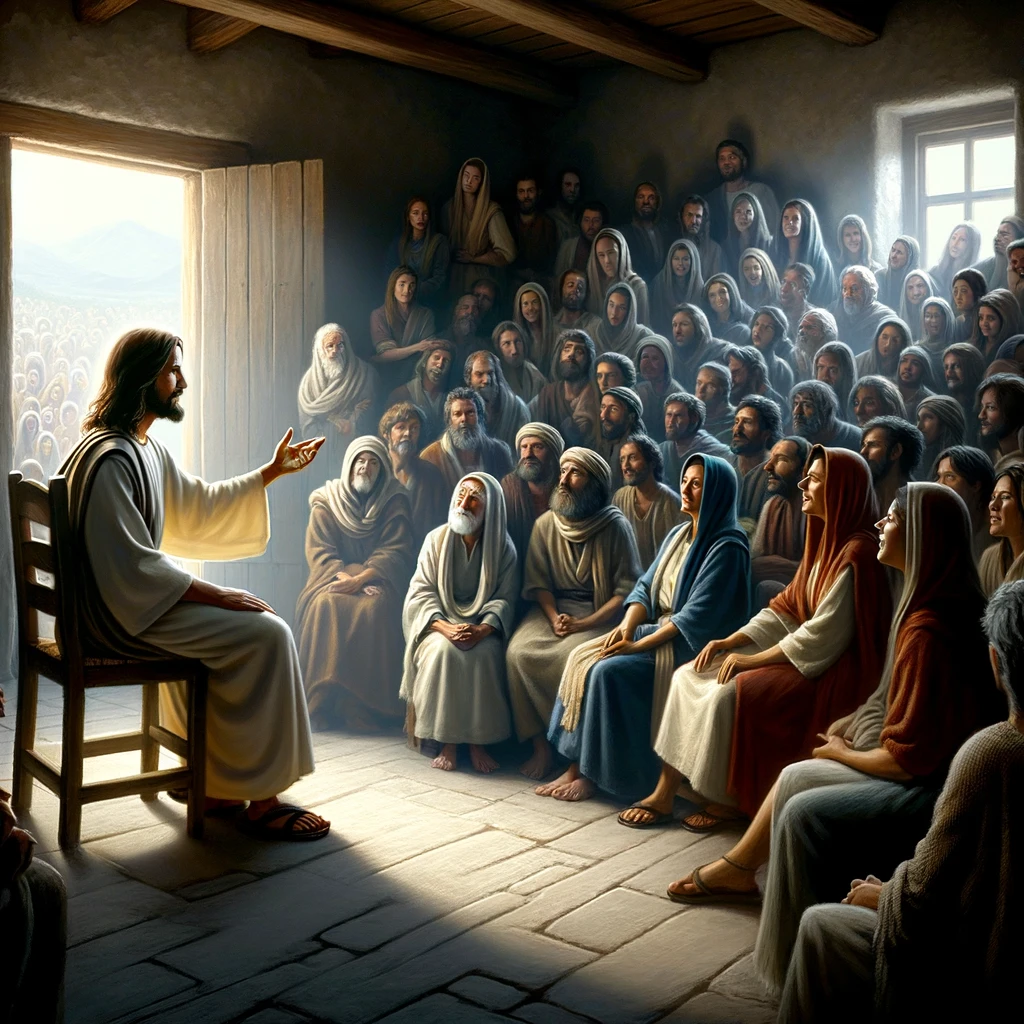
The image captures the moment where Jesus, surrounded by a diverse group of people, redefines the concept of kinship, with his mother and brethren standing outside, looking towards him with anticipation.
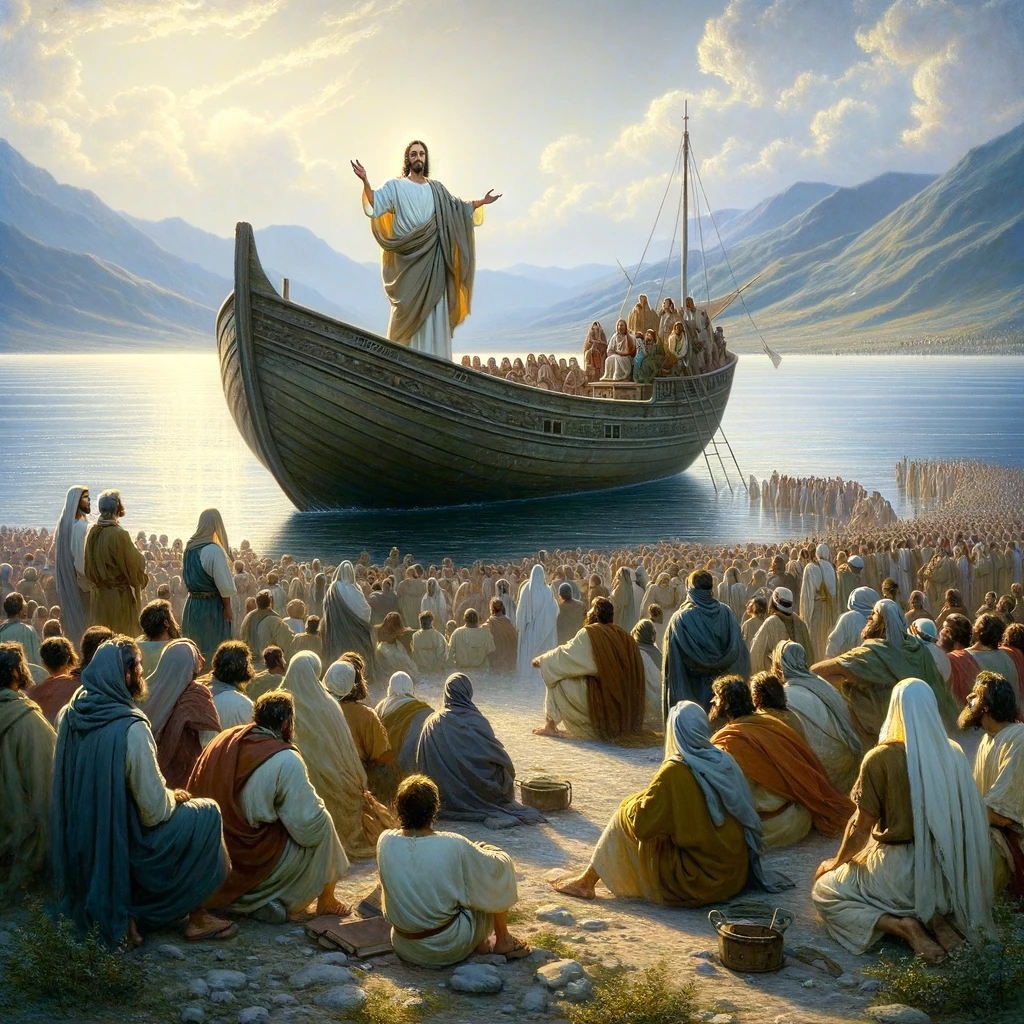
The image portrays a moment of spiritual teaching by the sea, with Jesus standing on a large boat close to the shore, addressing a vast and diverse crowd gathered on the land.
The image portrays the Parable of the Mustard Seed, depicting a grand mustard plant that has grown from a tiny seed, with birds finding shelter under its expansive branches, set against a serene landscape.

The image captures the dramatic moment of a storm on the lake, with Jesus depicted sleeping peacefully amidst the chaos on a boat, highlighting the contrast between the fear of the disciples and his serene faith.
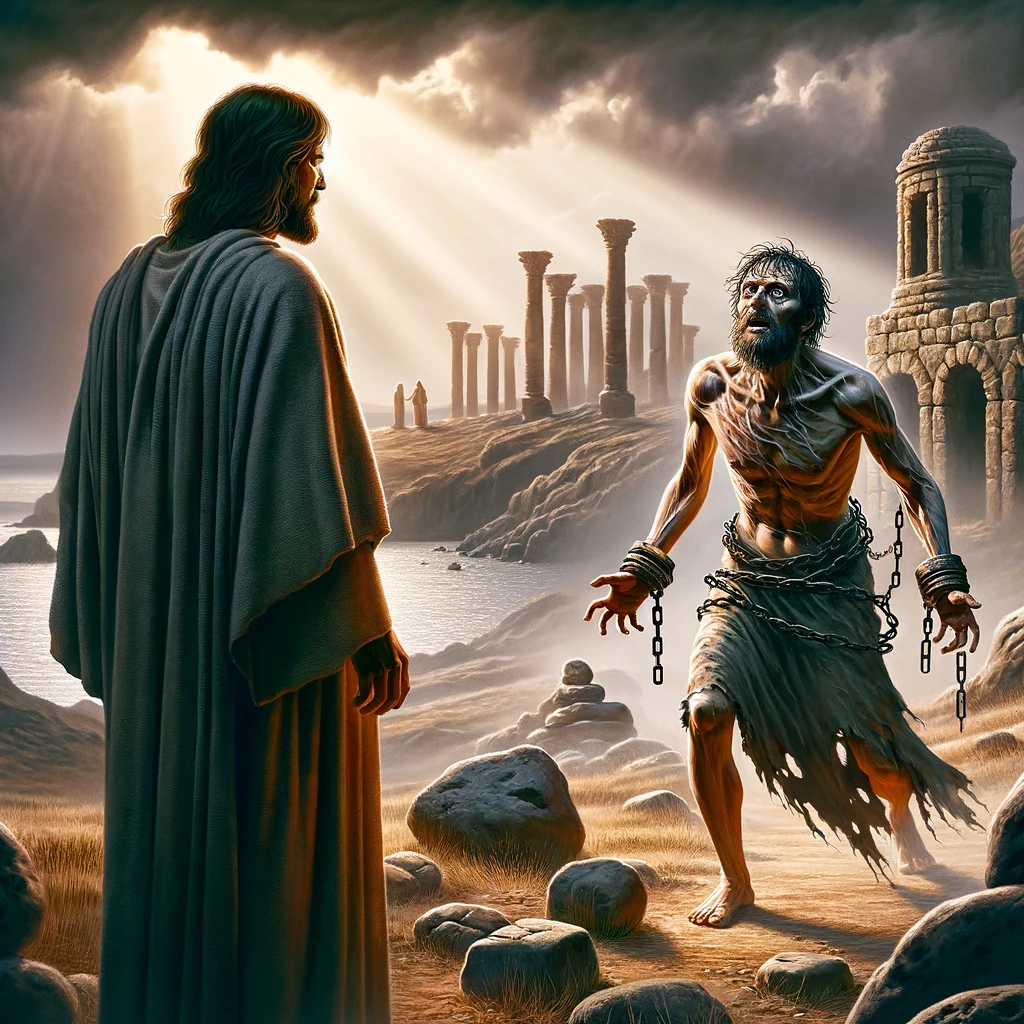
The image depicts the dramatic encounter between Jesus and the man possessed by an unclean spirit in the country of the Gadarenes, set against a rugged landscape near the sea and ancient tombs. The stark contrast between the man’s tormented state and Jesus’ serene demeanor is powerfully captured.
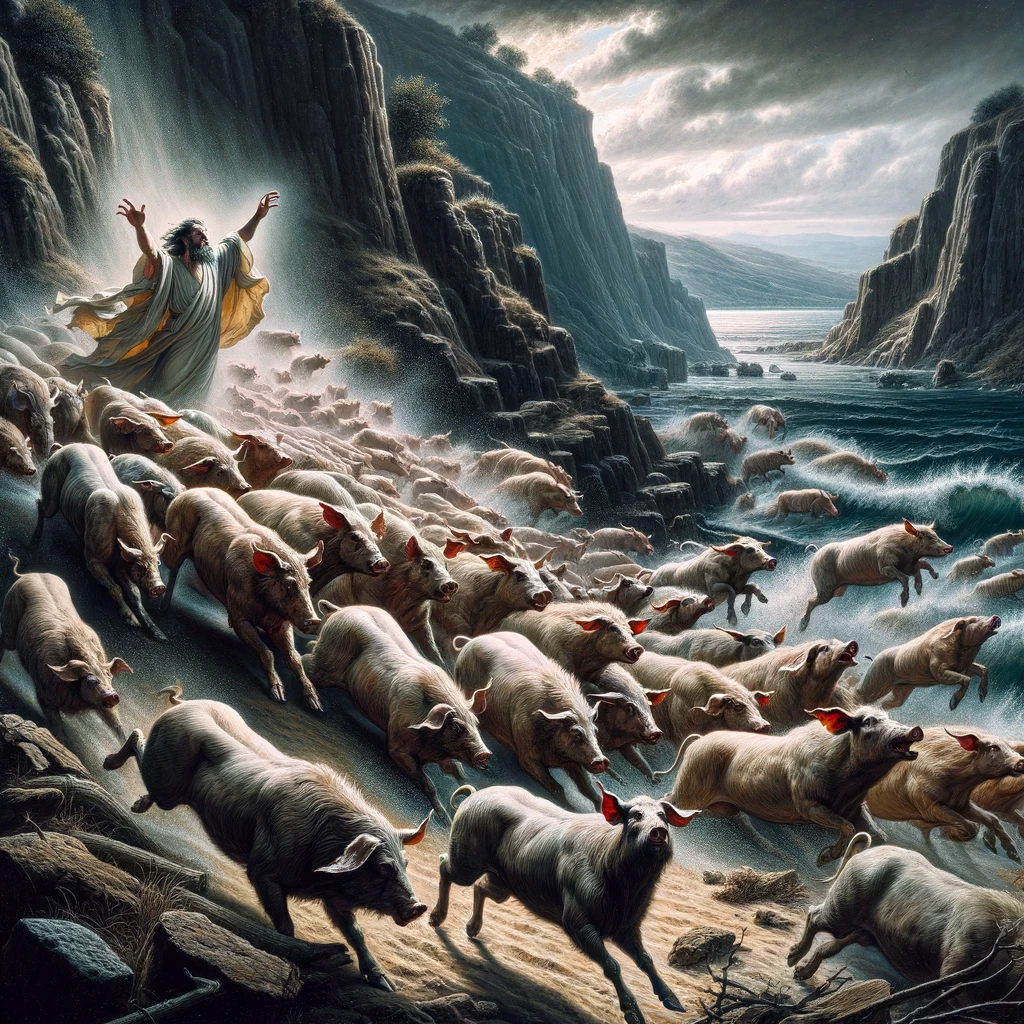
The image vividly depicts the dramatic scene where a herd of swine, possessed by unclean spirits, runs chaotically down a steep incline towards the sea, with Jesus in the background having just permitted the spirits to enter the animals.

The image captures the poignant moment where a woman, amidst a crowd, reaches out to gently touch the hem of Jesus’ garment as he walks past her, embodying her deep faith and hope for healing.

The image captures the miraculous moment of Jairus’ daughter’s revival, with Jesus gently holding her hand as she awakens, surrounded by her astonished and grateful parents and onlookers.

The image depicts a lavish royal feast in the time of Herod, with Herodias’ daughter gracefully dancing in the midst of an opulently decorated banquet hall, captivating Herod and the distinguished guests.
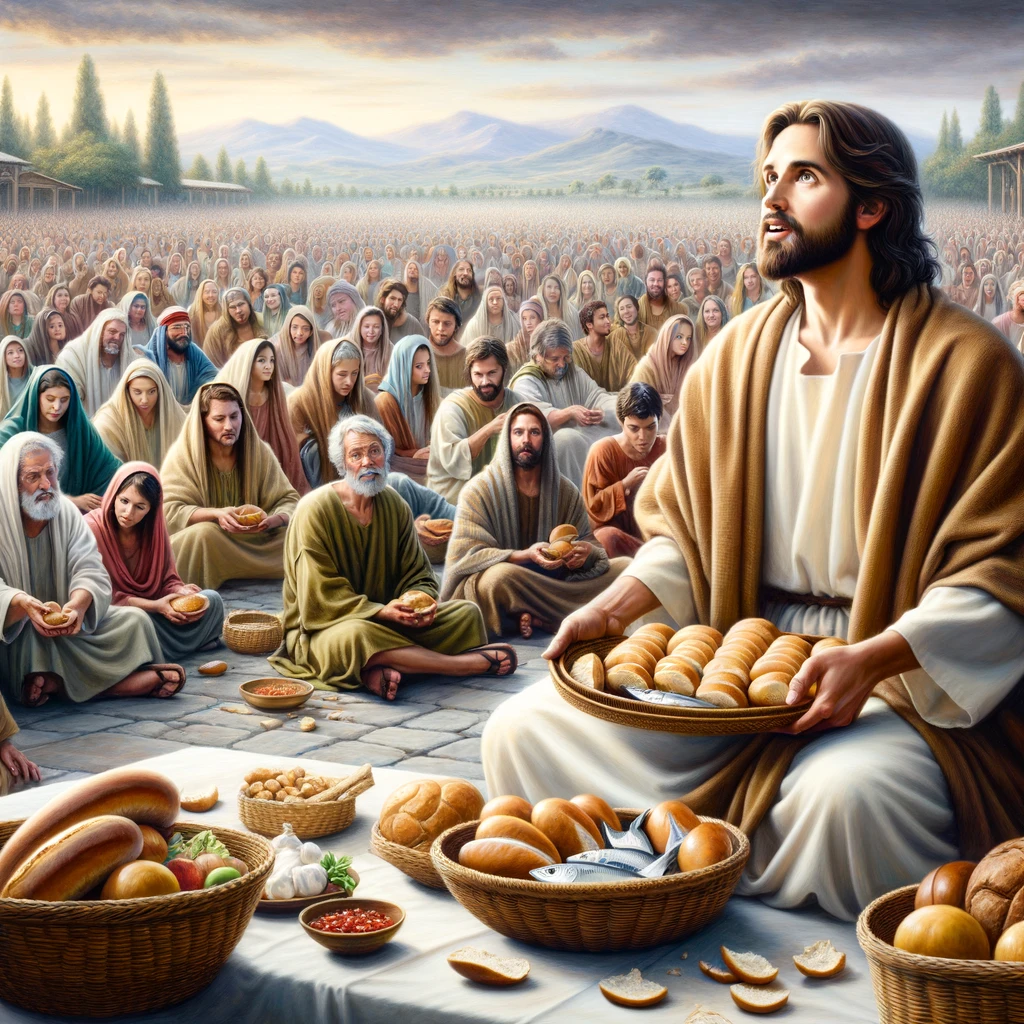
The image depicts the miraculous feeding of the five thousand, showing Jesus in the center blessing and breaking the loaves and fish, surrounded by his disciples and a diverse multitude seated in orderly rows, all partaking in the abundant meal.

The image depicts a mystical scene of Jesus walking on the sea towards a ship in a stormy night, radiating a sense of peace and divine power, as the ship’s occupants look on in surprise and awe.
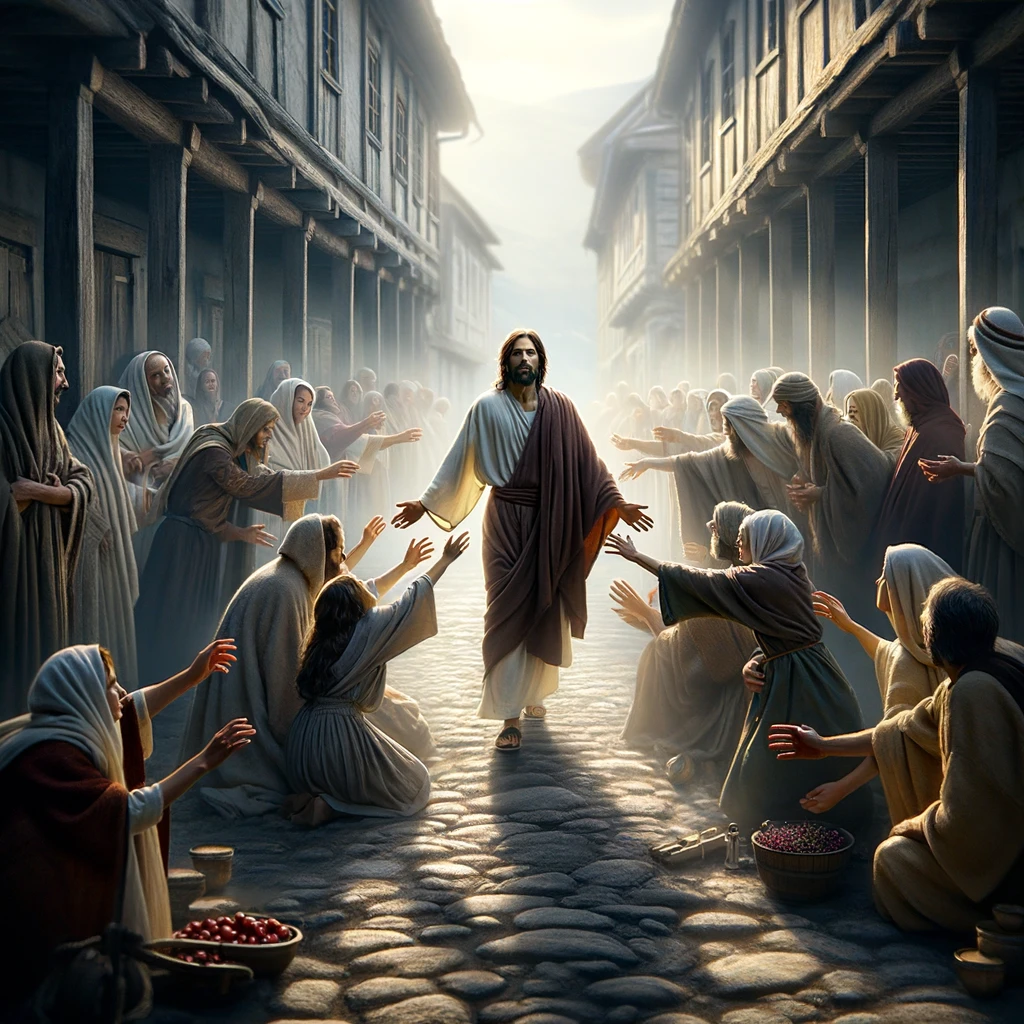
The image portrays a compassionate scene in a historical village street, where individuals gathered with their sick loved ones reach out to touch the garment of Jesus as he walks by, their expressions filled with hope and faith.
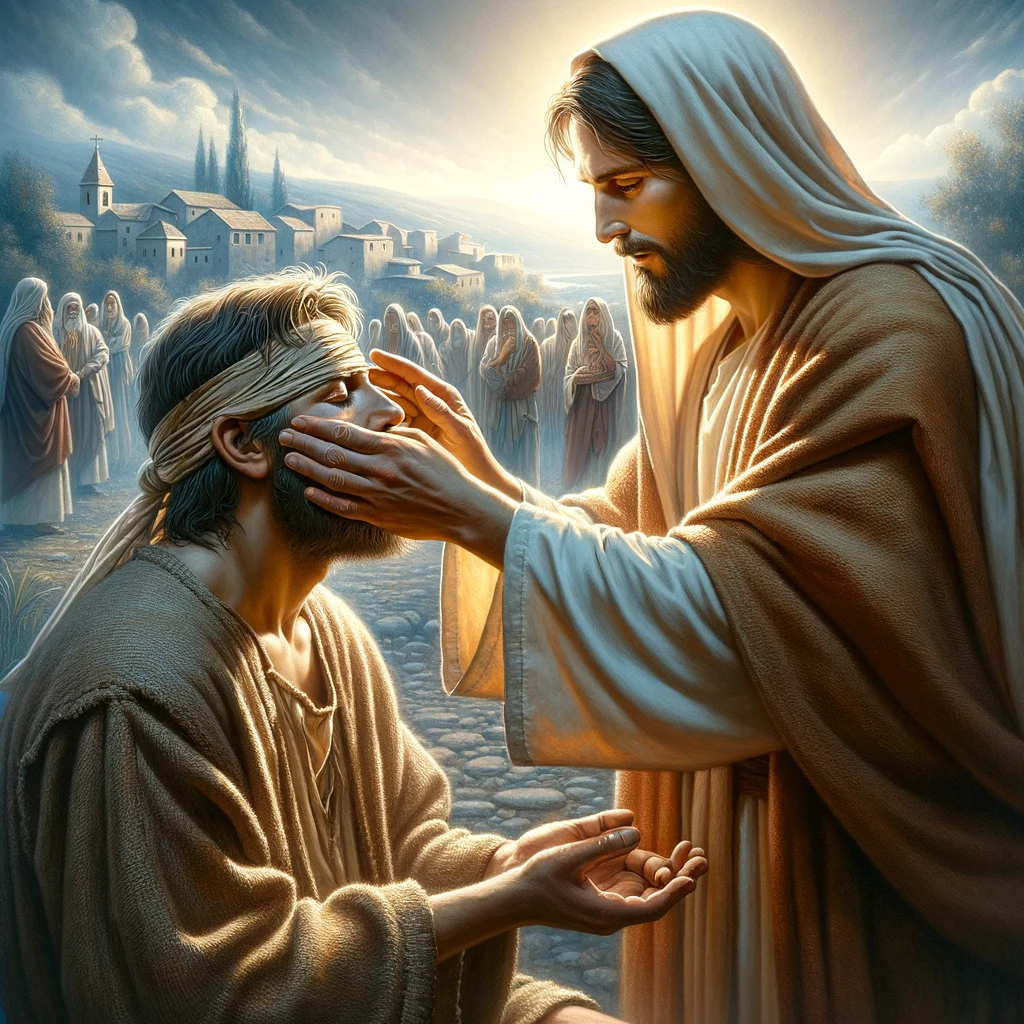
The image captures the poignant and transformative moment of the blind man’s healing at Bethsaida, with Jesus compassionately guiding and healing him, set against a serene landscape.
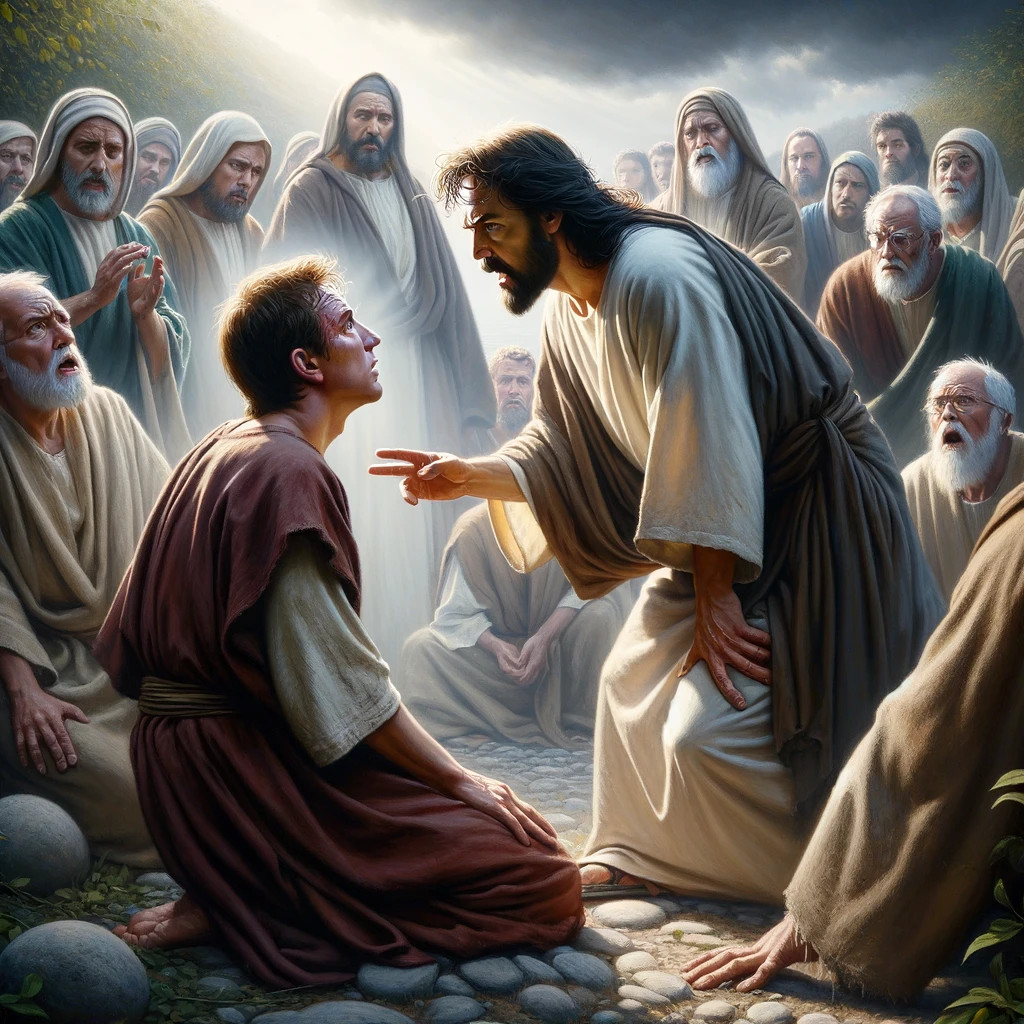
The image vividly captures the moment when Jesus, with a solemn and authoritative expression, rebukes Peter, who appears surprised and chastened. The scene is set outdoors, with other disciples reacting variously to this intense exchange.
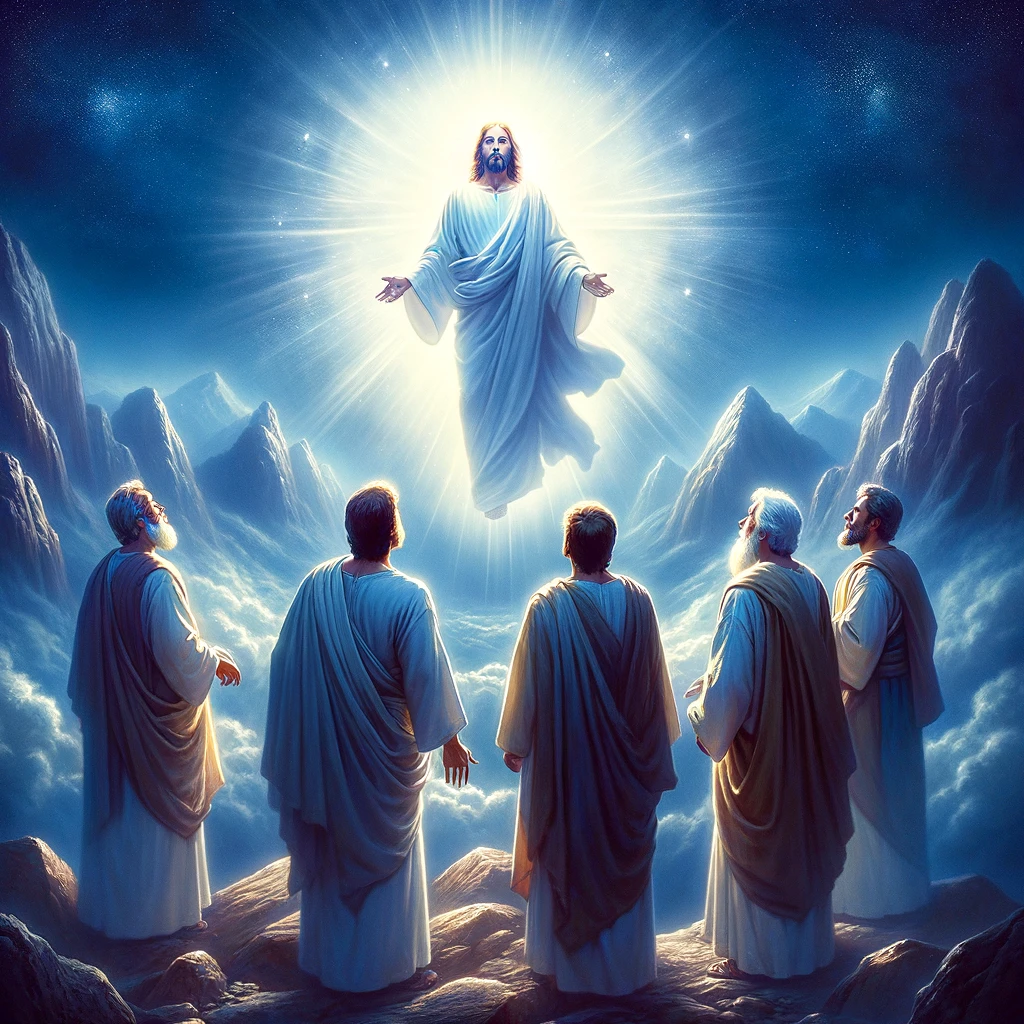
The image depicts a mystical and powerful scene of the Transfiguration of Jesus on a high mountain, surrounded by the three disciples: Peter, James, and John, each showing expressions of awe and reverence, against a backdrop of celestial light and a luminous cloud.
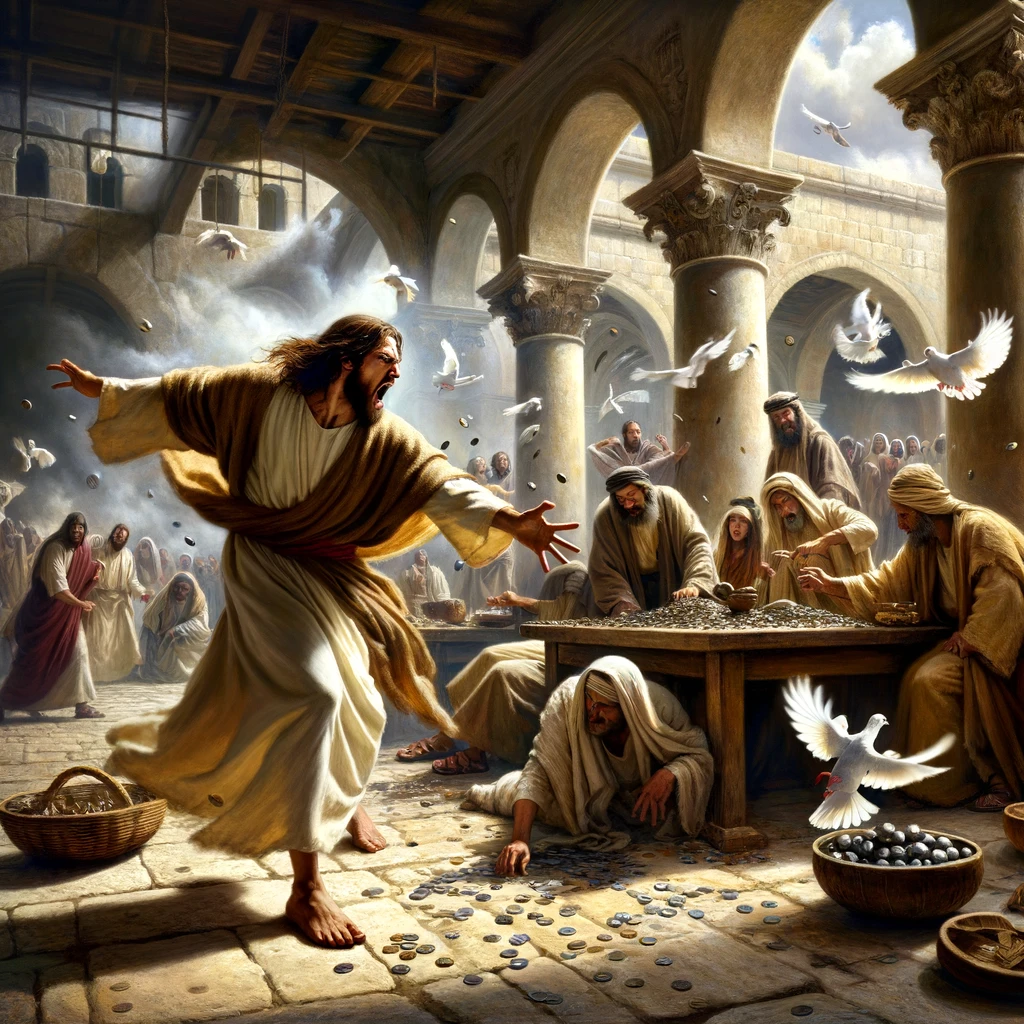
Here is the image depicting the scene where Jesus energetically overturns the tables of the moneychangers and the seats of those selling doves in the temple at Jerusalem.
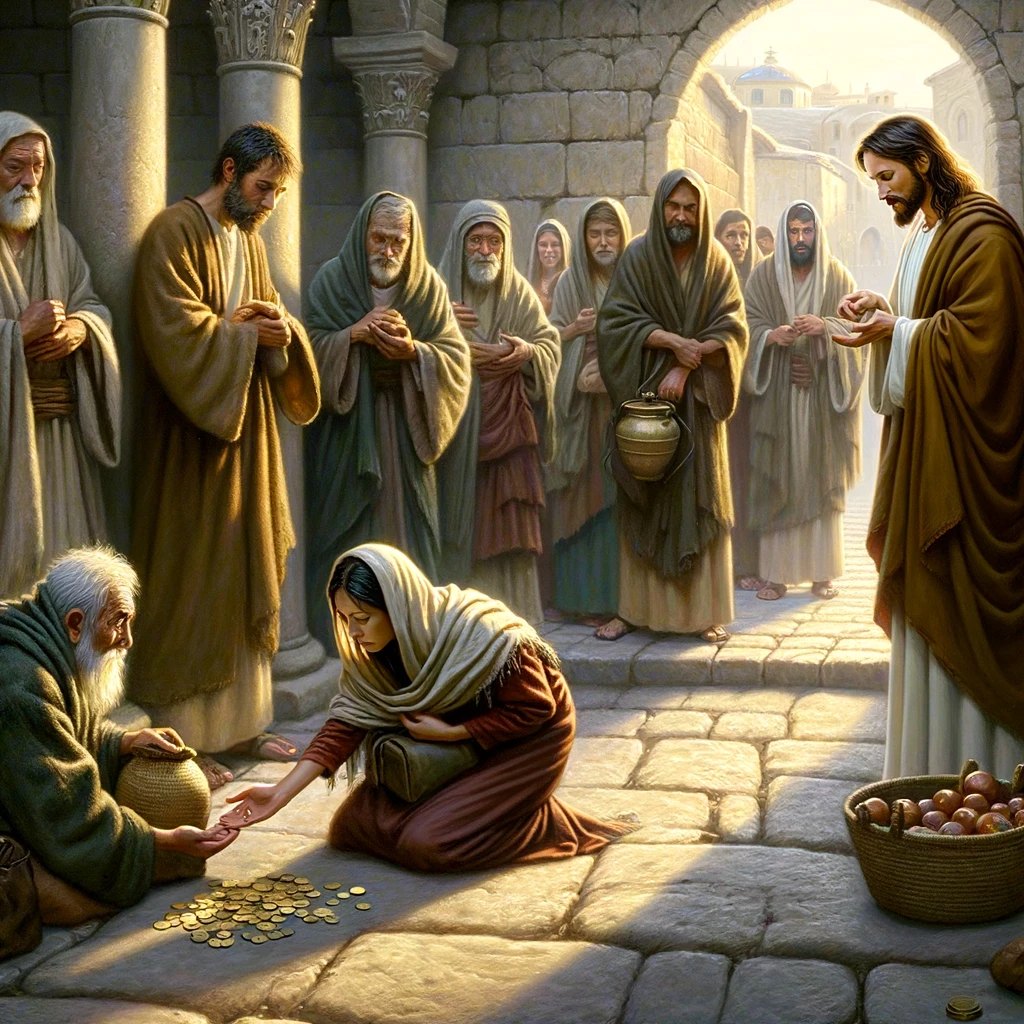
Here is the image depicting the scene where a poor widow discreetly offers two small coins into the temple treasury, as described in the passage. The image captures her act of sacrifice and generosity, contrasted with the less sincere donations of wealthier individuals. Jesus and his disciples are seen observing from a distance, acknowledging the profound significance of the widow’s humble offering.
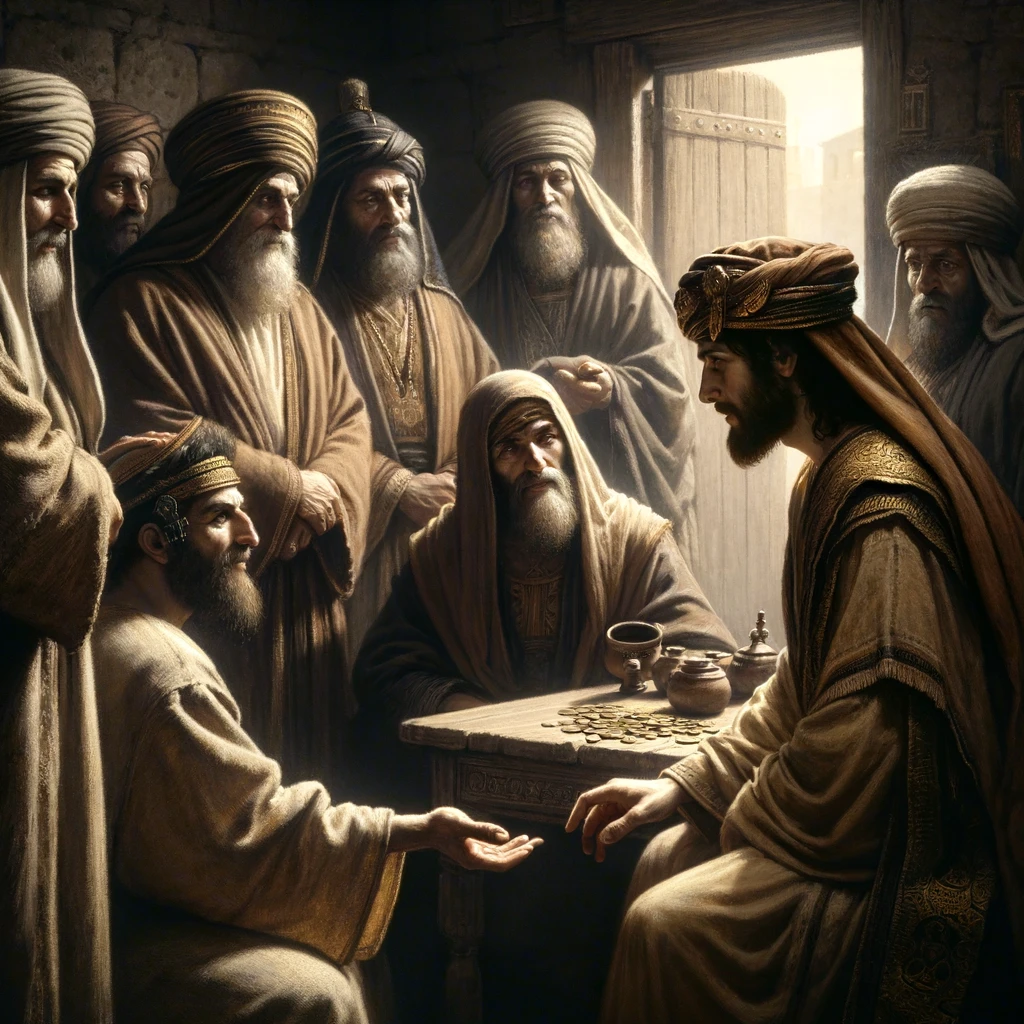
The image depicting the historical biblical scene of Judas Iscariot conspiring with the chief priests in ancient Jerusalem has been created. In this moment, Judas is shown engaging in a secretive conversation with the priests, as one of them discreetly hands him a small bag of coins, symbolizing their agreement for the betrayal of Jesus.

Here is the image depicting the scene in the Garden of Gethsemane, with Jesus alone and in deep anguish.

Here is the image depicting the scene where Judas Iscariot, accompanied by a group of armed men, arrives to betray Jesus. The setting is an ancient street in Jerusalem at night, with the architecture and attire reflecting the biblical era.
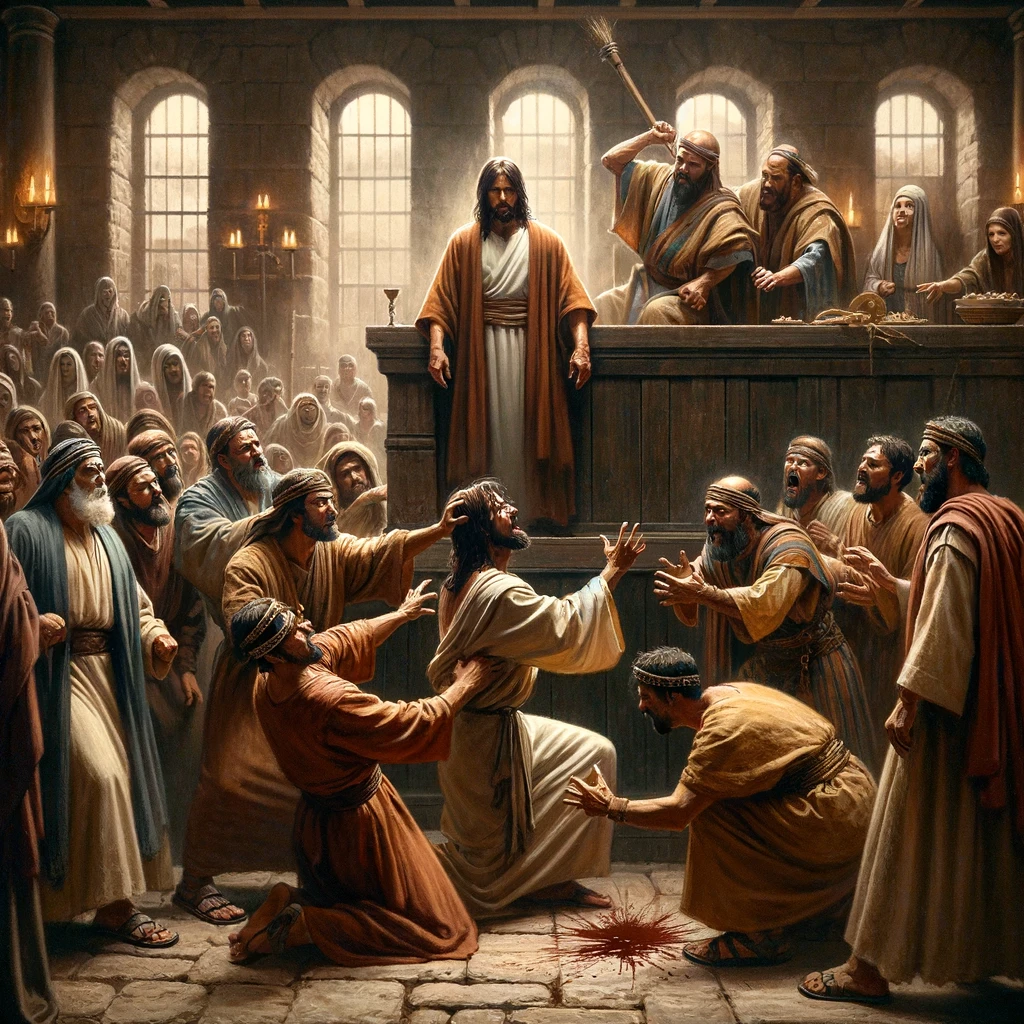
Here is the image depicting the scene in Mark 14 where Jesus is sent to the high priest and found guilty of blasphemy. The scene shows the moment when some begin to spit on him, cover his face, and strike him, as described in the passage.

Here is the depicted scene based on your description from Mark 15, showing Jesus before Pilate with the chief priests, elders, and scribes present. The dramatic tension of the moment is captured in the expressions and gestures of the characters involved.

The image depicting the scene from Luke, set in a dimly lit Roman Prætorium, has been created. It visually captures the solemn figure of Jesus, surrounded by Roman soldiers in a setting filled with dramatic tension and emotional intensity. You can view the image above.
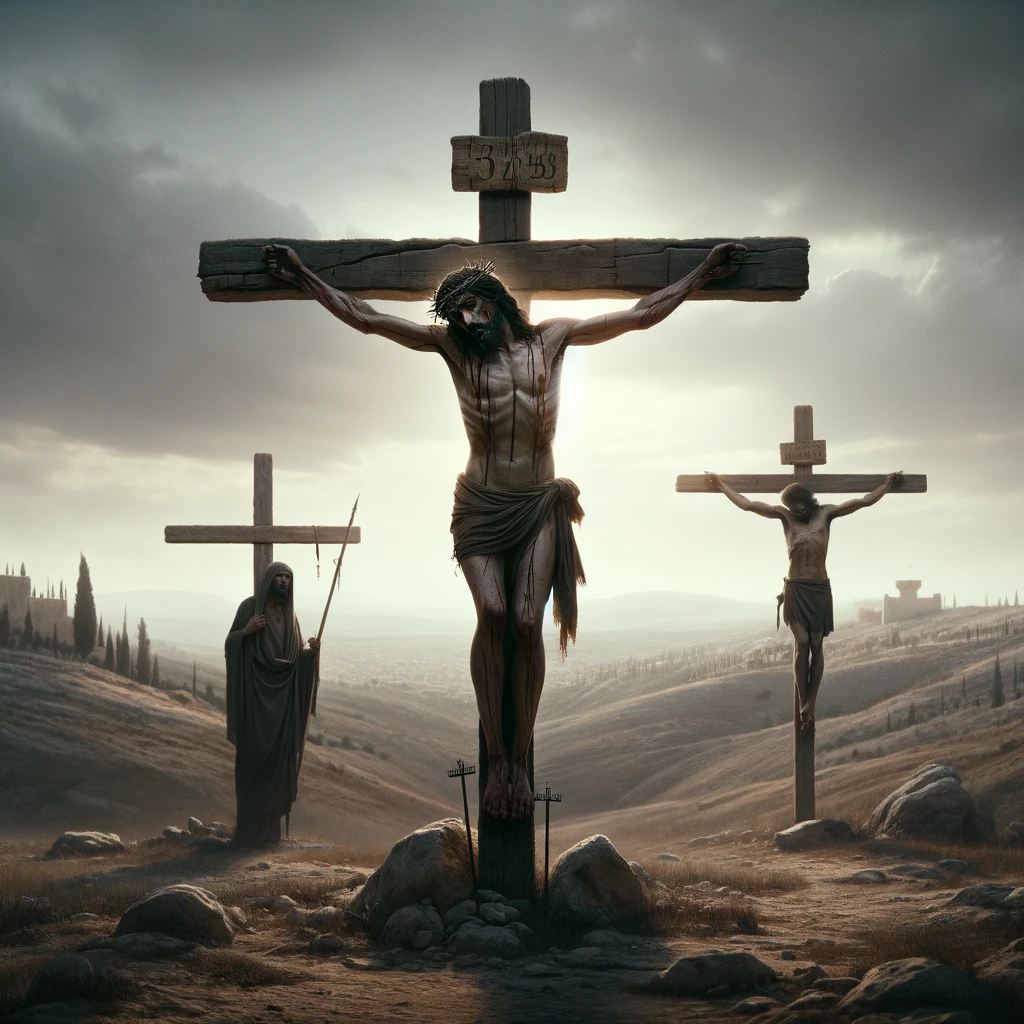
The image depicting the scene of Jesus crucified on the cross, with two thieves crucified on either side of him, has been created. The setting is outside ancient Jerusalem, with the scene cast under an overcast sky, enhancing the solemnity of the moment.
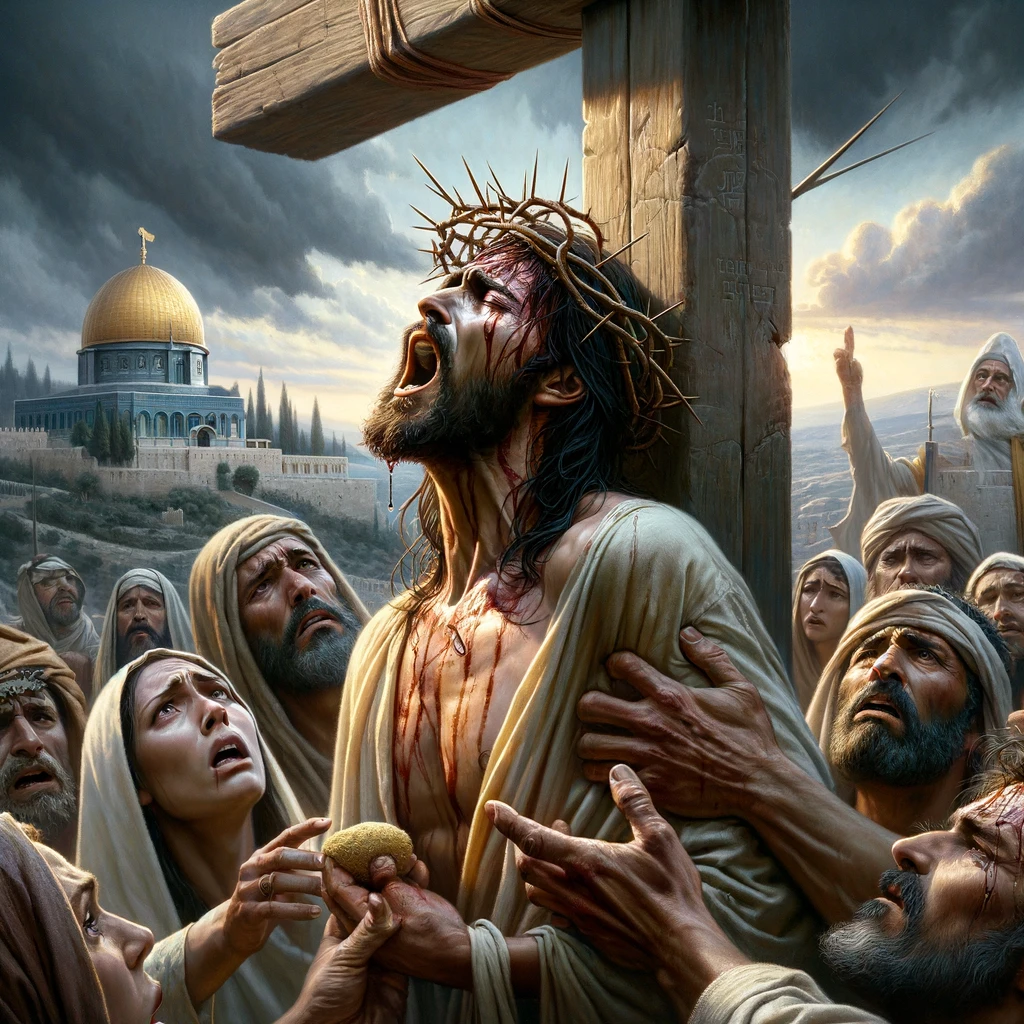
Here is the image depicting the scene from Mark 15, where Jesus, on the cross, cries out with a loud voice, and the moment of his passing is symbolized by the tearing of the temple’s veil.

Here is the image depicting the solemn and reverent biblical scene where Jesus’ body is being carefully wrapped in fine linen by Joseph of Arimathæa, near a sepulchre hewn out of rock, with Mary Magdalene and Mary, the mother of Joses, watching in the background.
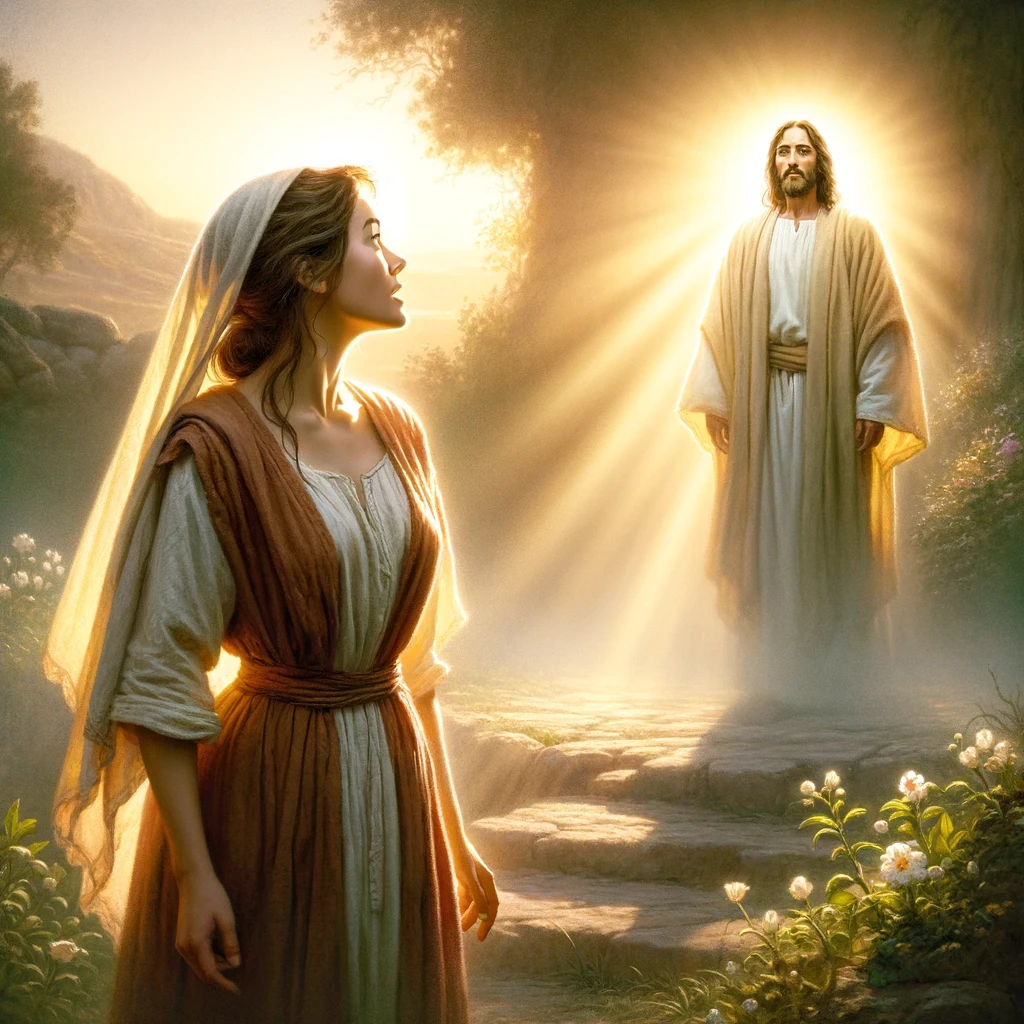
Here is the depiction of the scene where Jesus first appears to Mary Magdalene after his resurrection, as described in the Gospel of Mark, chapter 16.
 Modern Mosaic
Leave a comment